How to Check if Excavator Operating Hours Are Genuine (Anti-Fraud Guide)
Used excavator hour meter fraud is common. Step-by-step guide to verify operating hours: ECM cross-check, undercarriage wear, hydraulic stamps, photo evidence.
You want to buy a used excavator. The dashboard says 6,000 hours. That number is almost certainly wrong if you haven’t done your homework. Hour meter tampering is the single most common fraud in the used excavator market, and sellers in every region—from Lagos to Lima to Dubai—know how to roll back a digital or analog display. The only way to know the real hours is to cross-check the dashboard reading against at least three independent physical indicators: the engine ECM, the undercarriage wear, and the hydraulic component dates. If the seller refuses access to any of these, walk away.
Here is the step-by-step anti-fraud checklist we use at ExcaYard before we list any machine. You should use it too.
1. Read the Engine ECM (Electronic Control Module) – The Gold Standard
This is the single most reliable check. Every modern excavator (roughly anything built after 2005) has an ECM that logs total engine operating hours independently of the dashboard display. The dashboard and the ECM are separate systems. Tampering with the dashboard does not automatically change the ECM record.
How to do it:
- Caterpillar: You need Cat Electronic Technician (Cat ET) software and a communication adapter (like the Cat Data Link cable). Connect to the service port near the cab floor or behind the seat. Cat ET will display “Total Engine Hours” in the “Engine Configuration” screen. Compare this to the dashboard.
- Komatsu: You need Komatsu KomNet or a generic diagnostic tool that speaks the KOM2 protocol. The ECM hours are stored in the “Engine Controller” module.
- Hitachi / John Deere / Volvo: Each brand has its own software (e.g., Deere Service Advisor, Volvo Tech Tool), but the principle is identical.
The tolerance: A genuine machine will show a difference of 0–50 hours between the dashboard and the ECM. Why 50? Because the ECM logs engine running time, while the dashboard logs key-on time. If the engine idles for long periods, the ECM may be slightly lower. A difference of 100 hours or more is a red flag. A difference of 500+ hours means the dashboard has been tampered with.
What to watch out for: Some advanced fraudsters also reprogram the ECM. This is rare because it requires specialized software and leaves digital fingerprints. But it happens. That’s why you need the next checks.
2. Undercarriage Wear Correlation – The Physical Truth
The undercarriage wears at a predictable rate. You can estimate the machine’s real hours by measuring the undercarriage components. This works because undercarriage wear is directly tied to the number of times the tracks rotate, which correlates to operating hours.
What to measure:
- Track chain pitch stretch: Measure the distance between 20 track bushings (pitch length). A new chain has a specific pitch (e.g., 171.5mm for a 20-inch chain). After 5,000 hours of normal use, the pitch will have stretched by about 2–4mm. After 10,000 hours, it could be 6–8mm. If the dashboard says 4,000 hours but the chain pitch is stretched to 8mm, the hours are fake.
- Sprocket wear: The sprocket teeth should have sharp, defined edges. Worn teeth look like shark fins or have a “hooked” profile. A machine with 3,000 hours will have minimal sprocket wear. A machine with 8,000 hours will have significant hooking.
- Track roller and idler wear: Measure the outer diameter of the front idler and top rollers. Compare to factory specs. A worn idler loses 5–10mm of diameter per 5,000 hours.
The rough correlation table (for a 20–30 ton excavator on medium soil):
| Dashboard Hours | Chain Pitch Stretch (mm) | Sprocket Condition | Idler Diameter Loss |
|---|---|---|---|
| 2,000–3,000 | 0–1mm | Sharp teeth | <2mm |
| 5,000–6,000 | 2–4mm | Slight hooking | 3–5mm |
| 8,000–10,000 | 5–8mm | Heavy hooking | 6–10mm |
| 12,000+ | 8–12mm | Teeth nearly gone | 10mm+ |
Caveat: Undercarriage wear depends on soil type and operator skill. A machine that only worked in sand will wear slower. A machine in rocky terrain will wear faster. Use this as a cross-check, not a standalone proof.
3. Hydraulic Hose Date Stamps – The Forgotten Evidence
Every hydraulic hose has a manufacturing date stamped on the outer rubber, usually in a format like “DOT 2021” or “ISO 2019” or a Julian date (e.g., “3219” = week 32 of 2019). This is almost never faked.
What to look for:
- Find the main pump hoses, swing motor hoses, and boom cylinder hoses. They should all have dates.
- If the machine has 4,000 hours on the clock, the hoses should be original or replaced once. Original hoses from 2018 on a machine claiming 4,000 hours in 2024 is plausible.
- If you find a hose dated 2023 on a machine claiming 3,000 hours, ask why it was replaced. A hose that fails at 3,000 hours is unusual. It could indicate high hours, abuse, or a major repair.
- The real giveaway: If all hoses are from the same year as the machine’s production year, and the machine claims 12,000 hours, that’s suspicious. Hoses typically last 5–7 years or 6,000–8,000 hours. A 12,000-hour machine should have at least one set of replacement hoses.
4. Service History with Timestamps – The Paper Trail
A genuine service history is not just a list of oil changes. It must include timestamps—dates and hour meter readings at each service.
Red flags:
- Service records that only show dates but no hour meter readings.
- Records that show a sudden jump in hours (e.g., service at 2,000 hours in 2019, then next service at 3,500 hours in 2023—that’s only 1,500 hours in 4 years, which is unrealistically low for a working machine).
- Records that are photocopies or screenshots with no original stamp or signature.
- The seller says “the records are at the dealer” but cannot provide them.
What a good history looks like:
- Every 250–500 hours: oil and filter change, hour reading noted.
- Every 1,000 hours: hydraulic oil change, hour reading noted.
- Every 2,000 hours: major service (pump, swing gear, final drives), hour reading noted.
If the history shows a machine serviced at 5,000 hours, then again at 5,200 hours, then at 5,500 hours, and the dashboard now reads 6,000 hours, that is consistent. If the history jumps from 5,000 to 8,000 hours with no explanation, be suspicious.
5. Operator Cab Wear – The Human Factor
The cab tells the story of how many times an operator sat in that seat and moved those controls. This is subjective but powerful.
Checklist:
- Seat fabric: Look at the left bolster (where the operator’s left arm rests). Is the fabric worn through? A 4,000-hour machine should have slight fading, not a hole. A 10,000-hour machine will often have a worn-through bolster.
- Joystick rubber: The rubber boots at the base of the joysticks crack and wear from constant movement. At 3,000 hours, they should be intact. At 8,000 hours, they are often cracked or missing.
- Floor mat wear: Look at the area under the operator’s right heel (for the right pedal). A worn-through floor mat indicates many hours of operation—often 8,000+.
- Paint wear on door handles and grab bars: High-use machines have shiny, polished metal where hands have gripped. Low-hour machines still have original paint texture.
- Pedal rubber: The travel pedal rubber pads wear down. If they are smooth and shiny, the machine has seen heavy use.
The inconsistency trap: A machine with a pristine seat and joystick rubbers but a worn-through floor mat is a contradiction. Someone replaced the seat and boots but forgot the floor mat. That is a sign of a cosmetic cover-up.
6. The Seller’s Attitude – The Final Test
This is the most important check. If the seller is honest, they will let you run all the checks above. If they hesitate, make excuses, or say “the ECM is locked” or “we don’t have the software,” you have your answer.
Questions to ask the seller:
- “Can I connect my Cat ET to the machine right now?”
- “Can you provide the last three service invoices with hour readings?”
- “Can I take photos of the hydraulic hose date stamps?”
- “Can I measure the undercarriage chain pitch?”
What an honest seller says: “Sure, here is the service port. I’ll get the machine started for you.”
What a dishonest seller says: “The ECM is password-protected by the previous owner.” (This is almost never true. Dealers can reset passwords.) “We don’t have the service records, but the machine is low hours.” (Run.)
Bottom Line
You cannot trust the dashboard hour meter on any used excavator. Period. The only way to verify hours is to cross-reference the ECM reading, undercarriage wear, hydraulic hose dates, service history, and cab wear. If any two of these indicators contradict the dashboard, the hours are likely tampered with.
Your minimum requirement: ECM reading must match dashboard within 50 hours. Undercarriage wear must be consistent with the claimed hours. Service history must show hour readings at each interval. Seller must allow all inspections.
If you cannot verify the hours, do not buy the machine. The cost of a major engine or hydraulic rebuild at 10,000+ hours will wipe out any savings from buying a “low-hour” machine.
Recommendation
At ExcaYard, we run every machine through this exact checklist before we list it. We provide ECM readouts, undercarriage measurements, and service history with every machine we sell. We do not buy machines from sellers who refuse ECM access. We do not list machines with inconsistent hours.
If you are buying from a private seller or an unknown dealer, insist on these checks. If they refuse, walk away. There are plenty of honest machines on the market.
Talk to us about the specific make and model you are looking for. We can tell you the common hour-meter fraud patterns for that machine and what to look for. We can also show you our current stock with verified hours. No pressure. Just facts.

Used Excavator Inspection Checklist: 50-Point Field Guide for International Buyers
A practical 50-point inspection checklist for buying a used excavator from China or any export market. Engine, hydraulics, undercarriage, cab — what to actually check, common red flags, when to walk away.
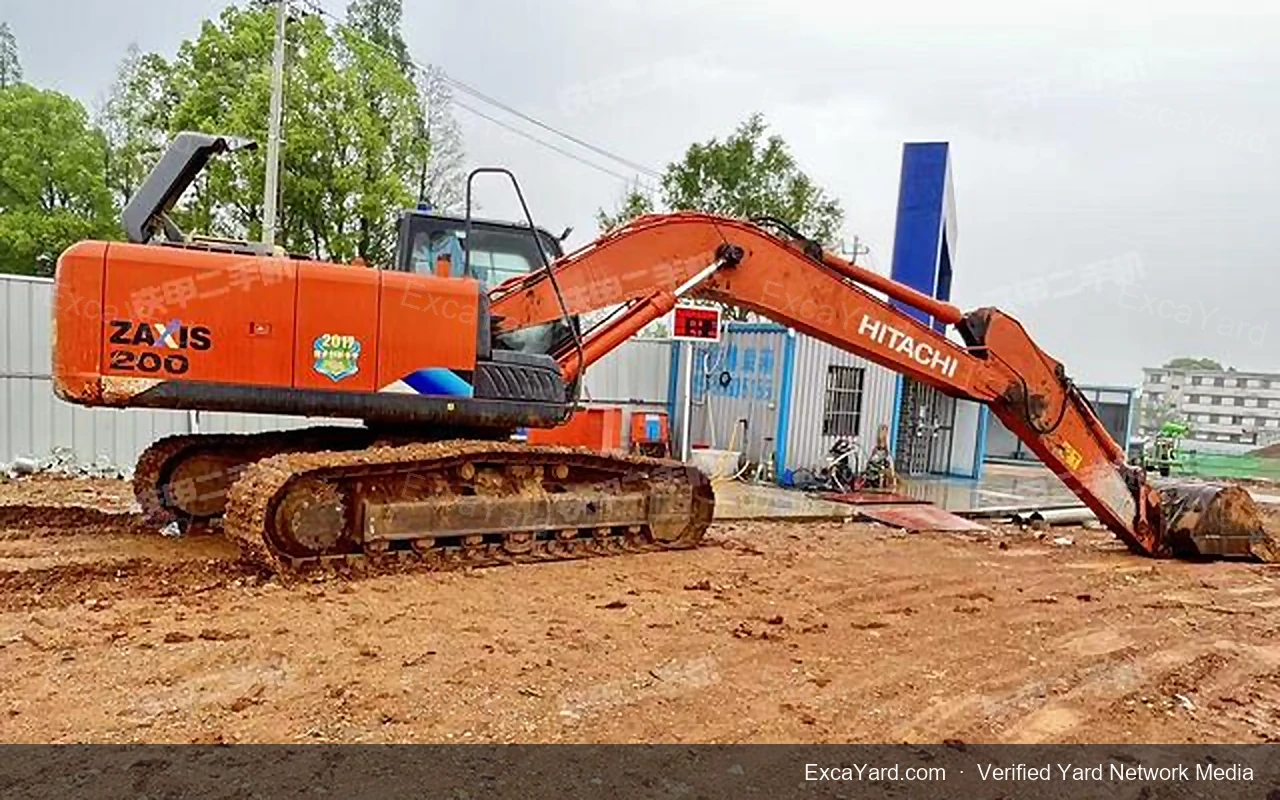
Used Hitachi ZX200-5A from China: Export Checklist for 20-Ton Excavator Buyers
Used Hitachi ZX200-5A from China for contractors and machinery importers: hydraulic pump checks, hour verification, undercarriage wear, spare parts and CIF quote keywords for 20-ton excavator buyers.
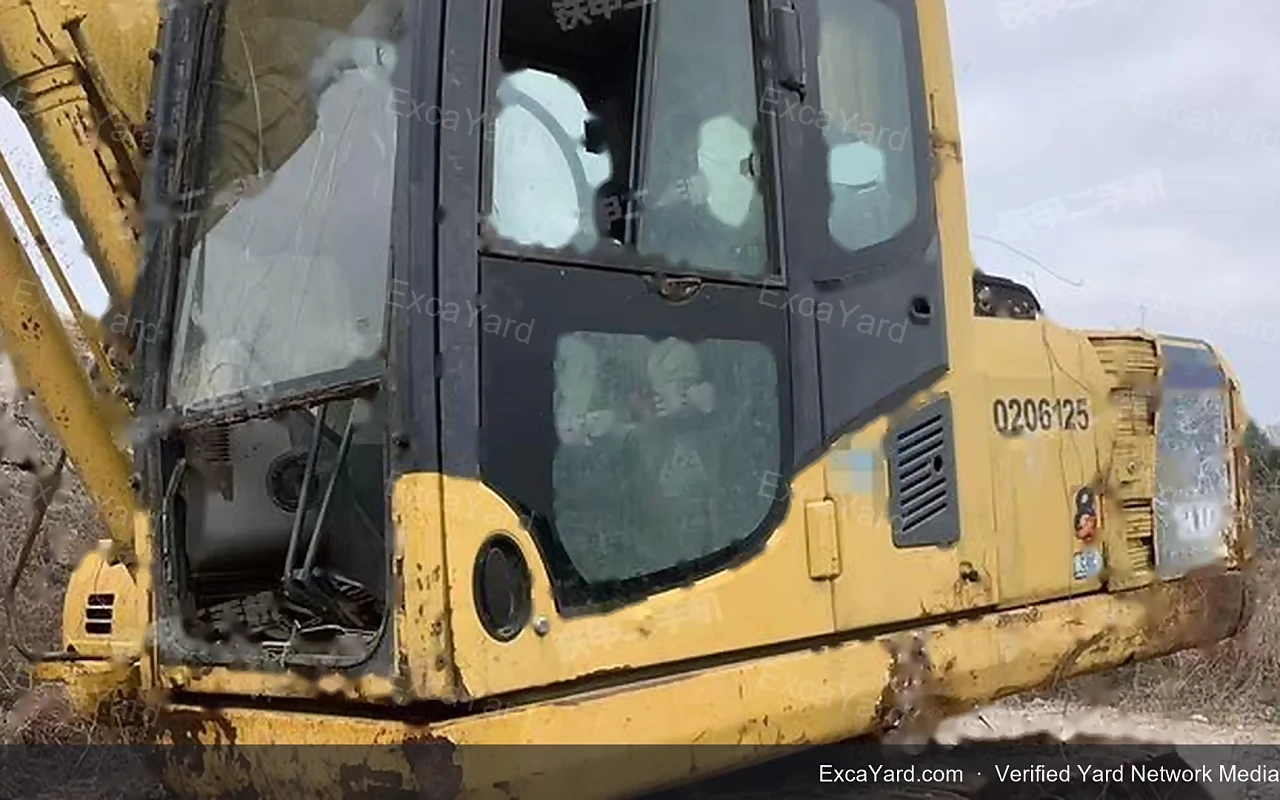
Cat 320 vs Komatsu PC200: Honest Comparison for Used Buyers (2026)
Choosing between a used Cat 320 and a used Komatsu PC200? Real-world differences in fuel economy, parts availability, resale value, and operating cost for export buyers.