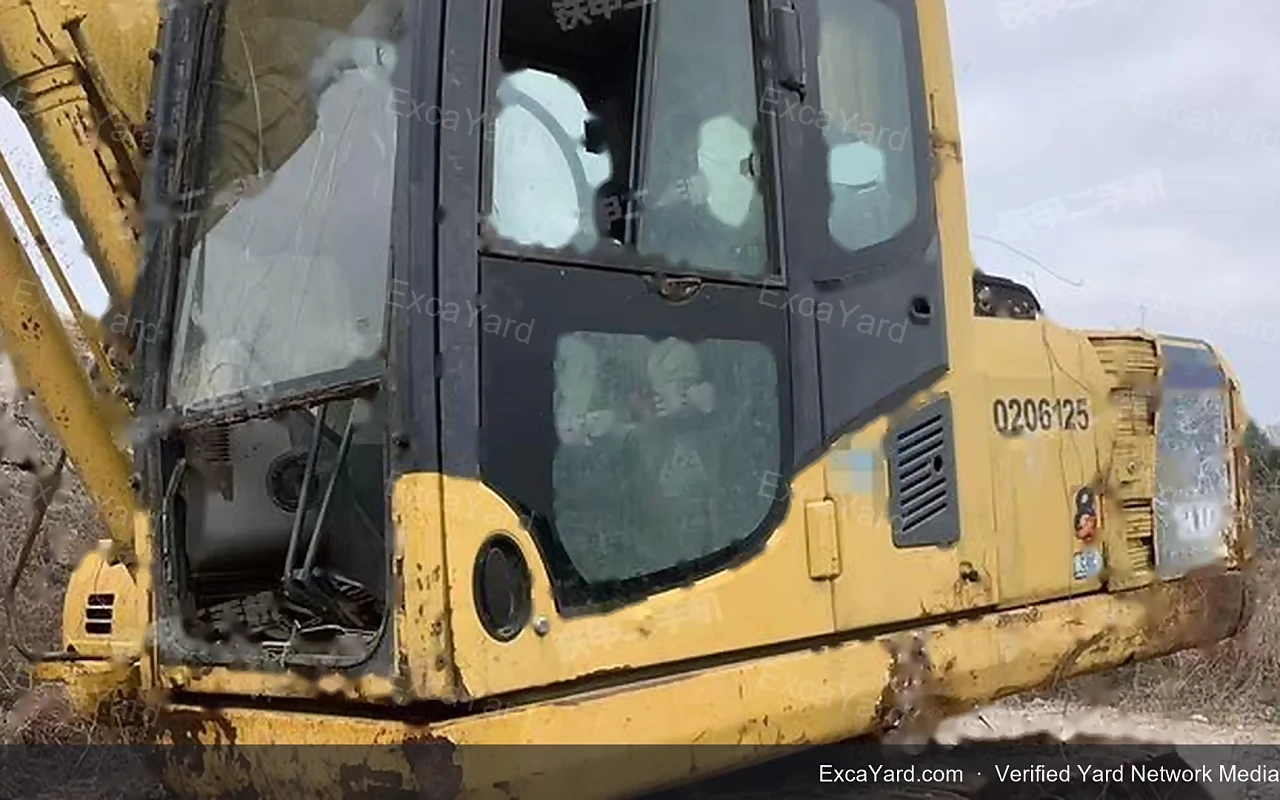
Cat 320 vs Komatsu PC200: Honest Comparison for Used Buyers (2026)
Choosing between a used Cat 320 and a used Komatsu PC200? Real-world differences in fuel economy, parts availability, resale value, and operating cost for export buyers.
The Cat 320 and the Komatsu PC200 are the two most-traded used excavators on Earth. Together they probably account for 30% of all used 20-ton class machine sales globally. If you’re a buyer comparing them, this guide gives you the honest mechanical, financial, and market reality of choosing between the two.
The headline answer
If your market has strong Caterpillar dealer presence (Nigeria, Kenya, Philippines, Peru, Mexico, UAE), buy the Cat 320. If your market is Indonesia, Vietnam, Russia, or anywhere with strong Komatsu service infrastructure, buy the Komatsu PC200. In a tie, marginal advantage to Komatsu on fuel and to Cat on resale value.
Engine and fuel economy
Cat 320 series machines (320B/C/D/E/GC) have used a range of Cat-branded engines over the years — the 3066T in older units, Cat C6.4 ACERT in the 320D, Cat C4.4/C7.1 in newer GC variants. All are reliable, well-supported globally, but on average consume 5-10% more fuel than the equivalent Komatsu.
Komatsu PC200 uses the SAA6D102E (older) and SAA6D107E (PC200-8 onward) engines. Both are known for fuel economy that beats most competitors. Operator reports consistently put PC200-8 fuel consumption at 15-18 L/h in mixed work versus 17-20 L/h for Cat 320D under similar conditions.
Verdict: Komatsu wins fuel economy by ~10%. Over 5,000 working hours at typical fuel prices, that’s $4,000-7,000 in savings. Real money.
Parts availability
Caterpillar has the world’s largest construction equipment dealer network — over 175 dealers in 192 countries. For Africa specifically, Cat parts can be sourced from local dealers in almost every country. For long-tail markets (Niger, Mali, Central African Republic), Cat is often the only brand with reliable local parts.
Komatsu has presence in 150+ countries but dealer density is lower in Africa and the Middle East than Cat. In Southeast Asia (especially Indonesia, Vietnam, Thailand), Komatsu parts are abundant. In Russia and CIS, both Cat and Komatsu have weakened post-2022 sanctions.
Verdict: Cat wins parts availability globally. For specific markets, check local dealer presence before buying.
Resale value
A 5-year-old Cat 320 typically retains 55-65% of its original value. A 5-year-old Komatsu PC200 retains 52-60%. The gap is real but not large.
What’s more important: both brands hold value far better than Volvo (45-55%), Hitachi (50-58%), or Chinese brands (35-45%) of the same age. For buyers who plan to resell after 3-5 years, the small Cat premium typically pays for itself.
Verdict: Cat wins resale by 3-5 percentage points. Meaningful for fleet operators with planned rotation cycles.
Pricing on the used market
For comparable units (same year, same hours, same condition), Komatsu PC200 typically sells for 8-12% less than Cat 320 on the international used market. A 2018 Cat 320D with 5,800 hours might list at $52,000; a comparable PC200-8 at $46,500.
This is consistent with the resale-value pattern: Cat costs more to buy and holds more value. Net cost over a 5-year holding period is roughly equivalent.
Verdict: Komatsu wins acquisition cost. Cat wins lifetime ownership cost (slightly).
Operator preference
In our customer feedback over the last 3 years, operators who have run both brands extensively report:
- Cat advantages: Heavier-feeling controls, slightly more refined cab climate control, better dust sealing in arid markets.
- Komatsu advantages: Smoother hydraulic response especially in fine grading, quieter cab at idle, more intuitive instrument cluster.
For a first-time operator without strong preference, either machine is excellent. For an experienced operator switching brands, expect 20-40 hours to adapt to the different control feel.
When NOT to buy either
If your budget is constrained and Chinese brand support exists in your market, a Sany SY215 or XCMG XE215 at $35,000-42,000 delivers 90% of the mechanical capability at 65-75% of the price. The trade-off is resale value and parts ecosystem outside major markets.
Bottom line for export buyers
| Factor | Cat 320 | Komatsu PC200 |
|---|---|---|
| Acquisition price | Higher (+10%) | Lower |
| Fuel cost | Higher | Lower (-10%) |
| Parts availability | Better globally | Better in SEA |
| Resale value | Stronger | Slightly weaker |
| Operator preference | Slight edge | Slight edge |
| 5-year total cost | Similar | Similar |
Choose based on your local dealer network. In a tie, Komatsu for fuel savings, Cat for resale and global support.
If you have a specific spec in mind — year, hours, configuration, budget, destination — contact us and we’ll match it across our verified yard network.

Cat vs Volvo Used Excavator: Honest Comparison for Export Buyers (2026)
Caterpillar vs Volvo used excavators — fuel economy, parts availability, resale value, and operating cost compared. Which to buy for African or Southeast Asian markets?
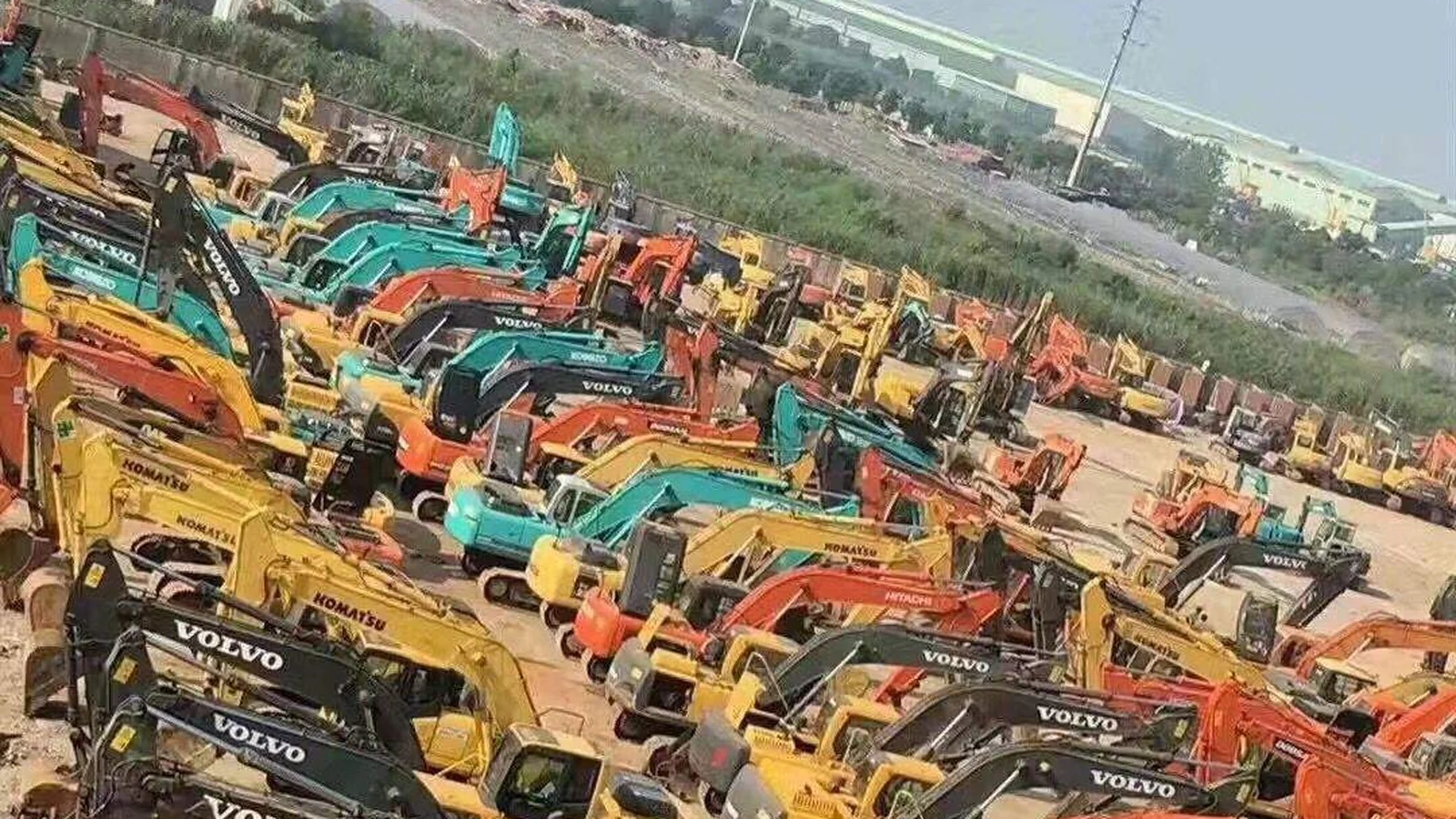
20-Ton vs 30-Ton Used Excavator: Which Class Should You Buy?
20-ton (Cat 320, Komatsu PC200) vs 30-ton (Cat 330, Komatsu PC300) — payload, fuel cost, transport cost, ROI per job class. Which makes more money for export buyers?
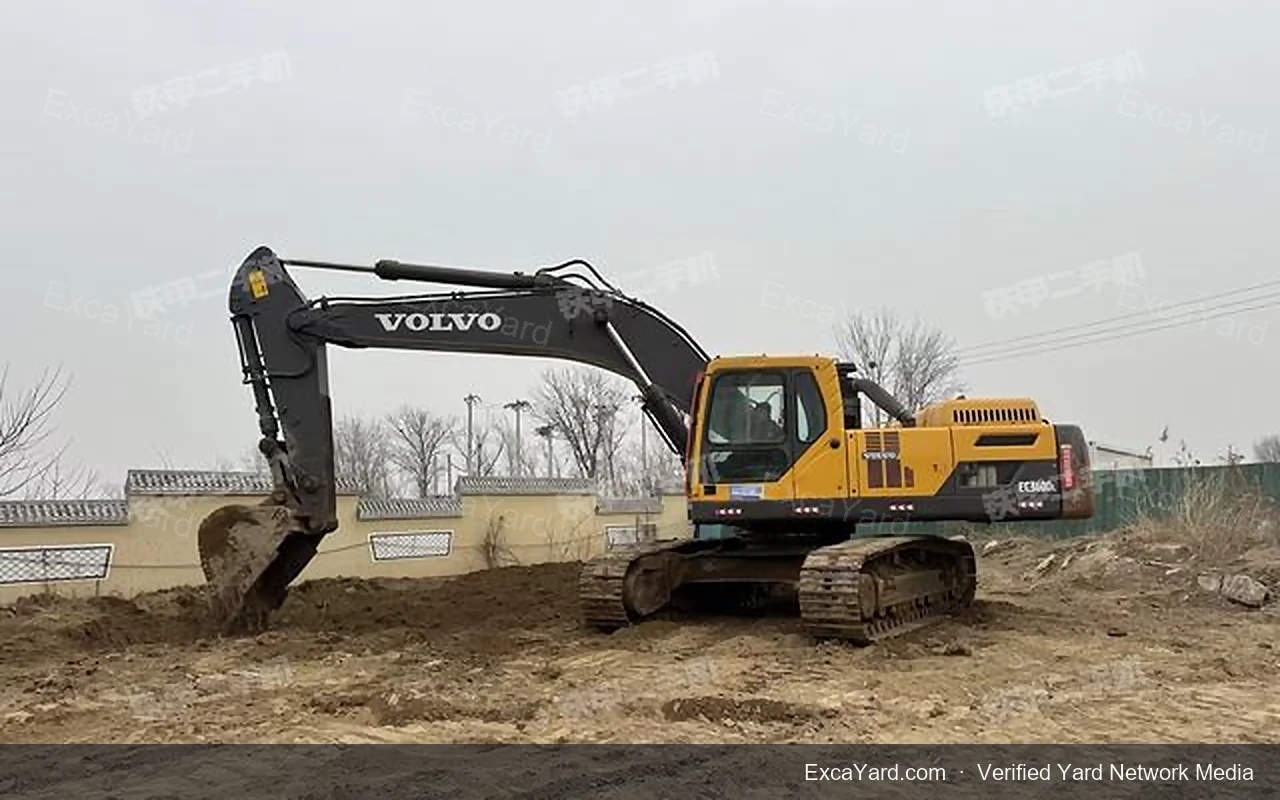
Sany vs XCMG Used Excavators: Chinese-Brand Comparison Guide
Sany vs XCMG used excavator comparison — quality, parts availability, dealer network, resale value. Honest take on the two largest Chinese OEMs for export buyers.