
Used Hitachi ZX2005A Excavator: Hydraulic Inspection Before You Buy
Used Hitachi ZX2005A excavator, 2021, 7,000 h, 20.05 t, $22,500: a five-stage hydraulic inspection, hour checks and price notes before you commit.
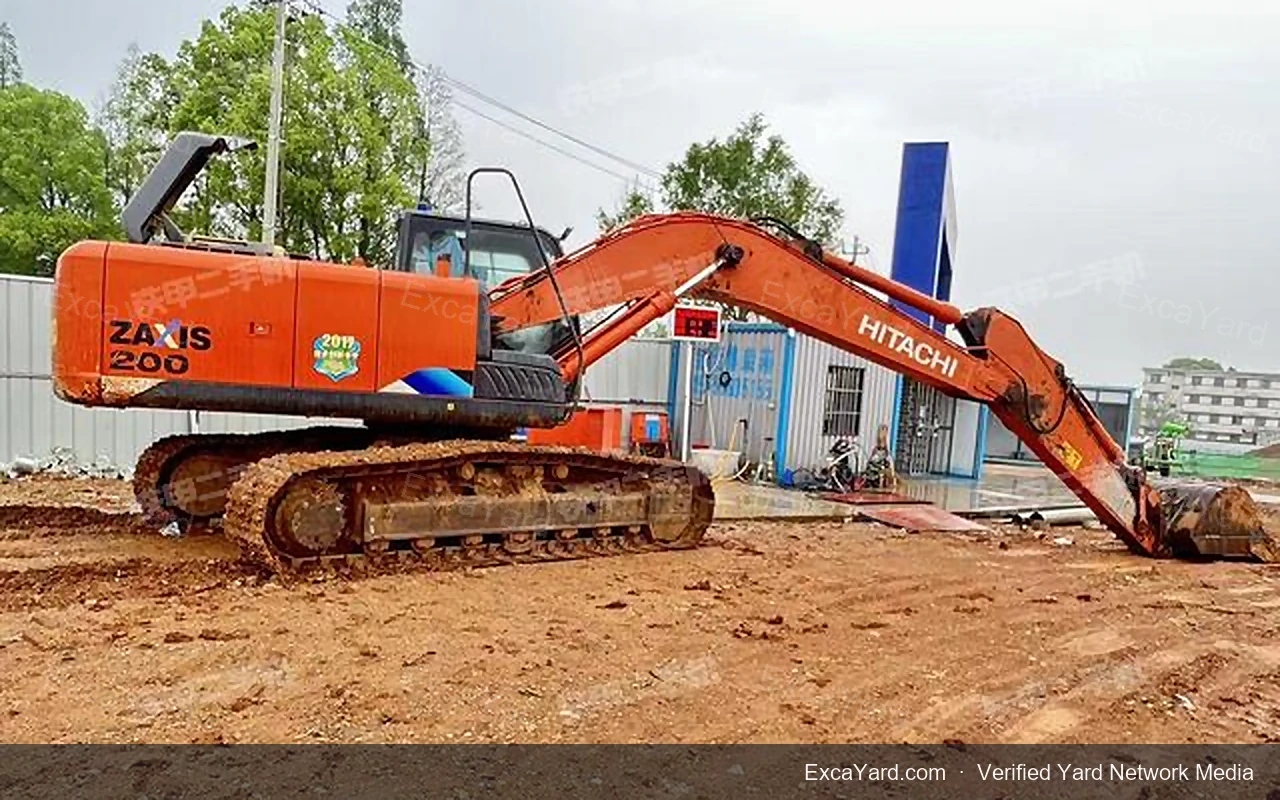
A 2021 Hitachi ZX2005A with 7,000 hours, a 1.0 m³ bucket, 20.05 tonnes of operating weight and an asking price of $22,500 is the kind of listing that sells on trust. This used Hitachi ZX2005A excavator is held by a partner yard in Anqing. ExcaYard verifies machines across a partner yard network and does not own the inventory. Trust is not an inspection method. On a 20-tonne Japanese excavator, the hydraulic system carries the largest concentrated repair risk, so the hydraulic test is where a deposit is either earned or refused.
Used Hitachi ZX2005A Excavator: The Listing in Plain Numbers
Start with what the record states, not what the seller suggests.
| Field | Listing value |
|---|---|
| SKU | EXY-HITAZX2005A-191 |
| Brand | Hitachi |
| Model | ZX2005A |
| Year | 2021 |
| Hours | 7,000 |
| Operating weight | 20.05 t |
| Bucket | 1.0 m³ |
| Grade | A |
| Location | Anqing |
| Price | $22,500 |
| Engine model | Not recorded |
The machine is in the 20-tonne class. That is the class most general contractors can use, and it is also the class where buyers compare Hitachi against Komatsu, Caterpillar, Kobelco and the stronger Chinese brands. The bucket is a standard 1.0 m³. The grade is A according to the listing.
The engine model is blank. Do not fill that gap with assumption. The engine plate, the serial number and the parts book should agree before you order filters or discuss emissions documentation. A missing field is a question, not a defect, but it is a question that must be answered.
Why the Hydraulic System Carries the Risk
A 20-tonne excavator has one engine, one main pump group, one control valve and a set of cylinders and motors that turn pressure into work. When the hydraulic system is healthy, the machine feels fast and predictable. When it is worn, the symptoms appear gradually: slower cycles, heat, drift, noise, or a circuit that stalls under load.
Those symptoms are easy to hide in a short video. A seller can warm the machine, film a clean bucket curl and stop before the oil reaches temperature. That is why the inspection sequence below runs from cold start to loaded operation, and why gauge readings matter more than commentary.
At 7,000 hours, the machine has a working history. The question is not whether it has been used. The question is how hard it was used, how often the oil and filters were changed, and whether any circuit has been overheated.
Stage 1 — Cold Start, Idle and Standby
Begin before the engine is started. The machine should be cold, and the video should show the hour meter and the surrounding area before the key turns. Record the ambient temperature, because a cold-start video means little without it.
Then check:
- Cranking speed and start time, with no starting fluid.
- Idle stability after the first minute.
- Exhaust color after warm-up, not during the first puff.
- Unusual noise from the pump area at low idle.
- Standby pressure at the gauge port, compared with the range for this serial number.
- Any active warning or error display.
A machine that needs ether to start, or that hunts at idle, is telling you something before you ever pull a lever. Do not let a seller skip the cold start because the machine is “already warmed up for you.”
Stage 2 — Boom, Arm and Bucket Under Load
With the engine at operating temperature, work each function through its full stroke. The point is not to see movement. The point is to see movement under resistance.
Watch the boom raise from the ground, hold it, and stop. Mark the position and measure drift over a defined interval. Repeat for the arm and the bucket. A cylinder that drifts has an internal seal issue or a control valve issue, and either one belongs in the repair budget.
Then load the bucket in a pile or against a bank. Listen to the engine note and watch the cycle. A healthy machine should not stall, shudder or slow dramatically when the bucket is curled under load. Check the cylinder rods for scoring, dents and weeping seals. Look at the hose ends and the swivel area for fresh oil.
Stage 3 — Swing, Travel and Combined Functions
Swing both directions and stop abruptly. Listen for gear noise, feel for backlash and check that the brake holds on a slope. A swing that coasts too far or clunks at the stop is not a small cosmetic issue.
Travel each track separately, then together. The machine should track straight on level ground. If it pulls to one side, the cause may be a travel motor, a final drive, a track tension problem or a control valve imbalance. That diagnosis changes the price.
Finally, combine functions at low idle: boom up, arm in, swing left, then repeat to the right. A worn pump or a tired control valve often shows up in combined operation before it shows up in a single function. Record what you see in plain language, with timestamps, so the report can be compared later.
Stage 4 — Oil, Filters and Contamination Evidence
A clean dipstick proves almost nothing. Ask for a hydraulic oil sample from the tank, taken warm, in a clean bottle, and send it for analysis. The report should cover wear metals, water and contamination. If the seller will not allow a sample, treat that as a finding.
Ask for the last hydraulic filter. A cut filter can reveal metal particles that a drain plug will not. Service records should show oil and filter intervals, not just an oil change before the photos were taken.
Check the tank breather, the return filter housing and the area around the pump for leaks. Fresh oil on a clean machine can mean recent service, or it can mean a leak was wiped down an hour before you arrived. Look at the bottom of the compartment, where oil collects.
Stage 5 — Temperature and Cycle Time
Run the machine under load for at least half an hour. Watch the hydraulic oil temperature gauge and compare cycle speed at the start and the end of the run. A machine that is fast when cold and slow when hot has a problem that a short test will miss.
Time the basic cycle in seconds: boom raise, arm in, bucket curl, swing 90 degrees, dump. Write the numbers down. “Fast” and “smooth” are opinions; seconds and temperatures are data.
If the hydraulic oil overheats, the cause may be a worn pump, a sticking valve, a blocked cooler or a fan problem. Each has a different cost. The inspection should identify which one you are facing before the machine is loaded.
Used Hitachi ZX2005A Excavator Inspection: Pass or Fail Rules
A ZX2005A inspection should end with a decision, not a folder of photographs.
| Finding | Decision |
|---|---|
| Stable pressures, no drift, clean oil, records consistent | Proceed to price and shipping |
| One circuit low, no metal, records plausible | Get a repair quote and renegotiate |
| Metal in oil, pump noise, heat fade, structural weld | Walk away or price as a project |
| Hours unsupported and wear inconsistent | Treat hours as unknown and reprice |
If the seller refuses a gauge test, the inspection ends. That is a result, not a delay. A used excavator ZX2005A for sale without pressure evidence is a listing, not a verified machine.
ZX2005A Price: What $22,500 Leaves on the Table
The asking price is $22,500. Three ratios keep the conversation honest:
- $22,500 ÷ 20.05 t = $1,122 per tonne.
- $22,500 ÷ 7,000 h = $3.21 per listed hour.
- $22,500 ÷ 1.0 m³ = $22,500 per cubic metre of bucket capacity.
Those are calculations, not appraisals. The ZX2005A price has to be read together with the hydraulic result and the undercarriage. A machine that needs a pump or a set of cylinders is not cheaper than a machine with a higher asking price and clean evidence. Get a local repair quote before you decide which one costs less.
As listed; verify configuration. The phrase matters here because the listing does not record the engine model, the attachment package or the undercarriage life. Each of those can change the real number.
Hours, Paint and the 7,000-Hour Claim
The machine is a 2021 unit. From 2021 to 2026 is five years, so 7,000 hours averages about 1,400 hours per year. That is a working machine, not a yard queen. The average is plausible; it is not proof.
Compare the meter with the wear:
- Seat, pedals and joystick grips.
- Boom and arm paint at the pin areas.
- Decals and warning labels.
- Hose date codes and filter dates.
- Track chain, sprocket and shoe wear.
Repainting is common in export preparation and is not automatically a red flag. What matters is whether the paint hides cracks, welds or repairs. Ask for photographs before paint if they exist, and inspect the boom and arm edges closely. The hour meter is one data point. Wear is the second. Records are the third.
Parts, Shipping and the ExcaYard Role
The listing notes that Hitachi parts are available through local dealers and online, with common wear parts in stock. That is useful for a 20-tonne machine, but confirm the parts book against the serial number before you order a bundle.
A 20-tonne unit is easier to consolidate than a 60-tonne machine. Confirm the loading plan, dimensions and weight with the forwarder rather than assuming a container will fit. If you are shipping to a market with weak local supply, add filters, seals and hoses to the shipment.
ExcaYard is a verified yard network, not the owner of this machine. We can show you the used Hitachi ZX2005A excavator listing, compare it with other Hitachi equipment, and arrange an inspection before you commit. If you want the hydraulic findings reviewed against your destination and budget, contact the team.
FAQ: Used Hitachi ZX2005A Excavator
Is 7,000 hours a lot for a used Hitachi ZX2005A excavator? It averages about 1,400 hours per year over five years, which is normal for a working machine. The number is not the problem; unsupported hours are. Check the meter, the wear and the service records together.
Which hydraulic test matters most? Standby pressure, loaded cycle performance and an oil sample. A video alone cannot show pressure or contamination. Ask for gauge readings at operating temperature.
What does the model name ZX2005A tell me? Use the listing and the serial plate as the reference. The record states ZX2005A. Confirm the plate matches and use the serial number when ordering parts; do not rely on a nickname.
Is $22,500 the total cost? No. Freight, inspection, wear parts and a repair reserve sit outside the asking price. As listed; verify configuration before you treat the figure as a budget.
Can ExcaYard inspect the machine before shipment? Yes. ExcaYard coordinates inspection through the partner yard and reports the findings. We do not own the machine, so the report distinguishes observed evidence from seller statements.
Used Hitachi ZX200-5A from China: Export Checklist for 20-Ton Excavator Buyers
Used Hitachi ZX200-5A from China for contractors and machinery importers: hydraulic pump checks, hour verification, undercarriage wear, spare parts and CIF quote keywords for 20-ton excavator buyers.
Cat 320 vs Komatsu PC200: Honest Comparison for Used Buyers (2026)
Choosing between a used Cat 320 and a used Komatsu PC200? Real-world differences in fuel economy, parts availability, resale value, and operating cost for export buyers.

Used Excavator Inspection Checklist: 50-Point Field Guide for International Buyers
A practical 50-point inspection checklist for buying a used excavator from China or any export market. Engine, hydraulics, undercarriage, cab — what to actually check, common red flags, when to walk away.