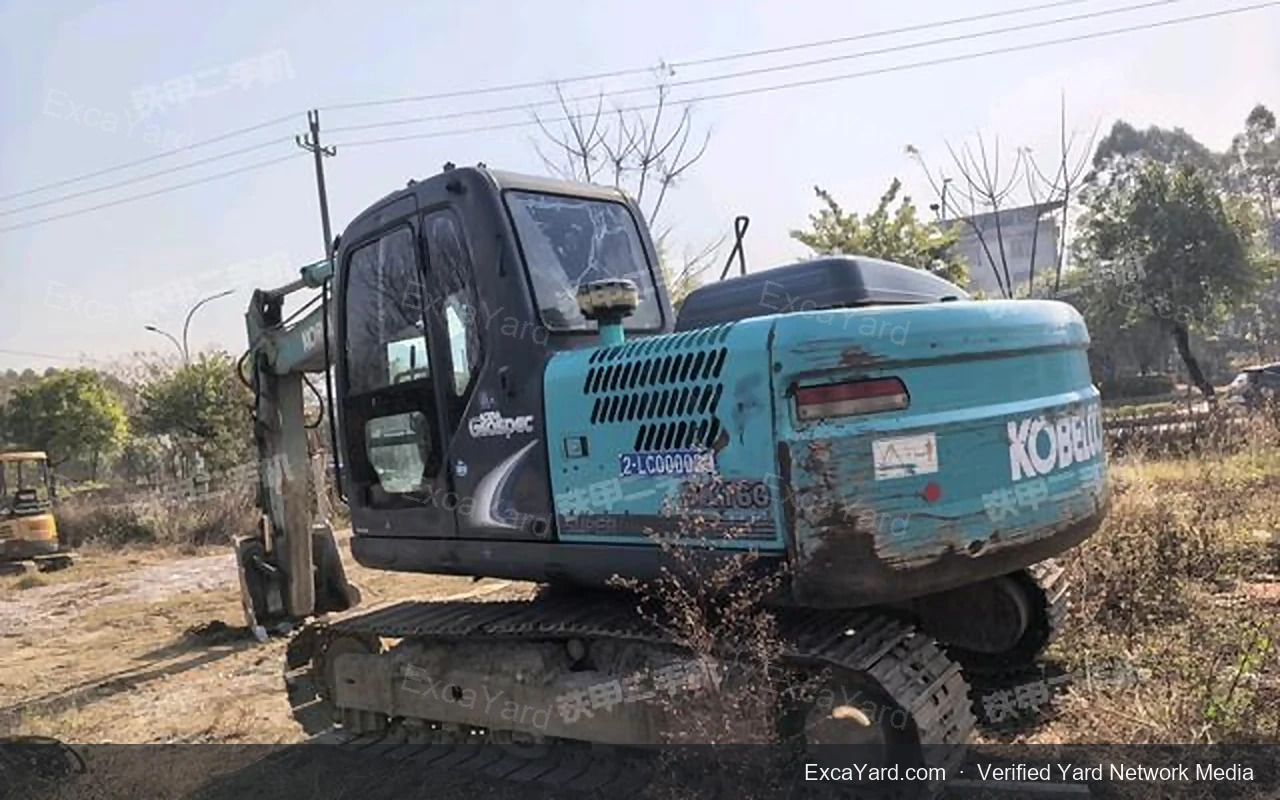
Used Kobelco SK140LC8 Excavator: A 14-Ton Utility and Transport Guide
A used Kobelco SK140LC8 excavator with 4,200 hours, Grade A, listed at $29,000: 14-ton utility fit, transport planning, inspection points and price context.
A used Kobelco SK140LC8 excavator sits in a narrow band of the export market: heavier than the mini machines contractors outgrow, lighter than the 20-tonne units that anchor most rental fleets, and priced between the two. The specific unit behind this guide is a 2021 SK140LC8 with 4,200 hours, a 0.7 m³ bucket, a Grade A listing and a $29,000 asking price, located in Beijing under SKU EXY-KOBESK140LC8-104. The badge matters less than three practical questions: does the work fit 14 tonnes, can you move it economically, and can you prove the hours before you pay?
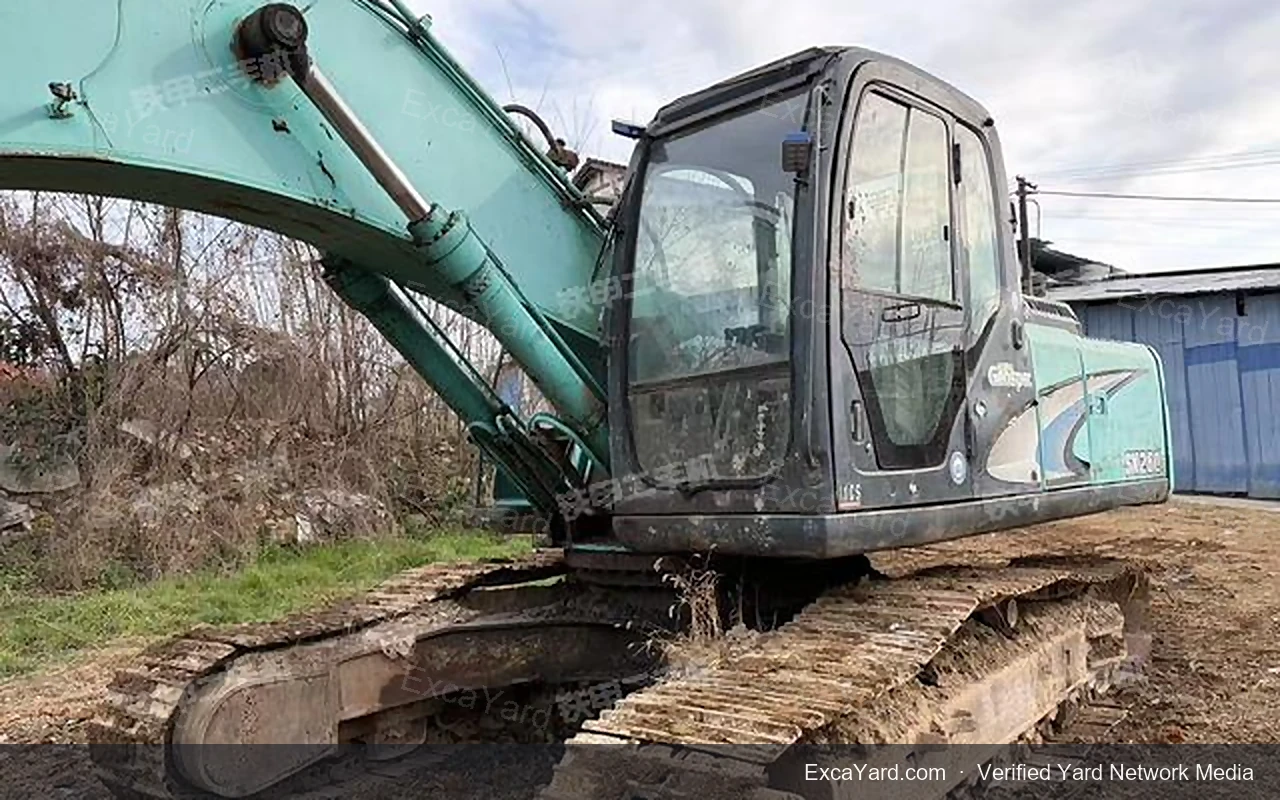
What the listing record actually says
A listing record is not a condition report. It is a set of claims that you should be able to check one by one.
| Field | Listing value | Why it matters |
|---|---|---|
| Year | 2021 | Sets the age band buyers compare against |
| Hours | 4,200 | Drives wear expectations and resale |
| Operating weight | 14.0 t | Decides transport class and job fit |
| Bucket | 0.7 m³ | Defines production per cycle |
| Grade | A | The seller’s own condition band |
| Price | $29,000 | Asking price, not a landed cost |
| Location | Beijing | Yard access and loading port options |
The hour figure deserves the most attention, because it is the one number that quietly prices everything else. Four thousand two hundred hours is low for a 2021 machine, but “low” is only useful if the rest of the machine agrees with it. The grade is a useful starting filter, yet a Grade A label is the seller’s opinion until an inspector confirms it.
Why 14 tonnes is a transport decision before it is a digging decision
At 14.0 tonnes this machine is six tonnes lighter than the 20-tonne class. That difference changes the conversation with your forwarder long before it changes your production rate. A lighter unit usually leaves more loading options open, but “usually” is not a shipping plan. The only reliable source is the exporter’s written loading proposal for this exact unit.
Ask for five things before you compare freight prices:
- Overall transport length, width and height, with the boom in the position it will ship in.
- Whether the boom or arm must be removed, and who does that work.
- The loading method quoted for your destination: container, flat rack or RoRo.
- Whether the price is FOB or CIF, and which port it leaves from.
- Photos or video of a comparable unit actually loaded, with lashing points visible.
Then check the inland leg. A 14-tonne machine is easier to move on a standard low-bed than a 20-tonne unit, but axle limits, bridge restrictions and yard access are local rules, not universal ones. Confirm them with your own transport contractor instead of accepting a dealer’s assurance.
Documentation belongs in the same conversation. Confirm who books the vessel, who prepares the export declaration, what the bill of lading will show, and whether insurance is arranged by you or included. A cheap freight number with unclear document responsibility is not cheap. Ask for the loading plan in writing after the deposit terms are agreed, but before the deposit is sent.
Do not accept “it fits a container” as a fact. It is a dimensional claim, and it should come with dimensions. If a seller cannot produce the measurement sheet, that is information about the seller, not about the machine.
Used Kobelco SK140LC8 excavator: what 4,200 hours means
Four thousand two hundred hours on a 2021 machine works out to roughly 840 hours a year across five calendar years. That is an arithmetic observation, not a verdict. Some owners run a machine seasonally, some keep it as a spare, and some share it across several small sites. The useful move is to ask why the annual average looks the way it does, then check whether the answer matches the wear you can see.
The listing states that hours are verified through the machine’s ECU and service records. That is the correct method for this model, but the method only counts if you receive the evidence. Request:
- A photo of the dash with the hour reading, taken with the machine serial plate in the same frame.
- Service record pages showing dates and hour readings, not just a stamped book cover.
- A cold-start video that begins before the engine turns over, then pans to the dash and around the machine.
- Close-ups of the seat, pedals, joystick boots, track chain and bucket, so you can judge whether the wear fits 4,200 hours.
Consistency is the test. A clean cab, a tight bucket and a track chain with life left should all point in the same direction. When the meter says low hours and the undercarriage says otherwise, stop and ask a second question before you negotiate a third time.
SK140LC8 inspection: where a 14-ton machine hides its costs
On a machine this size, repair bills come from a short list of places. None of them is exotic, and all of them are photographable.
| Component | What to request | Why it decides the deal |
|---|---|---|
| Undercarriage | Track chains, sprockets, rollers, idlers, shoes | Largest predictable wear cost |
| Pins and bushings | Boom, arm, bucket linkage close-ups | Loose pins turn a tight machine into a noisy one |
| Hydraulics | Cylinder rods, hoses, pump area, leak points | Rod scoring and weeping hoses are expensive |
| Swing and travel | Continuous video of swing both ways and straight travel | Reveals delay, noise or drift |
| Bucket | Cutting edge, teeth, side plates | A 0.7 m³ bucket is cheap to inspect, costly to replace |
| Structure | Boom and arm welds, counterweight, serial plate | Repairs and repaints hide here |
Ask for close-ups rather than wide shots, and for one continuous operating video instead of a dozen short clips. A machine that hesitates when boom, arm and swing move together is telling you something that a still photo cannot.
The SK140LC8 price question: $29,000 in context
Price only means something next to alternatives. Most used excavator SK140LC8 for sale listings quote a single number and leave you to guess the context, so start with what else was available in the same snapshot:
| Model | Year | Weight | Hours | Grade | Asking price |
|---|---|---|---|---|---|
| Kobelco SK140LC8 | 2021 | 14.0 t | 4,200 | A | $29,000 |
| Sany SY135C | 2021 | 13.5 t | 5,000 | A | $26,500 |
| XCMG XE150D | 2020 | 15.0 t | 3,900 | A | $26,500 |
| Doosan DX150LC | 2015 | 15.0 t | 6,800 | B | $12,000 |
| Hyundai R150LC9 | 2014 | 15.0 t | 8,400 | B | $12,000 |
Read the table carefully. The Kobelco asks $2,500 more than a 2021 Sany with 800 more hours and a slightly smaller class rating, and the same money as a 2020 XCMG with 300 fewer hours at 15.0 tonnes. The two older 15-tonne units sit at $12,000, but both are Grade B and roughly a decade old. None of this proves the Kobelco is overpriced. It proves the premium is real and that you should make the seller explain it in writing: newer brand support, better documentation, stronger undercarriage, or simply a name.
A fair way to negotiate is to ask what the extra $2,500 buys. If the answer is “Kobelco reliability”, ask for the inspection evidence that supports it. If the answer is a documented service history and a measured undercarriage, you have something to work with.
Who this machine suits, and who should walk away
This 14-tonne unit fits utility and municipal contractors working on trenching, drainage, road shoulders, smaller foundations and site preparation. It also suits rental fleets that need a lighter machine to move between jobs, and dealers serving buyers whose sites cannot take a 20-tonne unit.
It does not fit quarry face loading, continuous rock work or any job where the 0.7 m³ bucket is the bottleneck. It is not a replacement for a 20-tonne production machine, and it is not a good buy for someone who cannot inspect it or arrange a third-party inspection. If your local parts channel cannot support Kobelco, the purchase price is only the first cost you will struggle with.
Attachments deserve an early decision. If your work alternates between trenching and general digging, ask whether a second bucket or a quick coupler is available and what it costs to bundle before shipment. Buying an attachment later means paying freight twice and losing working days in between.
Payment, parts and how ExcaYard fits in
The listing’s payment terms are T/T with a 30% deposit and 70% before shipment, or L/C at sight. Confirm in writing what the $29,000 includes: the bucket, any spare parts, loading, export declaration, and whether the quote is FOB or CIF. Insurance and inland transport are usually separate, and they should be separate lines in the quote rather than vague promises.
Kobelco parts are available through global distributors and the ExcaYard network. If you are shipping to a market where filters and seals are not on the shelf, price a first-service kit with the machine. Small parts are cheapest to move while the machine is already moving.
ExcaYard is a verified yard network, not a single owned yard. We check units held by partner yards, collect condition evidence, arrange inspection access and coordinate documents. You are not asked to trust a listing photo; you are asked to review evidence that can be traced to a specific serial number.
FAQ: used Kobelco SK140LC8 excavator
Is a used Kobelco SK140LC8 excavator a sensible first import? It can be, if your job list genuinely fits a 14-tonne, 0.7 m³ machine. The main risks on a first import are logistics and verification, not the brand. Budget for freight, insurance, inland transport and a first-service kit before you compare offers.
How can I verify the 4,200 hours? The listing’s method is ECU reading plus service records. Ask for a dash photo with the serial plate visible, service pages with dated hour readings, and a cold-start video. Then compare cab and undercarriage wear against the claimed figure.
What does the $29,000 include? That is the asking price for the machine as listed. It does not automatically include freight, insurance, spare parts or loading extras. Ask for an itemised include-and-exclude list before you send a deposit.
Can I inspect the used Kobelco SK140LC8 excavator before paying? Yes. Request a continuous operating video first, then arrange a third-party inspection or ask ExcaYard to coordinate access to the yard. A deposit should follow evidence, not replace it.
Next step
If the 14-tonne class fits your work, start with the full record on the used Kobelco SK140LC8 excavator page, compare it with other Kobelco units in the network, then send your destination port and job type. If a 15- or 20-tonne machine is the better use of your money, we will say so.
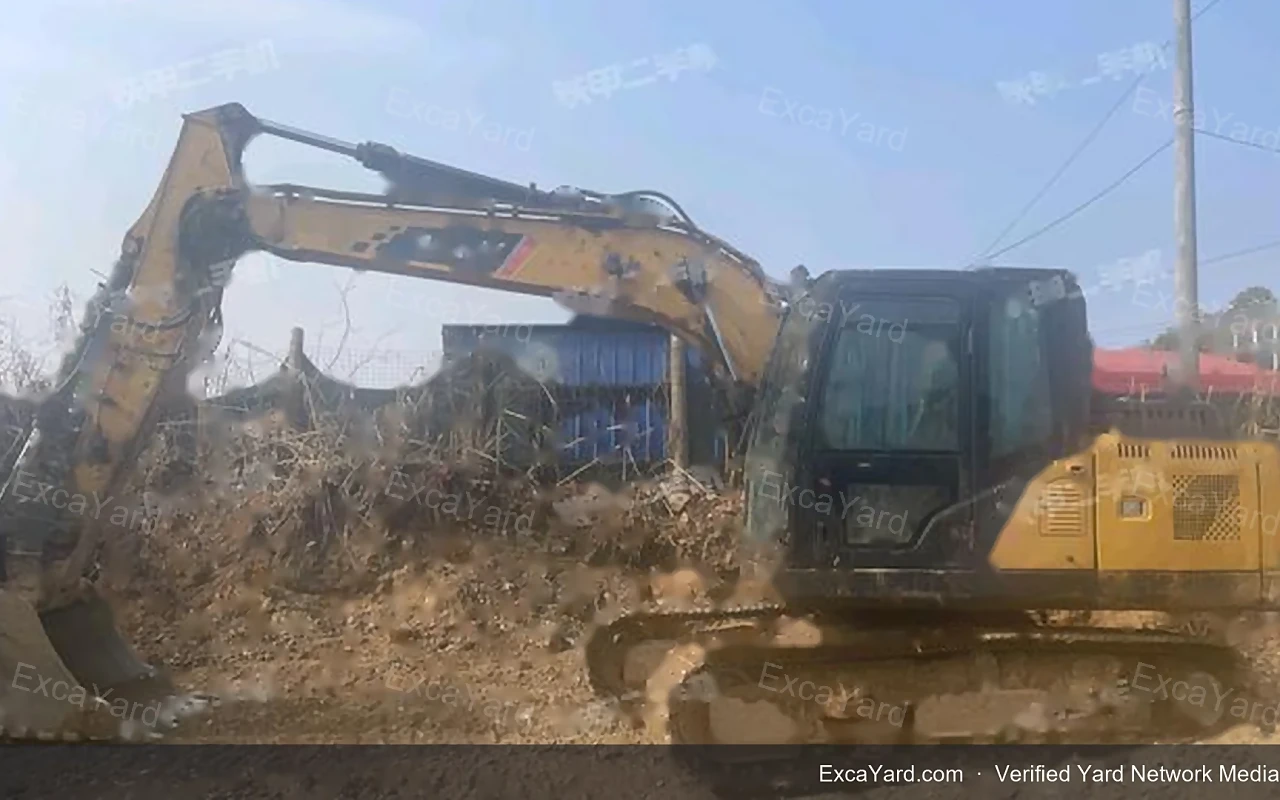
Used Sany SY135C excavator at $26,500: 13.5 tonnes and the transport argument
A used Sany SY135C excavator, 2021, 5,000 hours, Grade A, $26,500 — why the lightest machine in the group costs the most per tonne, and when transport beats bucket size.
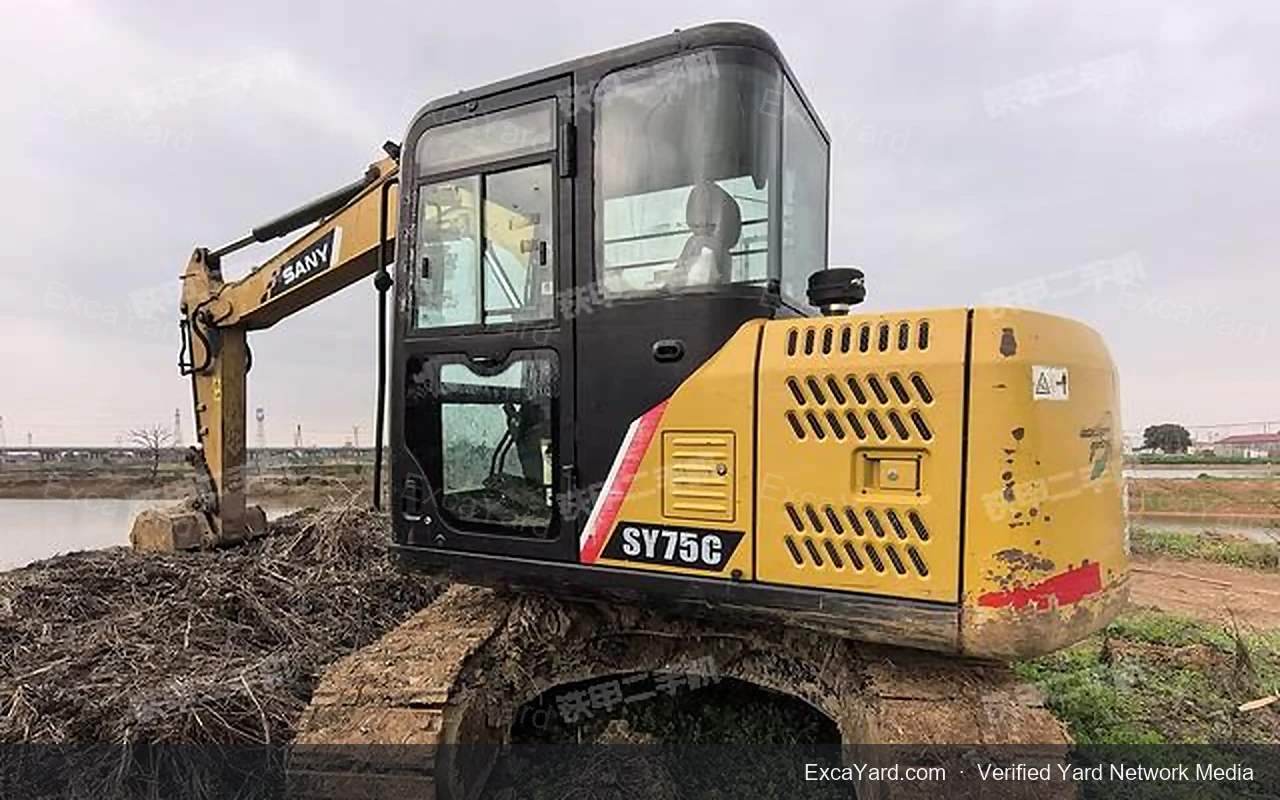
Used Sany SY75C Excavator: A $12,000 7.5-Ton Rental Unit
Used Sany SY75C excavator review for rental fleets and utility contractors: 2017, 4,685 hours, 7.5 tons, 0.38 m³, $12,000. Fit test, hour math, container plan and inspection points.
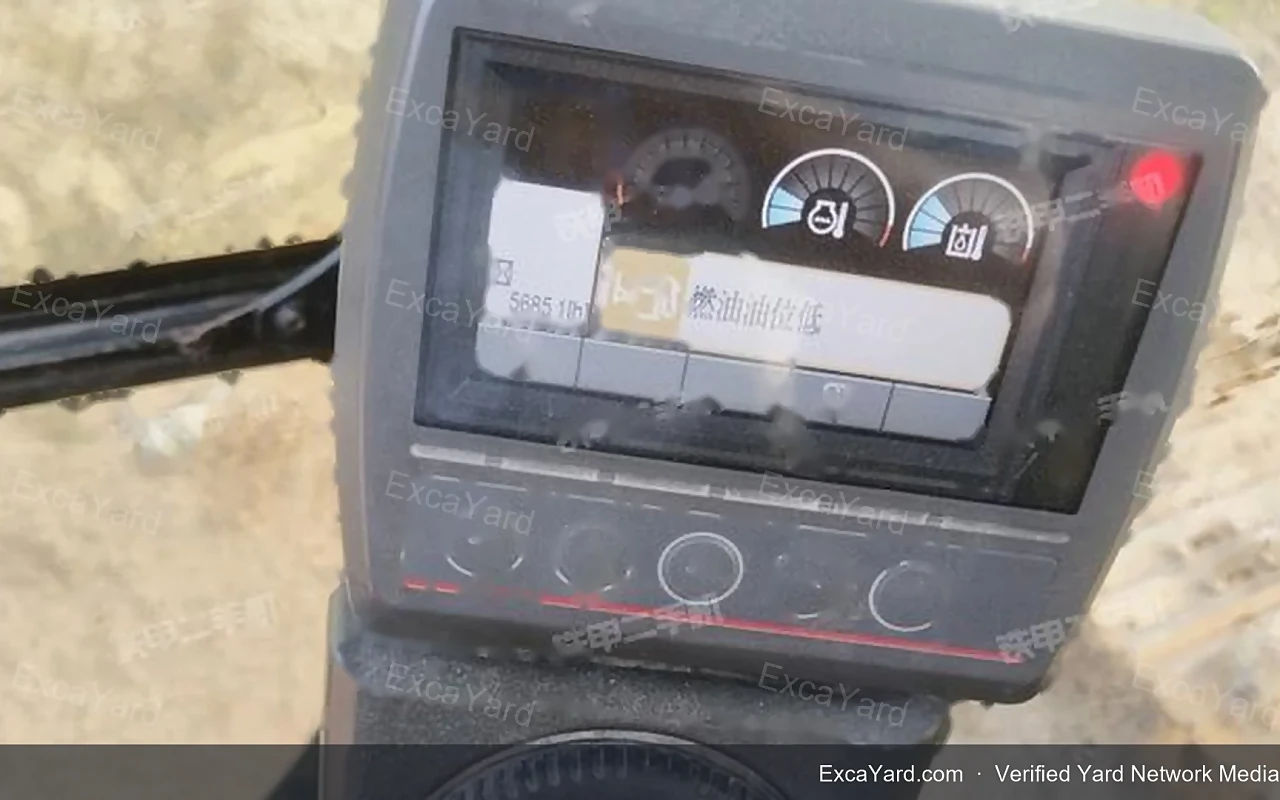
Used Caterpillar 313D2GC Excavator: 13-Tonne Class vs 20-Tonne, and the Freight Bill
Used Caterpillar 313D2GC excavator, 2021, 5,600 hours, Grade A, $35,500. Why the 13-tonne class changes your transport options, and what to reconcile before booking freight.