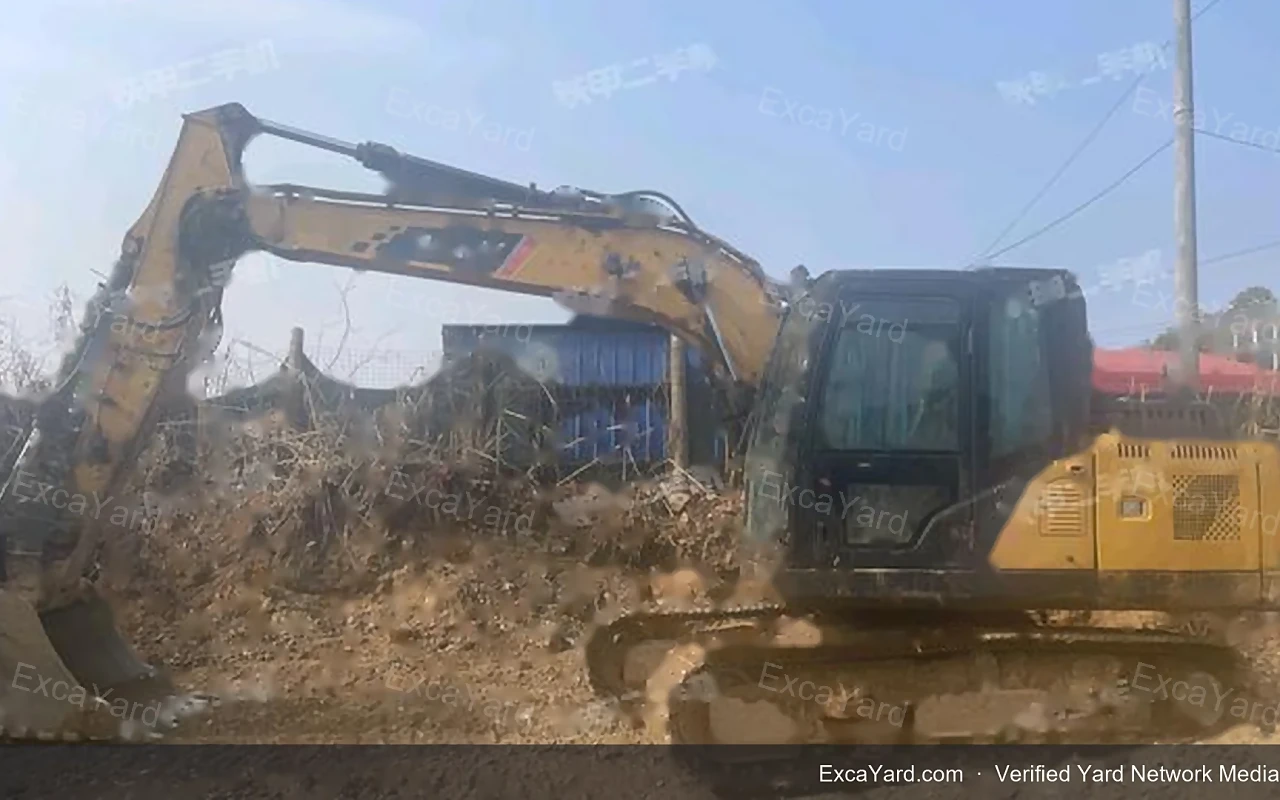
Used Sany SY135C excavator at $26,500: 13.5 tonnes and the transport argument
A used Sany SY135C excavator, 2021, 5,000 hours, Grade A, $26,500 — why the lightest machine in the group costs the most per tonne, and when transport beats bucket size.
This is the smallest machine in the group and the most expensive per tonne. A used Sany SY135C excavator listed at $26,500 with 5,000 hours, 2021, Grade A, 13.5 tonnes and a 0.68 m³ bucket sits in Meishan, Sichuan — lighter than both 20-tonne units and priced above them. That looks wrong until you run the numbers the right way, and then it becomes a straightforward question about what your sites and your truck can actually handle.
The price inversion, explained
| Unit | Year | Hours | Weight | Bucket | Grade | Price | Per tonne |
|---|---|---|---|---|---|---|---|
| SY205C | 2020 | 8,500 | 20.5 t | 1.03 m³ | B | $20,000 | $976 |
| SY200C | 2022 | 7,800 | 20.0 t | 1.0 m³ | A | $25,000 | $1,250 |
| SY135C | 2021 | 5,000 | 13.5 t | 0.68 m³ | A | $26,500 | $1,963 |
Per tonne, the 13.5-tonne machine costs about twice what the 2020 SY205C does. That is not a pricing error; it is what happens when steel is not the thing being sold. This unit has the lowest hours in the group, a Grade A result and a calendar year in between the other two. Small machines also live in a different demand pool: utility contractors, plant hire firms and municipal work, where a 13.5-tonne excavator is the largest machine a customer will accept on site.
The lesson for a buyer is that “price per tonne” is a diagnostic, not a valuation. It tells you this unit is priced on condition and hours. Whether that premium is worth paying depends on your access, your transport and your job mix — not on the sticker.
Five thousand hours in five years
Five thousand hours over five model years averages 1,000 hours a year, around 83 hours a month. In this class, that reads as light commercial use: a machine that worked regularly but not punishingly, with time for maintenance between jobs. The Grade A result is consistent with that profile, though consistency is not proof.
Two things still need checking. A low-hour machine that sat idle for long stretches can have dried seals and a flat battery history, so ask how it was stored between jobs. And low hours do not describe the duty cycle: 5,000 hours of breaker work on rock is a different machine from 5,000 hours of loading loose spoil. Ask for the hour reading from the last service as well as today’s; the pair shows whether the machine has been working recently or standing.
What 0.68 m³ changes about the job
Compare bucket volumes and the productivity gap is easy to state. The SY135C carries 0.68 m³ against 1.03 m³ on the SY205C — about 34% less per cycle — and against 1.0 m³ on the SY200C, roughly 32% less. To move the same volume, the smaller machine needs about one and a half cycles for every cycle of the 20.5-tonne unit.
That is the whole case against this machine in one sentence, and it deserves to be stated plainly before any argument in its favour. If your work is volume — bulk excavation, truck loading, large site cut and fill — the 13.5-tonne class will cost you more per cubic metre in operator time and fuel, and no amount of careful maintenance changes the bucket. In that scenario, the $20,000 SY205C is both cheaper to buy and more productive.
Transport and access: where this class earns its premium
The reason to buy 13.5 tonnes instead of 20 is rarely the machine. It is the journey and the site. The weight difference is 6.5 to 7 tonnes depending on which 20-tonne unit you compare against, and that gap changes what can move the machine, what route it can take, and what a customer will let onto a confined site.
Plan transport before you plan the purchase. The items to confirm, in writing, with a forwarder and a haulier:
- Measured dimensions with the boom and arm in the shipping position, not catalogue figures.
- Whether container loading is feasible for this unit and how much dismantling it needs.
- Flat rack and RoRo alternatives if container loading is not practical.
- Low-bed capacity and axle loading for the inland leg.
- Route restrictions, permits and weight limits between port and yard.
- Site access: gate width, overhead clearance, ground bearing and turning space.
None of those can be settled from a spec sheet, and all of them can kill a deal after the deposit. Ask for the shipping-position drawing rather than a verbal assurance; the gap between a quoted method and a measured one is where port surprises come from. A machine that is 7 tonnes lighter is easier to move on every one of those points, and in markets where haulage is scarce or expensive, that ease is the whole business case.
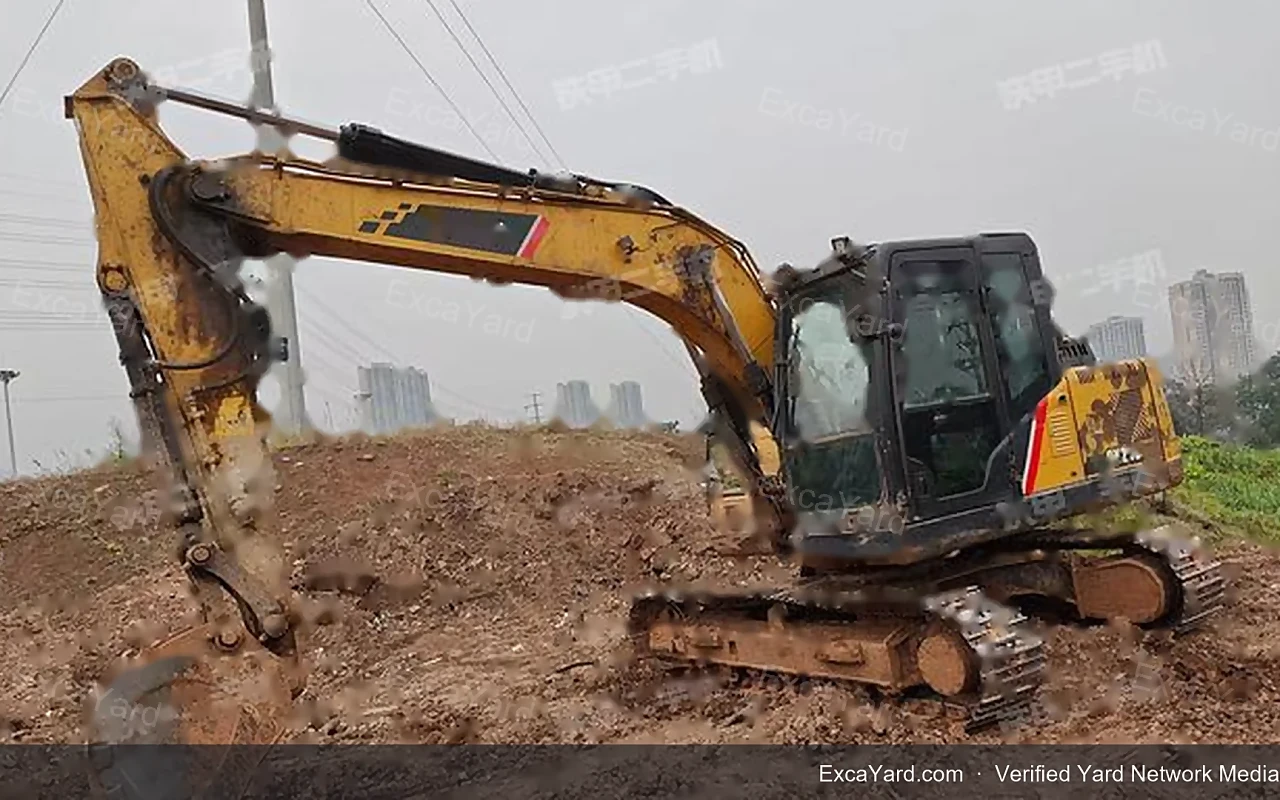
Why this used Sany SY135C excavator carries Grade A
Grade A is the top inspection band in the ExcaYard system, and on a machine with 5,000 hours it should be read as “little to argue about”, not “nothing to check”. The report still needs a date, a serial number and an itemised list. On a 13.5-tonne unit, the items that most often appear are cosmetic — panel damage, decals, seat and cab trim — plus small hydraulic seepage and air-conditioning performance. None of those are structural, and all of them are negotiable.
Ask what the grade was based on. If the answer is a walkaround and a wash, the letter means little. If the answer is a cold start, a hydraulic warm cycle, undercarriage measurements and a leak check under load, the letter is worth something. The difference between those two answers is the difference between a report and a compliment.
Inspection priorities on a 13.5-tonne machine
The checklist is the same as for any excavator, but the emphasis shifts. Undercarriage wear is proportionally a larger share of a small machine’s value, so measure it rather than eyeballing it. Hydraulic response at low idle tells you more about pump condition than a full-throttle demonstration. And because these machines often work in tight spaces, check the boom, arm and cab corner for impact damage that a site photo will not show.
Run the sequence cold, then warm. Cold start, idle quality, smoke. Then boom, arm, bucket, swing and travel through full ranges with the oil hot. Then pins and bushings, bucket teeth, leak points, electrics and the monitor. Finish with the serial plate, hour meter and any service records. Video the whole thing, or have someone independent do it; a 13.5-tonne machine is small enough that a thorough inspection takes an afternoon.
The 20-tonne counter-argument
Here it is in full, because it is strong. The SY205C costs $6,500 less, carries a bucket more than a third larger, and is in the same yard network. On an open site with steady volume work, it will out-earn this machine and pay back faster. The SY200C costs $1,500 less, is a year newer, and carries a 1.0 m³ bucket.
The SY135C wins when the constraint is not volume. Narrow urban plots, utility and drainage contracts, road works with lane closures, rental fleets serving small contractors, and any market where moving a 20-tonne machine between jobs is a project in itself. It also wins where a single low-bed can handle 13.5 tonnes but not 20, which is a common situation in secondary cities and cross-border work.
Decide the constraint first — volume, access or haulage — then pick the class. Buying the bigger machine and discovering the site cannot take it is an expensive way to learn this.
Freight planning before the deposit
Meishan, Sichuan, is inland. That matters: the inland leg to a loading port is part of the landed cost, and it should be quoted rather than assumed. Ask for the full route — yard to port, port handling, ocean freight, destination port charges, inland delivery — and ask for it in one document so the numbers can be compared with a coastal listing.
Then add the items that are easy to forget: marine insurance, attachments you want bundled, a spares package, and the cost of an inspection if you are buying remotely. The machine price is the smallest part of the decision, and the only part that is easy to see.
Next step
The full photo set and specification for this unit are on the used Sany SY135C excavator page, with the range under Sany. Send your site access constraints, haulage options and destination port through the contact form and the yard can price this machine against the two 20-tonne alternatives on the same freight basis.
FAQ about this used Sany SY135C excavator
Why is this used Sany SY135C excavator more expensive than a 20-tonne one? Because price follows hours, grade and year, not weight. This unit has 5,000 hours and a Grade A result, while the $20,000 SY205C has 8,500 hours and Grade B.
Is 5,000 hours low for a 2021 machine? It is about 1,000 hours a year, which is light commercial use for this class. Stored condition and duty cycle still need checking.
Can it be shipped in a container? Often yes for this weight class when dismantled, but the decision must be based on measured dimensions for this specific unit, not the model name.
Will it keep up with a 20-tonne machine on volume work? No. A 0.68 m³ bucket moves roughly a third less per cycle than a 1.03 m³ bucket, so it needs about one and a half cycles for the same volume.
What does Grade A cover? The inspection band with the fewest open items. It is not a warranty, and the itemised report still matters more than the letter.
Is the inland location a problem? It adds an inland haulage leg to the landed cost. That is a quoting exercise, not a defect, but it should be priced before you compare this unit with a coastal listing.
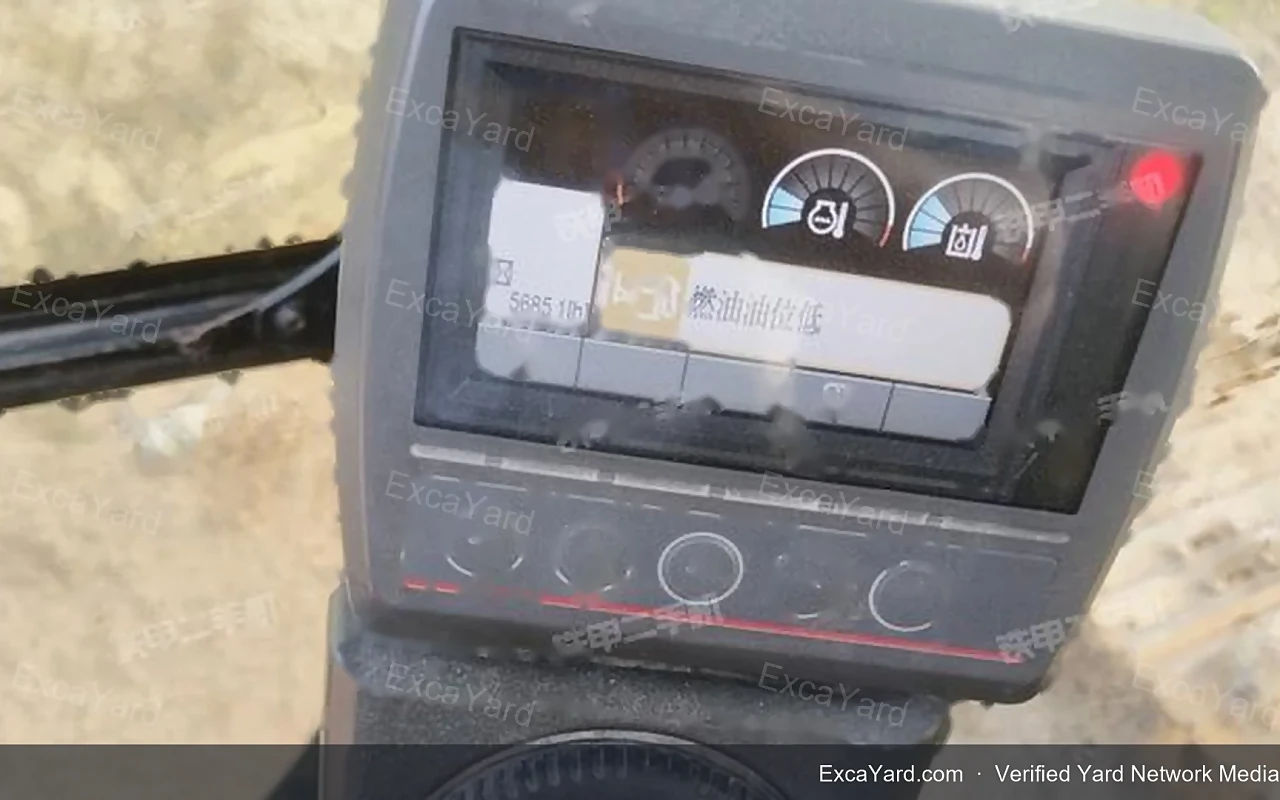
Used Caterpillar 313D2GC Excavator: 13-Tonne Class vs 20-Tonne, and the Freight Bill
Used Caterpillar 313D2GC excavator, 2021, 5,600 hours, Grade A, $35,500. Why the 13-tonne class changes your transport options, and what to reconcile before booking freight.
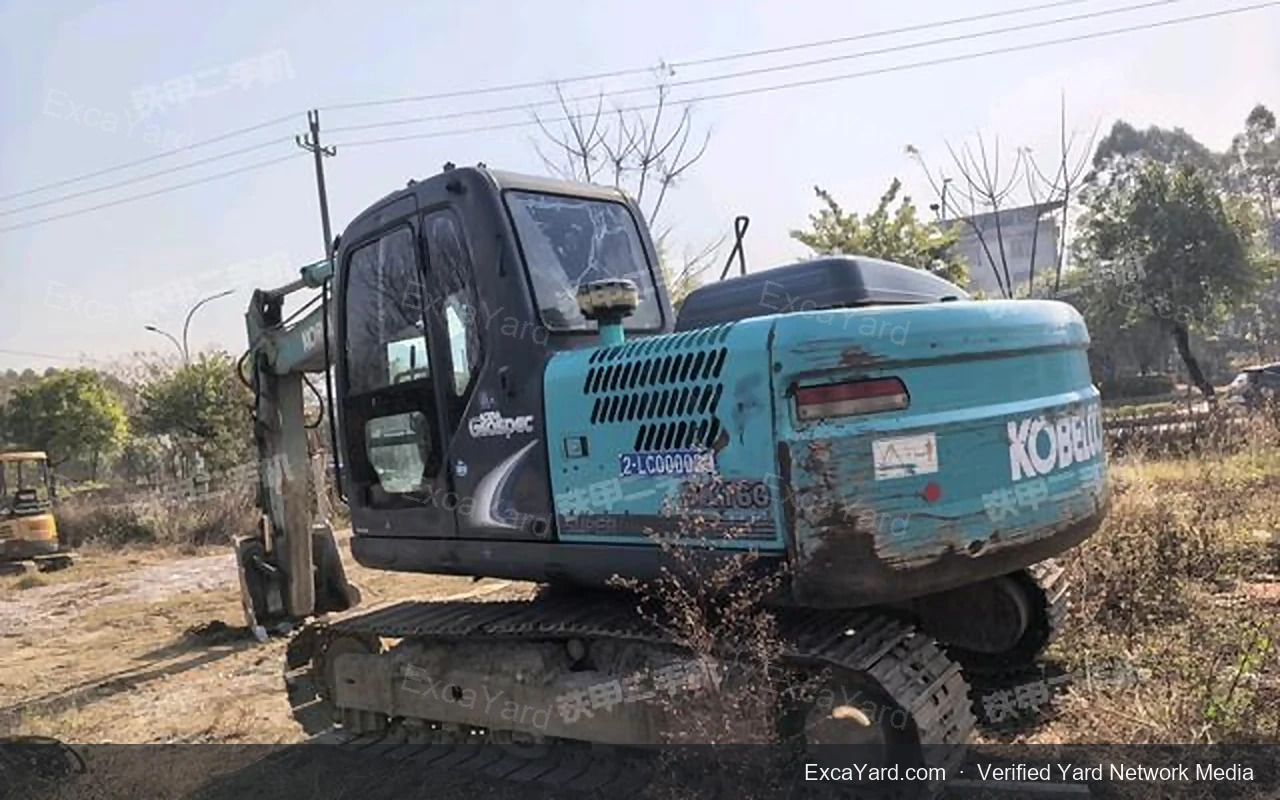
Used Kobelco SK140LC8 Excavator: A 14-Ton Utility and Transport Guide
A used Kobelco SK140LC8 excavator with 4,200 hours, Grade A, listed at $29,000: 14-ton utility fit, transport planning, inspection points and price context.
Used Sany SY200C excavator at $25,000: buying the 2022 unit for resale
A used Sany SY200C excavator, 2022, 7,800 hours, Grade A, $25,000 — how the newer 20-tonne unit compares on hours per year, grade evidence, and the resale questions that matter.