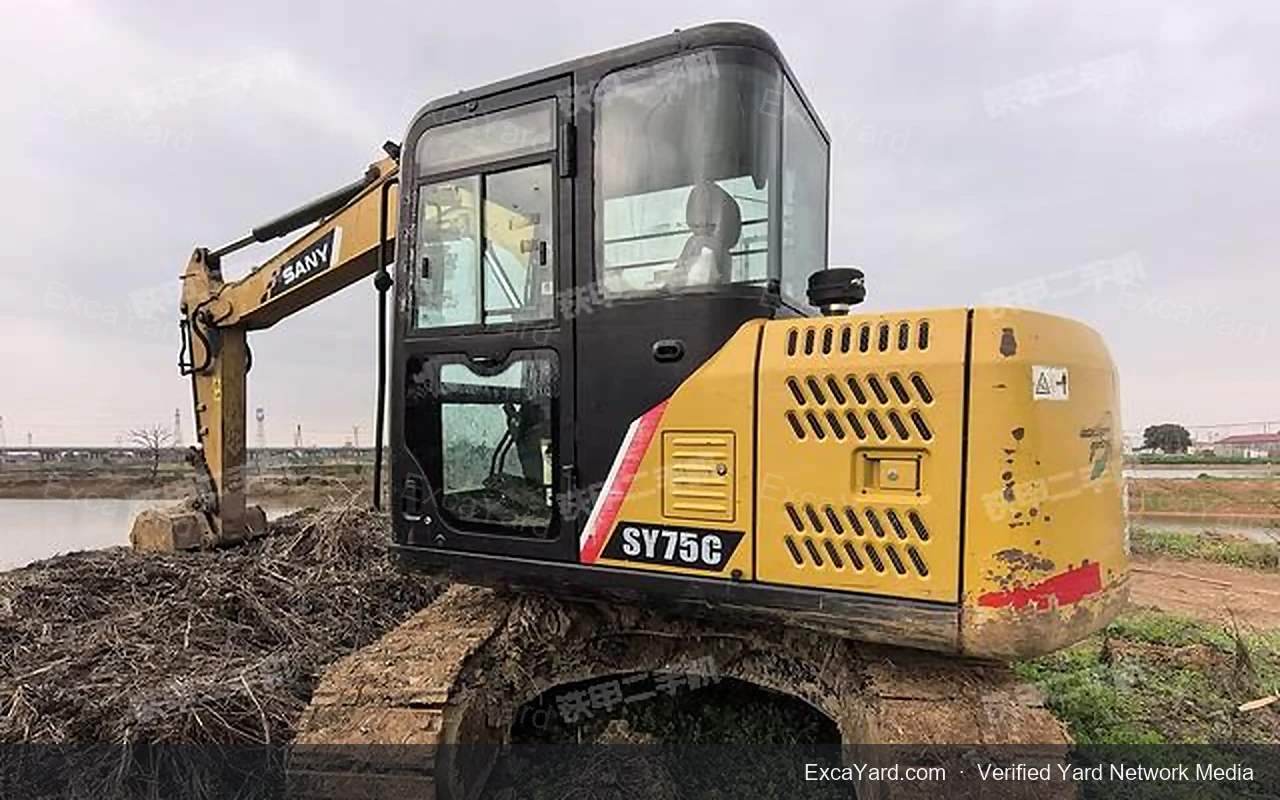
Used Sany SY75C Excavator: A $12,000 7.5-Ton Rental Unit
Used Sany SY75C excavator review for rental fleets and utility contractors: 2017, 4,685 hours, 7.5 tons, 0.38 m³, $12,000. Fit test, hour math, container plan and inspection points.
A used Sany SY75C excavator is the smallest machine on most export buyers’ shortlists and the one that decides whether a rental fleet can serve compound work, utility trenches and landscaping jobs that a 20-ton machine never reaches. This unit, stock EXY-SANYSY75C-188, is a 2017 machine with 4,685 hours, 7.5 tons operating weight, a 0.38 m³ bucket and a Grade A condition note, listed at $12,000 FOB Shanghai from a partner yard in Xingtai, Hebei.
The listing sheet is short, so this article stays close to it. Anything not on the sheet is a question to ask, not a detail to assume.
Start with the listing, not the brand story
| Field | Listing |
|---|---|
| Stock number | EXY-SANYSY75C-188 |
| Year | 2017 |
| Hours | 4,685 |
| Operating weight | 7.5 t |
| Bucket | 0.38 m³ |
| Grade | A |
| Price | $12,000 FOB Shanghai |
| Yard | Partner yard, Xingtai, Hebei |
| Availability | In stock at the time of listing |
Those nine lines are the whole factual basis for a buying decision. Everything else in this article is either arithmetic, a question to ask the yard, or a judgement about fit. That order matters: buyers who fall in love with a paint job before they read the sheet usually pay for it later.
What the used Sany SY75C excavator actually is
The SY75C is a 7.5-ton mini excavator. The class matters more than the badge. At 7.5 tons with a 0.38 m³ bucket, this is a machine for trenching, drainage, landscaping, small demolition and utility work, not a scaled-down 20-ton excavator. Its value is access: narrow plots, compound walls, farm roads and urban repair jobs where a larger machine cannot set up.
Sany’s own position in the export market is price-to-performance. ExcaYard’s Sany brand page describes the company as China’s largest construction equipment maker and notes that used Sany resale typically sits 10-20% below Japanese equivalents. That discount is already baked into the $12,000 ask, so do not expect Japanese-brand resale performance from a Chinese-brand machine. Expect a lower entry price and a buyer pool that cares more about the work than the badge.
This is also not a micro excavator. At 7.5 tons it is a real machine with a real undercarriage, and moving it still needs planning. It is simply easier planning than a 20-ton unit.
Used Sany SY75C excavator price: what $12,000 covers
The SY75C price on this unit is $12,000 FOB Shanghai. That is an FOB quote: the machine, loading to the port and export documentation. It does not mean the machine in your yard. Ocean freight, insurance, import duty, port charges, inland haulage and any reassembly after container loading sit outside that number.
A useful sanity check is price per ton. At $12,000 for 7.5 tons, this unit costs about $1,600 per ton. A 20-ton machine at $12,000 costs about $600 per ton. Small machines are more expensive per kilogram because the engine, hydraulics, cab and undercarriage do not shrink in proportion to weight. Buyers who compare raw tonnage across classes are comparing the wrong number.
There is a second number that matters more: the cost per billable hour. That depends on utilisation, not on the purchase price. Buyers comparing a used excavator SY75C for sale elsewhere should put the inspection pack and the landed cost side by side.
Hours: 4,685 is a claim to test, not a feature
Run the arithmetic. A 2017 machine listed in 2026 has had roughly nine years in service. At 4,685 hours, that is about 520 hours a year, or 43 hours a month. That is a light-duty pattern: short utility jobs, rental stints, seasonal work, or long periods parked between contracts.
The seller states the hours are verified through the machine’s ECU and service records. That is a stronger claim than a meter photo, but it is still a claim. Ask for three things before you rely on it:
- A photo of the monitor showing 4,685 with the machine’s serial plate in the same frame.
- A cold-start video, filmed before the engine is warmed.
- The service record pages that correspond to the hour readings.
Low hours on an older machine also mean long idle periods, and idle time has its own wear pattern: hardened seals, flat-spotted tyres on support equipment, stale fuel, tired batteries and hoses that crack before they fail. A 4,685-hour machine is not automatically healthier than a 7,000-hour machine that ran steadily. It is a different risk profile, and the inspection should target it.
Rental arithmetic you can do before you wire money
Rental buyers do not need a forecast. They need a break-even line. Use this formula with your own local numbers:
Capital recovery per billed day = (unit price + freight + preparation + first parts bundle) ÷ billed days in year one
A worked example, with the assumptions stated plainly:
| Item | Assumption |
|---|---|
| Unit price | $12,000 |
| Ocean freight (midpoint of the listed $1,500-2,500 range) | $2,000 |
| Preparation and first parts bundle | $800 |
| Total capital | $14,800 |
| Billed days in year one | 180 |
| Capital recovery per billed day | $82 |
At 120 billed days the same capital needs $123 per day. That money comes first. Fuel, operator wages, maintenance, insurance and repairs come out of whatever the day rate leaves after that. If your market cannot support the resulting rate, the machine is not a bargain at any purchase price.
This is arithmetic, not a market forecast. The point is to find the utilisation floor before you buy, because a mini excavator that sits is worse than a 20-ton machine that sits: it earns less per day and still consumes yard space, insurance and attention.
Where a 7.5-ton machine earns, and where it does not
Good fits:
- Utility and telecom trenching in built-up areas
- Drainage and small foundations
- Landscaping, farm access and site cleanup
- Small demolition where a larger machine cannot enter
- Rental to small contractors who do not need 20 tons
Poor fits:
- Quarry faces and mass excavation
- Loading 30-ton trucks at production rates
- All-day hydraulic breaker work in hard rock
- Deep drainage or long-reach work
- Any job where the 0.38 m³ bucket is the bottleneck
The bucket size is the honest limit. A 0.38 m³ bucket means more cycles per truck and lower tonnes per hour than a 20-ton machine. That is acceptable when access is the constraint and unacceptable when production is the constraint. Write down which one your job is before you enquire.
The container decision
The listing gives two loading options: a 40ft container with the machine dismantled, or RoRo. Estimated freight is $1,500-2,500 depending on method, with transit of 20-30 days to Africa and 25-35 days to South America.
Both options have hidden work. Container loading is cheaper on freight but adds dismantling, packing, and reassembly at destination. Demand a dismantling photo set, a removed-parts list, lashing photos inside the container and a packing list that matches the bill of lading. Missing pins, hoses and brackets are a classic first-week cost. RoRo keeps the machine assembled but requires a clean, drivable unit and port handling at both ends.
For a single unit, the freight difference between the two methods is small compared with the cost of a bad reassembly. Choose the method your destination port and your mechanic can actually support.
Mini-specific inspection: what decides the deal
Small machines are easier to repaint and harder to inspect than they look, so the SY75C inspection has to be physical rather than photographic. The listing claims Grade A: no major repairs, no leaks, no structural issues, 70% track life, cosmetic scratches but no rust. Treat each as a line item to verify.
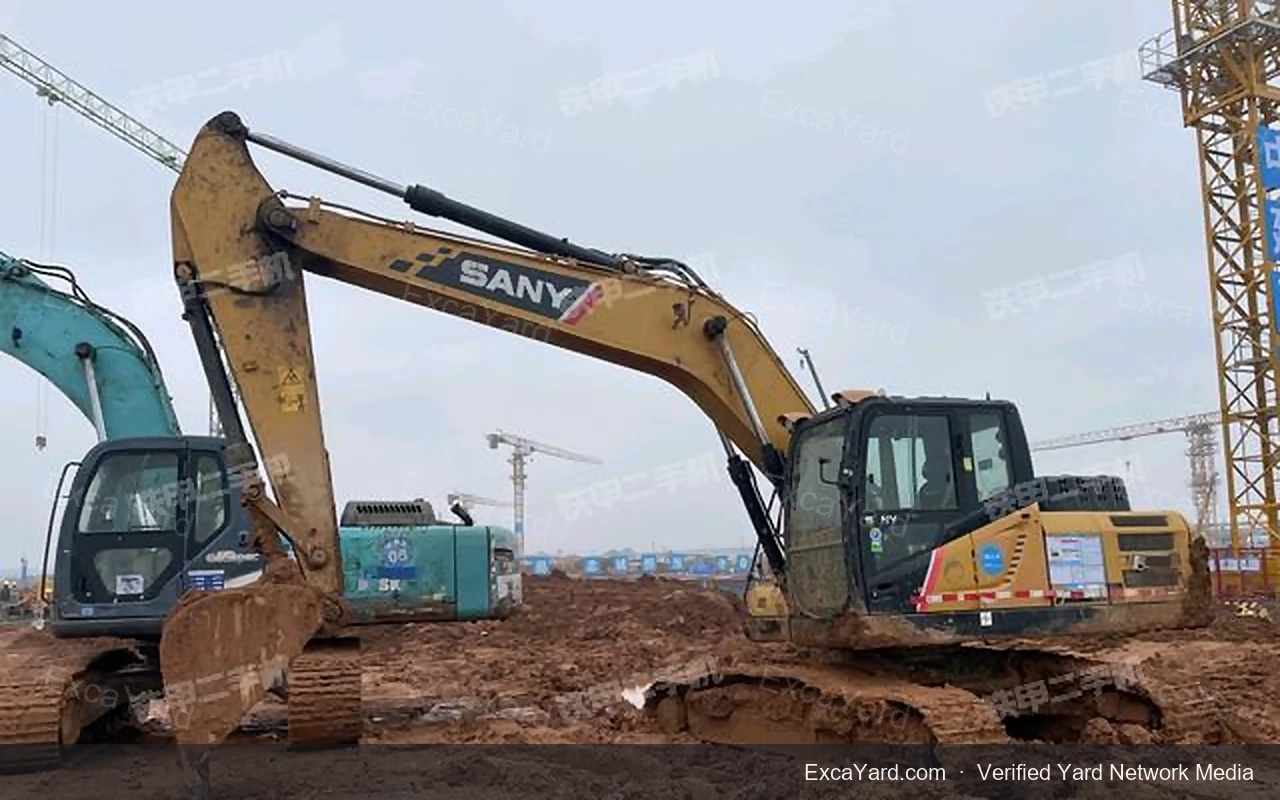
Check in this order:
- Cold start. White smoke for a few seconds is normal. Blue or white smoke at operating temperature is not.
- Full hydraulic cycle. Boom, arm, bucket, swing. Listen for cavitation and watch for drift.
- Both travel motors. Forward and reverse on each side, at low speed and high speed if the machine offers it.
- Slew play. Side-to-side movement with the bucket raised tells you about swing bearing and pin wear.
- Undercarriage. Track height, bushing wear, sprocket teeth and roller condition. The 70% claim should be visible, not asserted.
- Pins and bushings. Bucket, arm and boom play under load.
- Leaks and structure. Look under the machine after it has run, and inspect boom and arm welds.
- Cab and monitor. Controls, gauges, hour display, any fault codes.
A Grade A label is a description of the unit at listing, not a warranty. The inspection is what converts it into a decision.
Parts, service and resale
Sany parts are available through the network and local dealers, and the listing states that common wear parts are in stock. For a first shipment, bundle filters, bucket teeth, seals and a set of hoses. The goal is to start earning on arrival, not to wait three weeks for a filter.
Resale is the weaker side of the Sany case. The 10-20% discount to Japanese brands applies when you sell as well as when you buy. If you plan to hold the machine for five years and sell into the same small-contractor market, that is manageable. If you need maximum liquidity in a hurry, a Japanese-brand mini typically has a wider buyer pool.
Who this unit fits
- A rental fleet adding a small unit to serve contractors who cannot use a 20-ton machine.
- A utility or landscaping contractor buying their first excavator.
- A dealer with existing demand for 7-8 ton machines.
- An importer testing a new market with a low capital commitment.
It does not fit a buyer who needs 20-ton production, a buyer who wants a new-machine warranty, or a buyer whose local market has no Sany parts support.
Verify, then pay
Ask for the cold-start video, the hydraulic cycle video, undercarriage photos from both sides, the serial plate and the service records before you discuss price. The listed terms are 30% deposit by T/T and 70% before shipment, with L/C at sight also accepted. Keep the balance tied to a completed inspection, and use a surveyor you appoint rather than one the seller recommends.
If the videos and records line up, the decision comes down to utilisation. If they do not, walk away. There are other 7.5-ton units, and the cost of a bad first import is much higher than the cost of waiting a month.
FAQ
Is the used Sany SY75C excavator still available? Availability changes. The current status and photos are on the used Sany SY75C excavator listing EXY-SANYSY75C-188, which is updated from the yard.
Are the 4,685 hours verified? The seller states they are verified through the ECU and service records. Ask for the monitor photo, the cold-start video and the matching service pages, then have your inspector confirm the display and the wear pattern.
What will shipping cost? The listing estimates $1,500-2,500 depending on container or RoRo, with 20-30 days transit to Africa and 25-35 days to South America. Those are estimates, not quotes. Ask for a current CIF number to your port, including insurance.
Can it ship in a container? Yes, dismantled in a 40ft container, or assembled via RoRo. Container loading is cheaper on freight but requires documented dismantling and reassembly at destination.
What are the payment terms? 30% deposit by T/T, 70% before shipment. L/C at sight is also accepted according to the listing.
Next step
If you are building a rental fleet around small utility work, this is the class to start with. Send the destination port, the expected monthly hours and the attachments you need through the contact page, and ask for the inspection pack on this specific unit before you compare it with anything else.
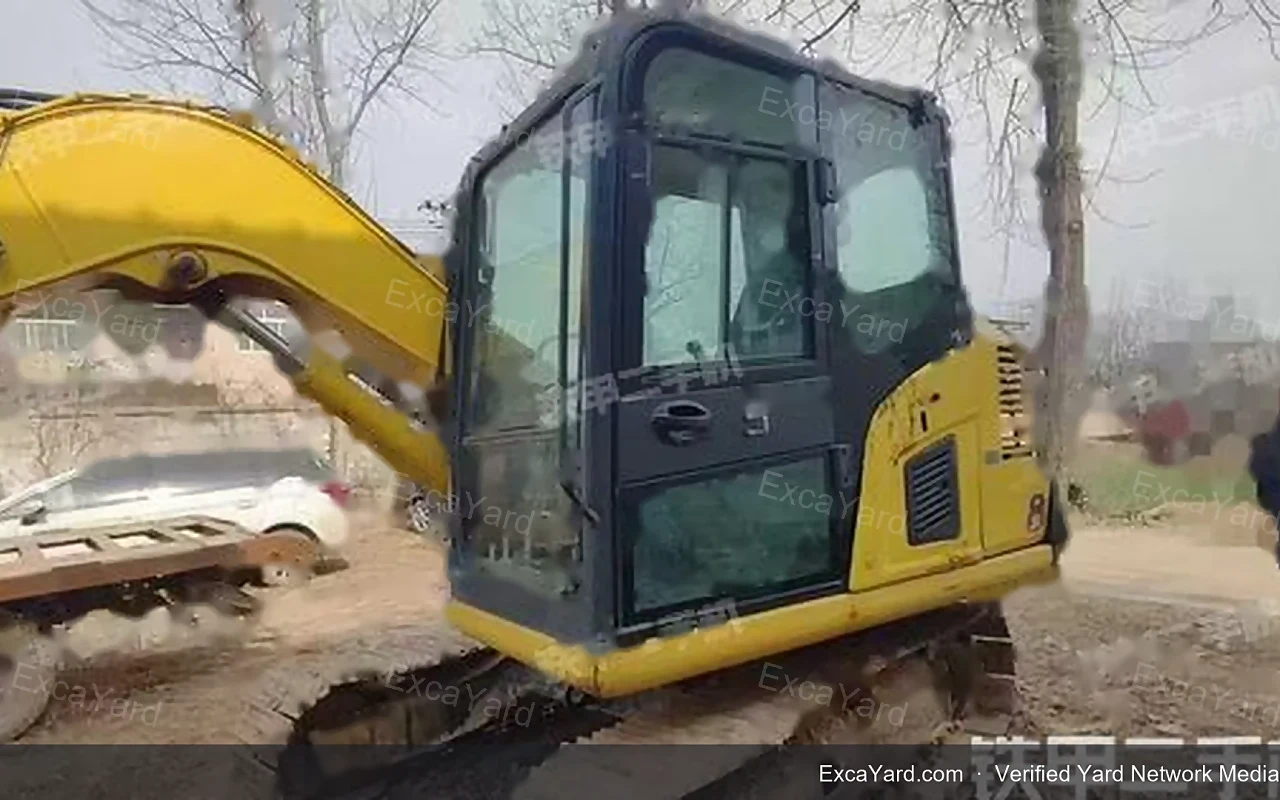
Used Komatsu PC60 from China: Mini Excavator Export Guide for Dealers and Rental Fleets
A buyer-focused guide to used Komatsu PC60 excavators from China: mini excavator search keywords, inspection points, spare parts, container loading and CIF quote logic for dealers and rental fleets.
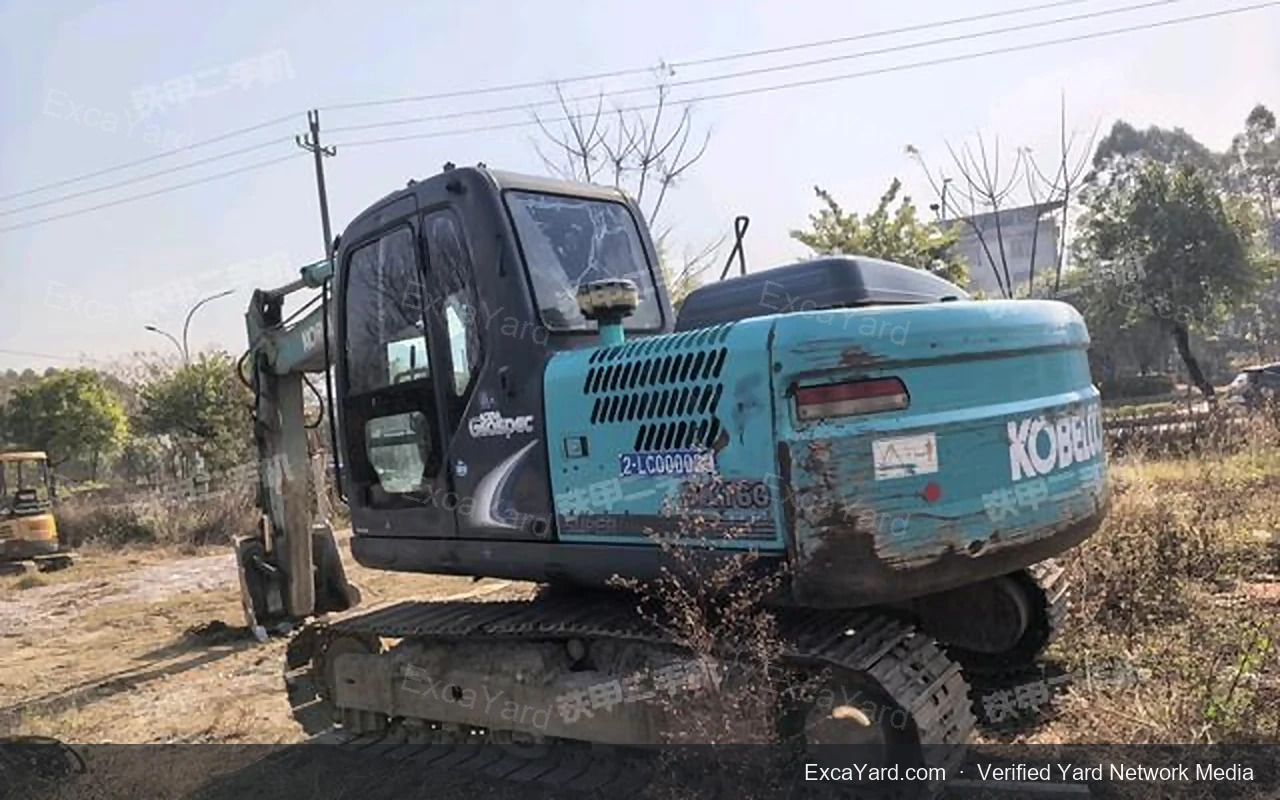
Used Kobelco SK140LC8 Excavator: A 14-Ton Utility and Transport Guide
A used Kobelco SK140LC8 excavator with 4,200 hours, Grade A, listed at $29,000: 14-ton utility fit, transport planning, inspection points and price context.
Used Sunward SWE60E Excavator: 6-Tonne Rental Economics
A used Sunward SWE60E excavator with 5,400 hours is listed at $18,500. How a 6-tonne mini pays back in rental work, what to inspect, and where the margin hides.