Used Volvo EC210D Excavator: Premium Machine at $18,000
A used Volvo EC210D excavator with 7,850 hours is listed at $18,000. What the 21-tonne premium badge is worth, what Grade A covers, and six checks before a deposit.
A used Volvo EC210D excavator at $18,000 sits in an awkward, interesting place. Volvo is the badge buyers pay extra for, and $18,000 is not extra — it is less than a 2020 Sany SY205C at $20,000 and barely above a 2015 Kobelco SK210LC8 at $13,500. Either the premium has quietly evaporated in the used market, or something in the file is doing the discounting. This guide works through the second possibility first, because that is the expensive one to get wrong.
The used Volvo EC210D excavator, in numbers
| Field | Listing |
|---|---|
| Model | Volvo EC210D |
| Year | 2019 |
| Hours | 7,850 |
| Operating weight | 21.0 t |
| Bucket | 1.05 m³ |
| Grade | A |
| Location | Guilin, China |
| Price | $18,000 USD |
| Terms | FOB Shanghai |
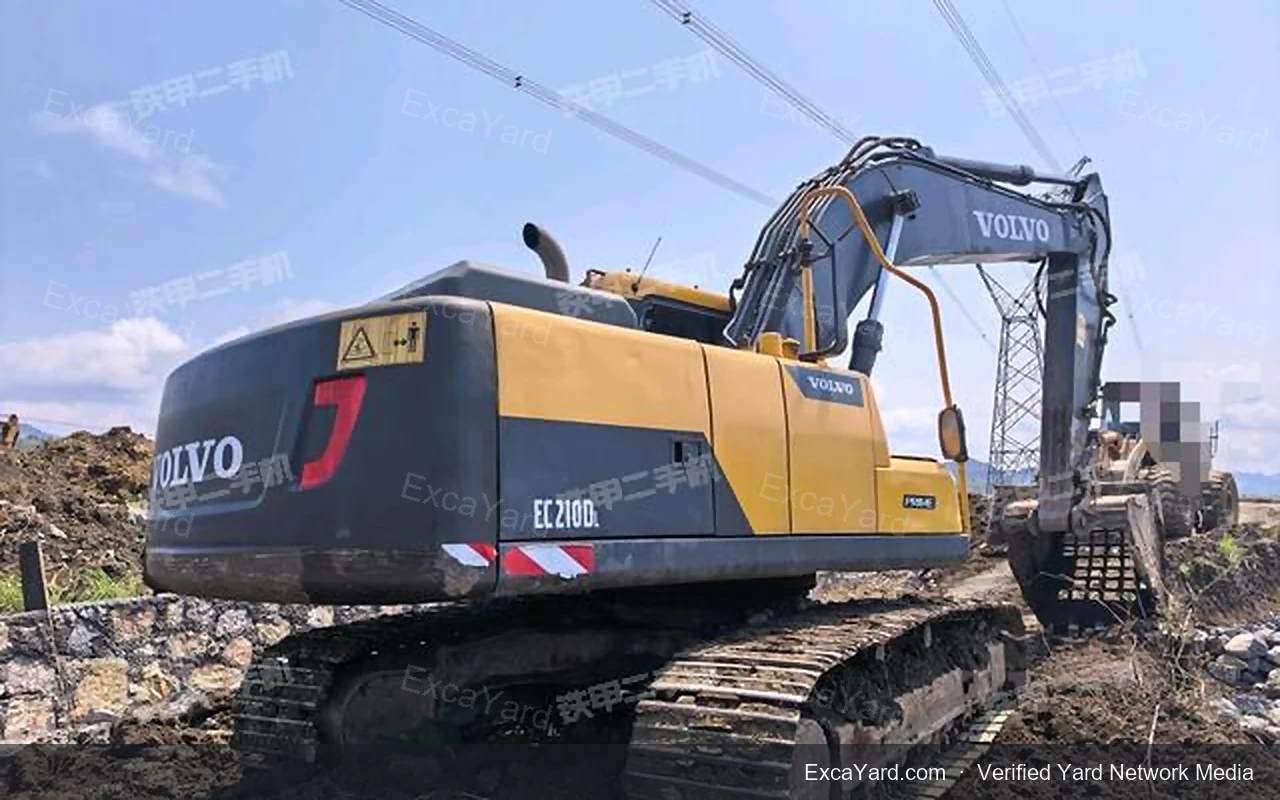
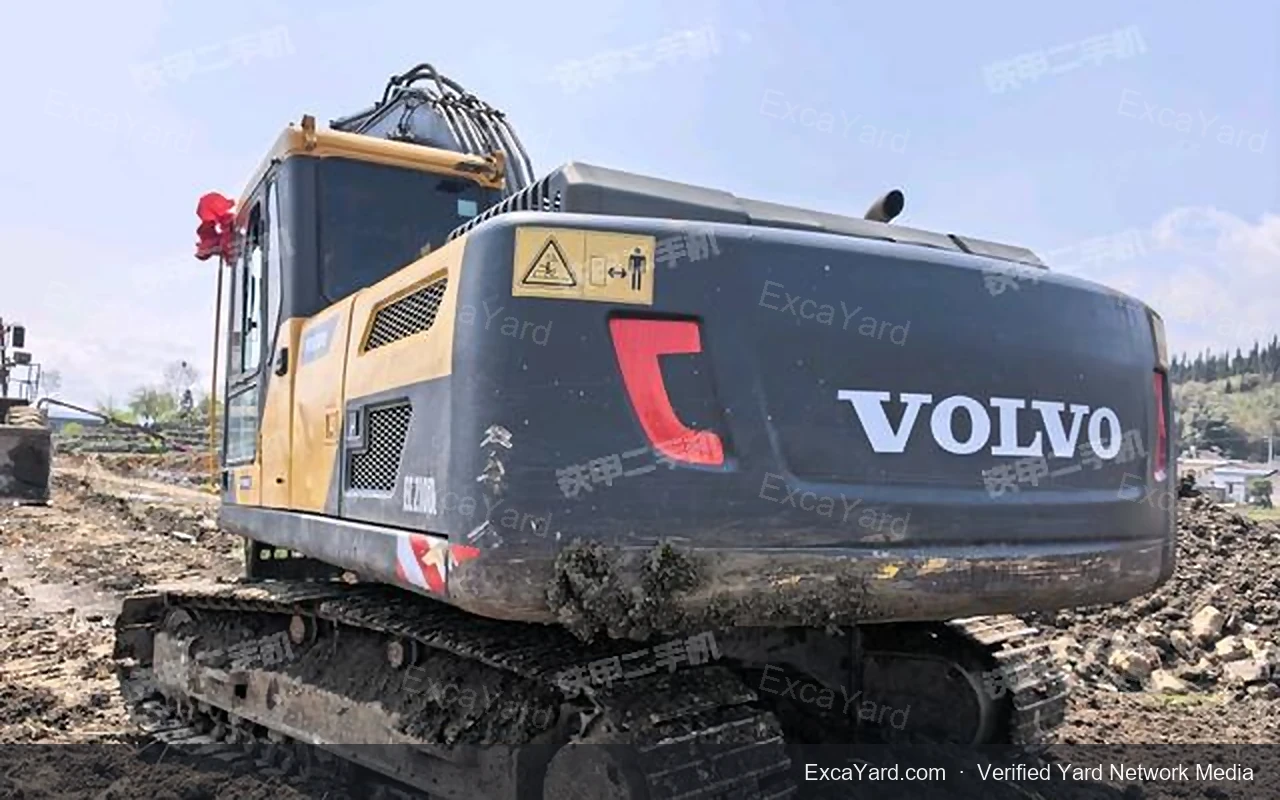
The condition notes describe documented service history, an engine that starts easily without smoke or unusual noise, hydraulics that operate smoothly without leaks, no cracks or repairs on boom and arm, tracks at roughly 70% and moderate roller wear, plus minor cosmetic wear on boom paint and decals and some edge wear on the bucket. For a 2019 machine with 7,850 hours — about 1,100 hours a year — that is a coherent story. A machine worked steadily, serviced on schedule, and did not spend years outdoors between jobs.
What “premium” means at $18,000
Premium in excavators is not leather and a badge. It is four practical things, and each one has a price.
Residual value. A Volvo holds its number in most markets better than an equivalent Chinese brand, which is why the badge survives the first owner. If you plan to sell in three years, that matters more than the purchase price.
Dealer coverage. The listing notes Volvo’s global parts distribution and local availability of common parts in most export markets. In practice this means a filter or a hose is a phone call in Nairobi, Jakarta or Lima rather than an air-freight experiment.
Operator acceptance. A comfortable cab is not a luxury when you are renting to contractors who choose between your machine and someone else’s. It is a utilisation argument.
Service data. Documented history is worth money at resale and worth more at purchase, because it is the only thing that makes an hour meter believable.
What premium is not: a warranty, a guarantee of no wear, or immunity to the cost of a hydraulic repair. At $18,000 with 7,850 hours, you are buying a well-kept machine, not a new one.
Volvo EC210D price: reading the number against the class
Strip out the badge and compare the arithmetic. Anyone weighing a used excavator EC210D for sale against a newer Chinese unit should start with hours and grade, not with the decal. $18,000 divided by 21 tonnes is about $857 per tonne. Now the same sum across the current ExcaYard stock feed:
| Machine | Year | Hours | Weight | Grade | Price | $/tonne |
|---|---|---|---|---|---|---|
| Kobelco SK210LC8 | 2015 | 4,200 | 21.0 t | B | $13,500 | $643 |
| Volvo EC210D | 2019 | 7,850 | 21.0 t | A | $18,000 | $857 |
| Sany SY205C | 2020 | 8,500 | 20.5 t | B | $20,000 | $976 |
| Hyundai R215VS | 2021 | 7,600 | 21.5 t | A | $22,500 | $1,047 |
| Hitachi ZX2005A | 2021 | 7,000 | 20.05 t | A | $22,500 | $1,122 |
| Komatsu PC2008M0 | 2020 | 3,600 | 20.08 t | A | $27,500 | $1,369 |
Look at what the table does to the premium story. The Volvo is cheaper per tonne than a 2020 Sany and about 20% cheaper than a 2021 Hyundai of similar size and grade. The only machine below it is a 2015 Kobelco with 4,200 hours and a Grade B report. So the EC210D is not being sold at a premium at all. It is being sold at a discount to the class, and the question becomes whether 7,850 hours is the reason.
It probably is, in part. Hours are the most visible number on a listing, and buyers anchor on them harder than on year or grade. A 2019 machine with 7,850 hours reads as “worked” next to a 2020 with 3,600, even when the annual usage is normal for a production machine. That anchoring is where a patient buyer finds value: you are paying for a newer calendar year, a Grade A report and a premium badge, at a price the market set on hours alone.
EC210D inspection: six checkpoints before a deposit
- Cold start and smoke. The listing says it starts easily without smoke. Verify on video from cold, not after the yard has warmed it. Blue smoke at start is a negotiation, white smoke is a walk-away until diagnosed.
- Hydraulics hot. Twenty minutes of work, then boom, arm, bucket, swing and both travel motors. Watch cycle times against the stopwatch in your head, not against the seller’s description.
- Boom and arm welds. “No cracks or repairs” is a claim worth photographing at the boom foot, the arm nose and the cylinder mounts. Paint hides a lot; a wire brush and a torch do not.
- Undercarriage at 70%. Ask for measurements, not adjectives. Chain height, sprocket teeth, roller diameter and idler wear, with a tape in frame.
- Pins, bushings and bucket. Edge wear is disclosed. Check the pin bosses for elongation — a loose bucket is a cheap fix until it becomes a line-bore job.
- Electronics and cab. Volvo machines carry more electronics than a 2013 Japanese unit. Confirm the monitor displays correctly, the machine selects work modes, and the hour reading is consistent across the display and the ECU report.
If you cannot inspect in person, commission the inspection through the yard rather than relying on a photo set. ExcaYard works through a verified partner-yard network and does not own the yards it lists from, so the inspection is arranged on your behalf and the report comes to you.
What Grade A covers, and what it does not
Grade A on this unit means documented service history, no major repairs, and systems that operate as they should. It does not mean the machine is free of consumable wear. Tracks at 70% and a bucket with edge wear are exactly what a 7,850-hour machine should show, and both belong in your budget.
Treat the grade as a statement about condition at inspection, not a forecast. A Grade A machine can still need a hydraulic hose in month two; what the grade buys you is the absence of deferred maintenance at the point of sale.
Parts, dealer support and the real cost of the badge
Volvo support is the strongest argument for this machine and the easiest thing to overestimate. The listing states that common parts are available locally in most export markets and that parts can be sourced from China if needed. Test that claim against your own postcode before you buy.
Three questions to ask your local supplier:
- Can you get filters and a hydraulic hose for an EC210D this month?
- What does a final drive cost, and how long is the lead time?
- Is there an independent technician within reasonable distance who has diagnostic access?
If the answers are yes, the premium is real and this machine is a bargain at $18,000. If the answers are vague, you are buying a European machine with Japanese-brand logistics, and the badge becomes a liability rather than an asset. The Volvo brand page covers the model range and market positioning if you want the wider context.
Transport and handover notes
The listing quotes FOB Shanghai and suggests a 40-foot flat rack or RoRo. At 21 tonnes, this is not a machine you slip into a container without dismantling, and the method affects your landed cost more than most buyers expect. Confirm boom and cab configuration with the forwarder, and ask for lashing photos at loading.
Documents to have in hand before the machine sails: commercial invoice, packing list, bill of lading, and the export declaration. If your market requires a pre-shipment inspection, book it before the unit is loaded, not after.
When the used Volvo EC210D excavator is the wrong buy
It is wrong if you need a machine under 20 tonnes for transport reasons, because the EC210D sits above that line and mobilisation costs follow.
It is wrong if your local support is thin and you cannot diagnose electronics yourself. A premium machine without a premium support network is just an expensive machine.
It is wrong if you need maximum hours-to-price efficiency and do not care about resale. A Grade B Japanese unit at $13,500 with 4,200 hours will move dirt for less capital, and if your exit plan is “run it until it dies”, the Volvo badge never pays you back.
It is also wrong if 7,850 hours sits uncomfortably with you and you would spend the next two years waiting for a failure. Buy the machine you can sleep with; anxiety is a real operating cost.
FAQ
Is this used Volvo EC210D excavator still in stock? Availability changes daily. The used Volvo EC210D excavator file shows current status, and we will confirm before you book anything.
Are the 7,850 hours verified? The listing states the hours were verified through the ECU and service records and that the reading matches reported usage. Ask for the ECU printout and the service stamps together; either one alone is a story, the pair is evidence.
Why is a 2019 Volvo cheaper than a 2020 Sany? Hours and market positioning. 7,850 hours anchors the price down, and Volvo’s used pricing in export markets is not as aggressive as its new pricing. The gap is an opportunity only if the inspection holds up.
What does the EC210D price include? $18,000 is FOB Shanghai. Freight, insurance, duty and inland transport are separate. Send your destination port and we will quote CIF so the number you compare is the number you pay.
Can I see the machine working before I pay? Yes — request a continuous working video and, for larger commitments, a third-party inspection. We would rather lose a sale than ship a machine you have not seen move.
Used Kobelco SK210LC8 Excavator: What 4,200 Hours Really Means
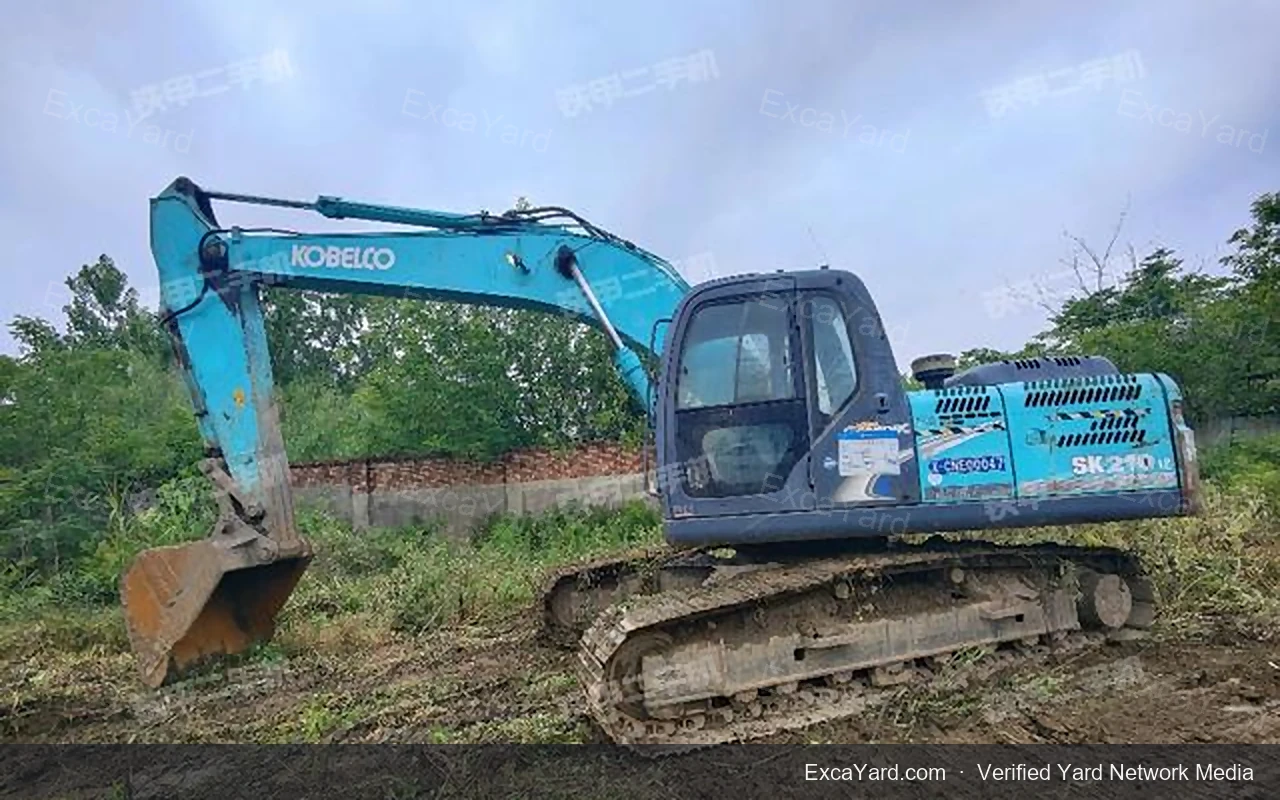
Used Kobelco SK210LC8 excavator under inspection: 2015, 4,200 hours, 21 tons, 1.05 m³, $13,500. Hour-plausibility math, Grade B notes, cold-start tests and landed cost.

Used Excavator Inspection Checklist: 50-Point Field Guide for International Buyers
A practical 50-point inspection checklist for buying a used excavator from China or any export market. Engine, hydraulics, undercarriage, cab — what to actually check, common red flags, when to walk away.
How to Check if Excavator Operating Hours Are Genuine (Anti-Fraud Guide)
Used excavator hour meter fraud is common. Step-by-step guide to verify operating hours: ECM cross-check, undercarriage wear, hydraulic stamps, photo evidence.