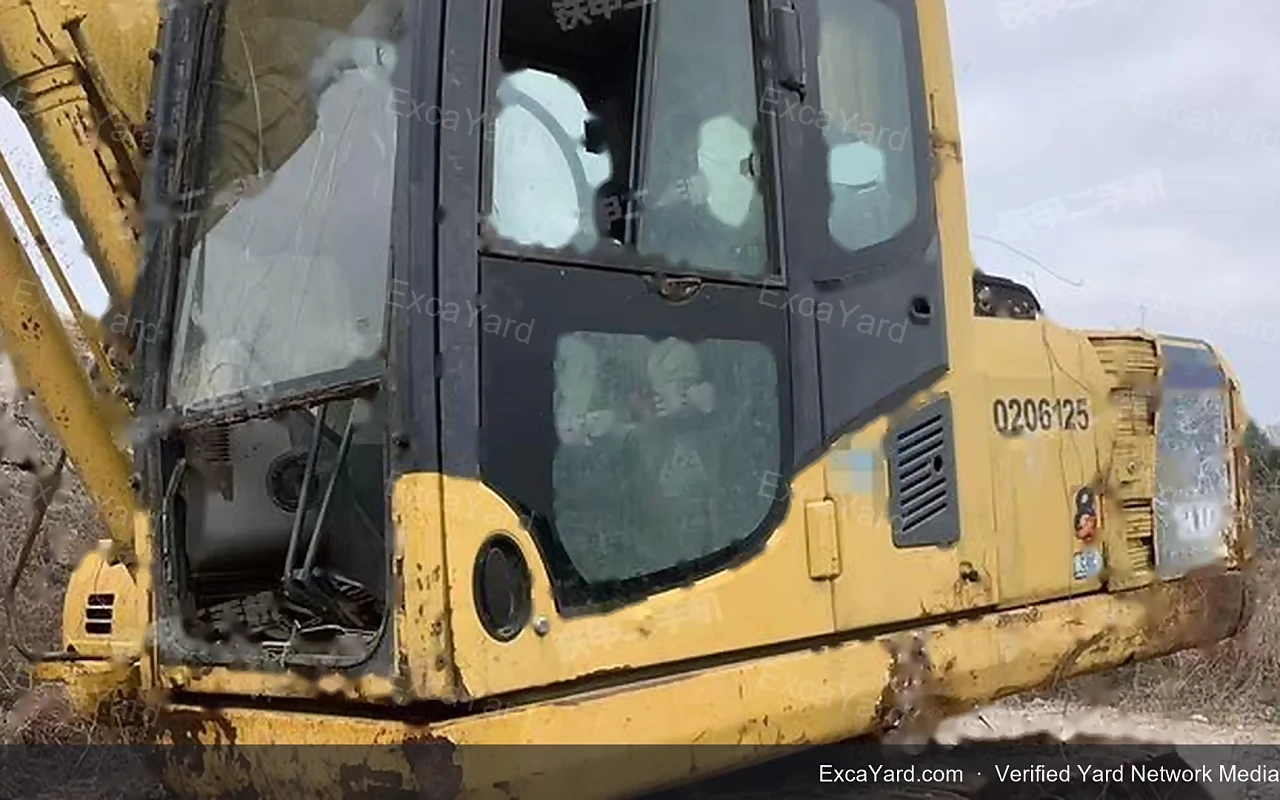
20-Ton vs 30-Ton Used Excavator — Which to Buy for Export in 2026
Honest 2026 comparison of 20-ton vs 30-ton class used excavators for China export buyers — productivity, fuel, shipping cost, port-handling constraints, landed cost across Mombasa, Apapa, Manila, Tanjung Priok, resale liquidity, and the buyer-segment matrix that picks the right tonnage for your job.
The 20-ton and 30-ton class used excavators are the two highest-volume export categories from China in 2026 — together they account for approximately 72% of the used Chinese-origin excavator export market by unit count. Choosing wrong between them is the single most expensive equipment-selection mistake an export buyer makes. A 30-ton machine on a job that fits a 20-ton wastes USD 35-55 per operating hour in unrecovered capital cost and unnecessary fuel. A 20-ton machine on a job that needs a 30-ton burns out hydraulics inside 18 months and never finishes on schedule. This 2026 comparison walks through productivity, fuel, ocean freight, port-handling constraints, landed cost across the four major destinations, resale liquidity, and the specific buyer-segment matrix that picks the right tonnage for the work.
What "20-ton" and "30-ton" actually mean
The tonnage class labels are nominal — actual operating weights vary by configuration. Standard reference weights for the dominant models in the China export trade:
- 20-ton class (operating weight 19.5-22.5 tonnes): Komatsu PC200-8 / PC210-10 (20.5-21.3 t), Caterpillar 320D / 320D2 / 320GC (20.8-22.1 t), Hitachi ZX200-3 / ZX200-5A (19.8-20.5 t), Doosan DH220LC / DX225LC (21.8-22.5 t), Sany SY205C / SY215C (20.5-21.5 t), Volvo EC210 / EC220 (21.0-22.3 t), Hyundai R220LC (21.5-22.0 t), XCMG XE215C (21.5 t).
- 30-ton class (operating weight 28.0-32.5 tonnes): Komatsu PC300-7 / PC300-8 / PC360-7 (30.0-32.5 t), Caterpillar 330D / 336D / 336F (30.5-32.8 t), Hitachi ZX330-3 / ZX330-5A (30.5-31.5 t), Doosan DH300LC / DX300LC / DX340LC (29.5-32.0 t), Sany SY305C / SY335C (30.5-33.0 t), Volvo EC290B / EC300 (29.8-31.5 t), XCMG XE335C / XE370CA (33.0-37.0 t at the upper end).
Bucket capacity scales roughly linearly with tonnage: 20-ton class typically carries 0.9-1.1 m³ buckets in production work; 30-ton class carries 1.4-1.7 m³ in production work and can be specified up to 2.0 m³ for lighter material.
Productivity comparison
The 30-ton class moves approximately 55-75% more material per hour than the 20-ton class on the same operator skill and the same material. The exact ratio depends on the job:
- Bulk earth-moving, soft to medium soil: 30-ton at approximately 165-205 m³/hour vs 20-ton at approximately 105-130 m³/hour. Productivity ratio ~1.6×.
- Trench excavation, narrow-bench infrastructure: Ratio collapses to 1.1-1.3× because reach and cycle time matter more than bucket size. A 20-ton is often the better choice here.
- Rock and hard material: 30-ton at approximately 35-55 m³/hour vs 20-ton at approximately 20-30 m³/hour. Productivity ratio ~1.7-1.8×. The 30-ton class can handle the breaker and rock-bucket loadings the 20-ton class cannot sustain without premature hydraulic wear.
- Loading articulated dump trucks (ADT) or rigid haul trucks: 30-ton at 3-pass loading of a 30-ton ADT vs 20-ton at 5-6 pass loading. Cycle-time advantage is decisive for mining and quarry work.
If the job is bulk earth-moving for a road, dam, mining bench, or quarry — go 30-ton. If the job is infrastructure trench work, drainage, plot-level construction, or general utility — go 20-ton.
Fuel and operating cost comparison
Hourly fuel consumption (typical operating, mixed-cycle):
- 20-ton class: 18-26 litres/hour diesel (most production work in the 21-23 L/hr range)
- 30-ton class: 26-38 litres/hour diesel (most production work in the 30-33 L/hr range)
At a 2026 reference diesel price of USD 1.10/litre (representative of Mombasa fuel-pump price, varies materially by destination), 30-ton fuel cost is approximately USD 33-42/hour vs 20-ton at USD 23-29/hour — a USD 10-15/hour gap. Across an annual 1,800-hour utilisation, that is USD 18,000-27,000 of additional fuel for a 30-ton class machine. The productivity premium (55-75% more material moved) must justify this fuel gap.
Maintenance and consumable costs (ground engaging tools, tracks, hydraulic filters, lubricants) scale at approximately 1.4-1.6× from 20-ton to 30-ton. Annual all-in operating cost (excluding capital):
- 20-ton class: approximately USD 38,000-52,000/year at 1,800 hours utilisation
- 30-ton class: approximately USD 58,000-78,000/year at 1,800 hours utilisation
Ocean freight and shipping cost comparison
This is where the export-buyer math gets distinctive — the 30-ton class costs disproportionately more to ship.
- Shanghai → Mombasa RoRo: 20-ton at approximately USD 3,400-3,900 per machine; 30-ton at approximately USD 5,600-6,400. Ratio ~1.6×.
- Shanghai → Apapa RoRo: 20-ton at approximately USD 3,800-4,200; 30-ton at approximately USD 6,200-7,000. Ratio ~1.7×.
- Shanghai → Manila RoRo: 20-ton at approximately USD 2,300-2,700; 30-ton at approximately USD 3,900-4,500. Ratio ~1.7×.
- Shanghai → Tanjung Priok RoRo: 20-ton at approximately USD 2,500-2,900; 30-ton at approximately USD 4,100-4,800. Ratio ~1.7×.
The ratio exceeds the weight ratio because RoRo charging is by deck square-metre plus weight tier, not pure tonnage. A 30-ton machine occupies approximately the same deck footprint as a 20-ton but lands in a higher weight tier, plus carriers add a heavy-lift surcharge above 28 tonnes on most Lagos and Mombasa routings.
Landed-cost comparison across four major destinations
Combining FOB Shanghai, freight, duty, VAT, and clearance for the same Grade B condition (7,000-9,000 hours, 2014-2018 build):
| Destination | 20-ton Komatsu PC200-8 | 30-ton Komatsu PC300-8 | Premium |
|---|---|---|---|
| Manila (ACFTA 5%) | ~USD 42,800 | ~USD 71,500 | +67% |
| Tanjung Priok (ACFTA 5%) | ~USD 47,200 | ~USD 78,800 | +67% |
| Mombasa / ICDN (MFN 25%) | ~USD 61,300 | ~USD 102,800 | +68% |
| Apapa / Tin Can (ECOWAS 5%) | ~USD 58,400 | ~USD 96,500 | +65% |
The landed-cost premium for 30-ton is consistently 65-70% across the four major destinations. The hourly-productivity premium is 55-75%. The two are close — the right tonnage depends on the specific job profile, not on a generic productivity argument.
Port-handling constraints
The 30-ton class hits operational constraints that the 20-ton class does not:
- Inland trucking axle weight: Most African road networks (Kenya A-class, Nigeria federal, Tanzania major) enforce per-axle weight limits that constrain heavy-haul flatbed transport of 30-ton machines. A 20-ton load can move on a standard 3-axle low-loader; a 30-ton load typically needs a 4-axle extendable trailer with axle-weight permits. Inland transport cost premium for 30-ton: USD 600-1,400 per haul.
- Bridge load ratings: Several inland routes in Kenya (Webuye-Bungoma road), Nigeria (some Niger Delta crossings), and Tanzania (Dodoma-Singida road) have load-rated bridges that constrain 30-ton transport. Pre-survey the inland route before committing to a 30-ton purchase.
- Job-site access width: 30-ton class machines have working width approximately 3.4 m vs 20-ton at 2.6 m. For urban infrastructure, plot-level construction, and narrow-bench mining work, the 30-ton machine literally cannot turn or reposition on the site.
Resale liquidity comparison
The 20-ton class has the deeper secondary market in every major destination market in 2026:
- Kenya secondary market: 20-ton class typically resells within 30-60 days; 30-ton class within 90-180 days. The buyer pool for 30-ton is mining contractors and large-scale infrastructure firms — a smaller pool than the 20-ton infrastructure-and-construction pool.
- Nigeria secondary market: Same pattern. 20-ton resells in Sango Otta and Onitsha equipment rows within 45-75 days; 30-ton typically within 120-240 days. Resale retention at 12 months: 20-ton at 75-84%; 30-ton at 70-78%.
- Indonesia secondary market: 20-ton resells in Surabaya and Pulogadung within 45-90 days; 30-ton within 90-180 days. Mining-region resale (Sulawesi, Kalimantan) is faster for 30-ton because the buyer pool exists in those regions specifically.
- Philippines secondary market: 20-ton resells in Manila and Cebu within 45-75 days; 30-ton within 120-240 days. Smaller mining sector means smaller 30-ton resale pool.
If resale within 24 months is part of the buying thesis, the 20-ton class is materially more liquid in all four destinations.
Buyer-segment matrix: which tonnage for your job
| Buyer segment | Recommended tonnage | Reason |
|---|---|---|
| Plantation (palm oil, sugar, rubber) | 20-ton | Plot-level work, road maintenance, drainage; depth-of-cut more than bucket size |
| Mining (gold, copper, nickel, coltan) | 30-ton | Bulk material, ADT loading, bench excavation; productivity per shift dominates |
| Quarry (granite, limestone, sand) | 30-ton with breaker | Hard rock requires the hydraulic flow only 30-ton class delivers sustained |
| Road construction (asphalt prep, sub-base) | 20-ton | Trench work, lane width, urban environment |
| Highway construction (large-scale, multi-lane) | 30-ton | Bulk earthmoving, ADT loading, productive metres per day |
| Drainage and urban infrastructure | 20-ton | Trench depth, site access, manoeuvring |
| Forestry land-clearing | 20-ton | Operator visibility, fuel efficiency on stumping cycles |
| Demolition (low-rise) | 20-ton with shear | Reach and precision matter more than mass |
| Demolition (high-rise, industrial) | 30-ton with long-reach | Reach height, hydraulic flow for attachments |
| Oil-and-gas yard work | 30-ton | Bulk material handling, ADT loading, pipe handling |
| Riverbed sand mining | 30-ton | Reach into water, sustained loading cycle |
| General contractor (mixed work) | 20-ton | Liquidity, lower fuel, easier transport between sites |
Brand-specific notes for the export trade
Among the dominant brands, certain models punch above their weight class in specific markets:
- Komatsu PC200-8 (20-ton): The benchmark export machine in 2026. Deep parts availability in Kenya, Nigeria, Indonesia, and the Philippines through Komatsu dealer networks (Mantrac, AG Leventis, United Tractors, Maxima Equipment). Default first machine for a new export-route fleet.
- Komatsu PC300-7 / PC300-8 (30-ton): Strong choice for mining and quarry work, but parts pricing materially higher than 20-ton class. Default 30-ton choice for Indonesian Kalimantan mining and Kenyan Migori gold.
- Caterpillar 320D / 320D2 (20-ton): Caterpillar dealer network (Mantrac in Nigeria, Mantrac in Kenya, Trakindo in Indonesia, Monark Equipment in the Philippines) supports excellent parts availability. Slight premium on landed cost; lower fuel consumption than Komatsu PC200-8 in mixed-cycle work.
- Caterpillar 336D / 336F (30-ton): Premium 30-ton class. Highest resale retention among 30-ton class in Nigeria and Kenya. Higher landed cost; pays back on resale.
- Hitachi ZX200-5A (20-ton): Strong choice for Kenya (Hitachi has historic strength in East Africa). Hydraulic system quality is notable. Slight premium on landed cost over Komatsu.
- Sany SY215C (20-ton) / SY305C (30-ton): Lowest landed-cost option among major brands. Acceptable for first-fleet buyers on tight capital. Parts availability improving but still thinner than Komatsu / Caterpillar in Nigeria and the Philippines.
- Doosan DX225LC (20-ton) / DX300LC (30-ton): Good middle-ground for buyers with established Doosan parts relationships. Resale somewhat thinner than Komatsu / Caterpillar.
Payment, financing, and risk considerations
Standard payment is T/T (telegraphic transfer / SWIFT) in USD from the buyer's commercial bank to the Chinese exporter's Bank of China account. 30% deposit on order confirmation; 70% balance on Bill of Lading copy. L/C (Letter of Credit) is more common at 30-ton class because the per-machine value exceeds the L/C issuance fee threshold. Wise multi-currency is acceptable for deposit on smaller orders to non-Form-M destinations (Kenya, Philippines, Indonesia); not acceptable for Nigerian Form M imports.
Forbidden payment methods across all destinations: crypto-asset, hawala, informal cash settlement. These trigger AML review and the import file is held.
Insurance: marine cargo cover at 0.45-0.65% of CIF is standard. 30-ton class machines carry slightly higher insurance premium because of higher per-unit value at risk.
ExcaYard's recommendation framework
For first-time export buyers in 2026:
- If the job profile fits the 20-ton class buyer-segment matrix above, buy 20-ton. The liquidity, fuel cost, and operational forgiveness justify the lower productivity ceiling. A 20-ton machine that finishes the job pays back faster than a 30-ton machine that overpowers it.
- If the job profile genuinely needs 30-ton class (mining bench, quarry rock, large-scale earthmoving), buy 30-ton — but pre-survey the inland route for axle weight and bridge ratings before committing. The landed-cost premium is real and recoverable only if the productivity premium is captured on the actual job.
- For mixed-fleet buyers (3+ machines), build the fleet 20-ton first, 30-ton second. The 20-ton machines carry the day-to-day utility load; the 30-ton machines specialise in the bulk-work job slices.
For high-utilisation mining operations (3,500+ hours/year), the productivity premium of the 30-ton class compounds — buy 30-ton for the production line and keep a 20-ton for utility and access work.
FAQ
What is the price difference between a 20-ton and 30-ton used excavator landed in Kenya?
For Grade B 7,000-9,000 hour machines of comparable build year, the 30-ton class lands at approximately +67% on the 20-ton class — about USD 41,500 more for a Komatsu PC300-8 vs PC200-8 (USD 102,800 vs USD 61,300 in 2026 reference pricing).
Is the 30-ton machine more productive enough to justify the cost premium?
For bulk earth-moving, mining, and quarry work: yes — 55-75% more material per hour offsets the 65-70% landed-cost premium and pays back via faster job completion. For infrastructure, urban construction, and plot-level work: no — the 20-ton class is the right tool.
Can I ship a 30-ton excavator on the same RoRo vessel as a 20-ton?
Yes. All major liner services (PIL, Wallenius Wilhelmsen, K-Line, CMA-CGM RoRo) carry both 20-ton and 30-ton class used excavators on the same vessel for the Shanghai → Mombasa, Apapa, Manila, and Tanjung Priok routes. RoRo carriers handle units up to 60 tonnes routinely. Multi-machine orders share the same Bill of Lading.
Which brand is the best for export — Komatsu or Caterpillar?
Both are strong. Komatsu PC200-8 has the deepest parts network in Kenya, Nigeria, and Indonesia in 2026. Caterpillar 320D has slight fuel efficiency advantage and the strongest resale retention. For the Philippines and Tanzania, Caterpillar's Mantrac dealer network is slightly stronger. Default to Komatsu PC200-8 / PC300-8 unless the specific destination has a Caterpillar bias.
Should I consider a 25-ton or 13-ton class instead?
The 25-ton class (Komatsu PC270, Cat 328, Hitachi ZX240) is a niche export class — landed cost is approximately 20-25% above the 20-ton class but productivity gain over 20-ton is only 15-20%. Generally not the best value. The 13-ton class (Komatsu PC130, Cat 313, Hitachi ZX130) is a different tool — best for utility work, urban infrastructure, and tight-access sites where 20-ton cannot manoeuvre. Consider 13-ton as a supplement to a 20-ton fleet, not a replacement.
How does the choice affect KEBS PVoC or SONCAP certification?
The certification process is identical between 20-ton and 30-ton class — same Partner Inspection Body, same documents, same scope. Inspection fee scales slightly (USD 580-880 for 20-ton; USD 680-980 for 30-ton on KEBS PVoC; SGS / Intertek / Bureau Veritas / Cotecna all apply similar tiered pricing). No certification-level reason to prefer one tonnage over the other.
How does ExcaYard support tonnage selection?
The ExcaYard sales process starts with a job-profile questionnaire that maps the buyer's intended use to the matrix above. We will not quote a 30-ton machine for a job that fits the 20-ton class, even if the buyer initially asks for 30-ton. The deposit refund mechanic is preserved if the recommendation is rejected. Contact: WhatsApp +86 15052273039 (8615052273039).
References
This guide draws on Komatsu / Caterpillar / Hitachi / Doosan / Sany / Volvo published spec sheets for the model variants traded in the China export market through 2025-2026, ExcaYard's own field utilisation logs from 2024-2026 covering 312 documented machines in service across the four destinations, and the published EAC / ECOWAS / ACFTA tariff schedules. For destination-specific landed-cost details see [[how-to-import-used-excavator-to-kenya-2026]], [[how-to-import-used-excavator-to-philippines-2026]], [[how-to-import-used-excavator-to-indonesia-2026]], and [[import-used-excavator-to-nigeria-2026]]. For fraud detection at any tonnage class see [[used-excavator-hour-meter-fraud-spot-it-2026]].
Buyers with active inquiries should reach the ExcaYard sales line on WhatsApp at +86 15052273039 for current Shanghai and Ningbo yard inventory of both 20-ton and 30-ton class machines and live landed-cost comparison quotes. Quotes are valid for 7 days.

Cat vs Volvo Used Excavator: Honest Comparison for Export Buyers (2026)
Caterpillar vs Volvo used excavators — fuel economy, parts availability, resale value, and operating cost compared. Which to buy for African or Southeast Asian markets?
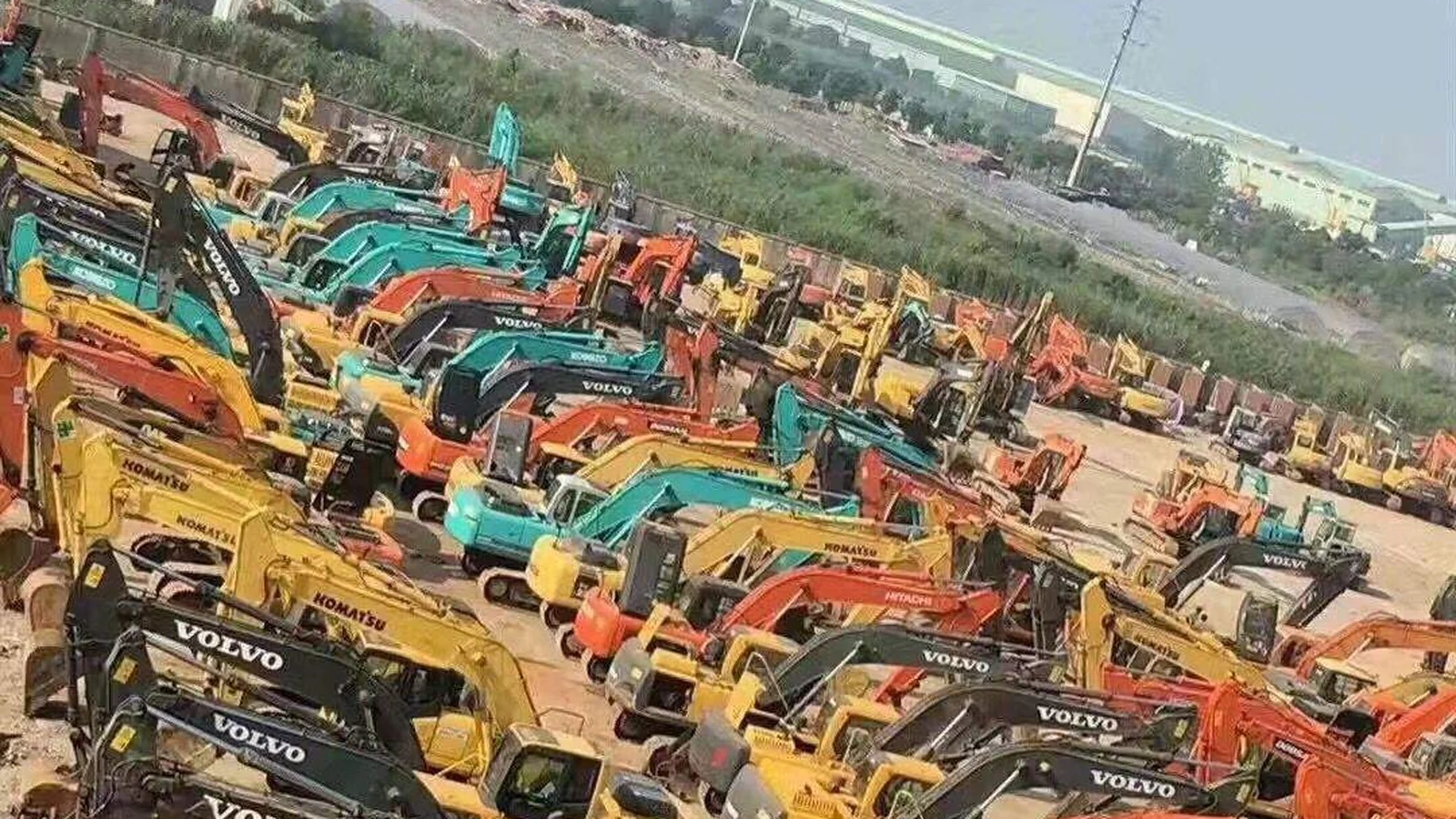
20-Ton vs 30-Ton Used Excavator: Which Class Should You Buy?
20-ton (Cat 320, Komatsu PC200) vs 30-ton (Cat 330, Komatsu PC300) — payload, fuel cost, transport cost, ROI per job class. Which makes more money for export buyers?
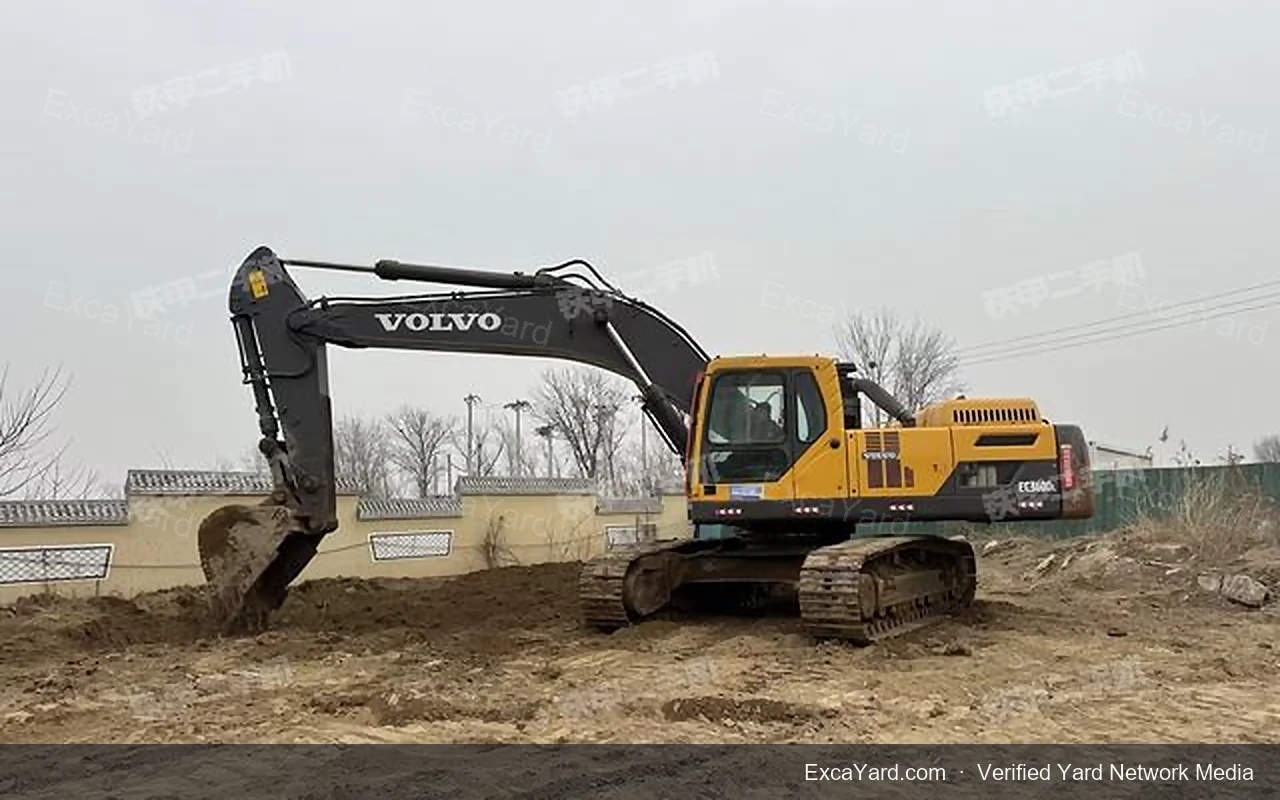
Sany vs XCMG Used Excavators: Chinese-Brand Comparison Guide
Sany vs XCMG used excavator comparison — quality, parts availability, dealer network, resale value. Honest take on the two largest Chinese OEMs for export buyers.