How to Import a Used Excavator from China to Kenya (2026 Deep Guide)
Honest 2026 guide for importing used excavators from China to Kenya — KEBS PVoC pre-export verification, Mombasa port and ICDN Nairobi clearance, 25% duty, 16% VAT, IDF/RDL stack, total landed KES/USD cost math, and the five mistakes that quietly burn KES 1.5 to 4.2 million.
Kenya is the second-largest used Chinese-origin excavator import market in 2026, behind Russia and ahead of Indonesia and Nigeria. Roughly 5,200 used excavators land at Mombasa each year — destined for the SGR feeder road expansion, ongoing Northern Corridor upgrades, the Lamu Port South Sudan Ethiopia Transport (LAPSSET) project's Kenyan leg, mining operations in West Pokot and Migori, large-scale agriculture in Trans-Nzoia and Uasin Gishu, and quarrying across the Rift Valley. This 2026 hub guide is the master reference: it explains the KEBS PVoC pre-export verification process, the Mombasa-to-ICDN Nairobi corridor, the honest KES landed-cost math, and the five mistakes that quietly burn first-time importers KES 1.5 to 4.2 million.
Why Kenya is the demanding East African import market
Three structural realities define the Kenyan import experience versus other African destinations:
- The toughest verified pre-shipment compliance regime in East Africa: The Kenya Bureau of Standards (KEBS) operates the Pre-Export Verification of Conformity (PVoC) programme, requiring SGS / Intertek / Bureau Veritas certification at China origin before the bill of lading can be cut for shipment. This is stricter than Tanzania's TBS PVoC and substantially stricter than Uganda's UNBS PVoC. A clean PVoC file means smooth Mombasa clearance; a missing or defective PVoC file means a 7-21 day hold at Kilindini terminal at KES 14,000-22,000 per day demurrage.
- The highest duty stack on the East African seaboard: 25% import duty + 16% VAT + 2% Import Declaration Fee + 1.5% Railway Development Levy + 3.5% Import Declaration Fee assessment compound to a landed cost of approximately FOB + 55-62%. Compare to Indonesia (+25-30%), the Philippines (+30-35%), Nigeria (+65-75%). Kenya is structurally expensive — the offset is a deep regional secondary market.
- Two-step clearance through Mombasa and ICDN Nairobi: Most up-country buyers do not clear at Mombasa. They use the rail-linked Inland Container Depot Nairobi (ICDN, Embakasi) for final customs clearance. This is operationally important: the machine moves on the Standard Gauge Railway to Nairobi under bond, then clears at ICDN with a Nairobi-based agent. Total transit from Mombasa to ICDN: 3-5 working days. Buyers based in Eldoret, Kisumu, Kakamega, or Nakuru save approximately USD 800-1,400 in Mombasa-to-up-country trucking by using ICDN.
KEBS PVoC and the 2026 import rules
Kenya regulates imported used machinery under the Standards Act Cap 496 and the KEBS PVoC programme operationalised through Legal Notice 78 of 2005 and subsequent amendments. Three rules that bind 2026 imports:
1. Age cap: 8 years from year of manufacture. This is a hard rule. A 2017-built PC200-8 imported in 2026 is at the boundary — a 2016 or older unit will be rejected at PVoC and cannot be shipped. This is the strictest age cap among the major African destinations. The practical implication: Kenya-bound inventory must be 2018 or newer for a comfortable margin against the cap. ExcaYard maintains a separate "Kenya-eligible" inventory list with year-of-manufacture verified against engine and chassis serial plates.
2. KEBS PVoC Certificate of Conformity (CoC) — issued at China origin by an appointed Partner Inspection Body (SGS Kenya, Intertek, Bureau Veritas, Cotecna). The CoC inspection covers physical condition, hour meter cross-check against ECU read, OEM identification plates, and basic safety items (lights, mirrors, ROPS where applicable, oil and fluid leaks). Cost: USD 580-880 per machine, lead time 7-12 working days.
3. Import Declaration Form (IDF) lodged with KRA via iCMS — the buyer's local clearing agent files the IDF before the bill of lading is cut. The IDF triggers the duty assessment and locks the exchange rate at the date of filing. Lead time to lodge: same day if documents are complete. IDF fee: 2% of CIF value, minimum KES 5,000.
If any of the three are missing at Mombasa landing, the machine sits in the Kilindini Container Terminal at KES 14,000-22,000 per day until resolved — typically 2-3 weeks for a missing CoC. This is the single most expensive avoidable cost in Kenyan importing.
Realistic 2026 landed-cost math: a Grade B PC200-8 to ICDN Nairobi
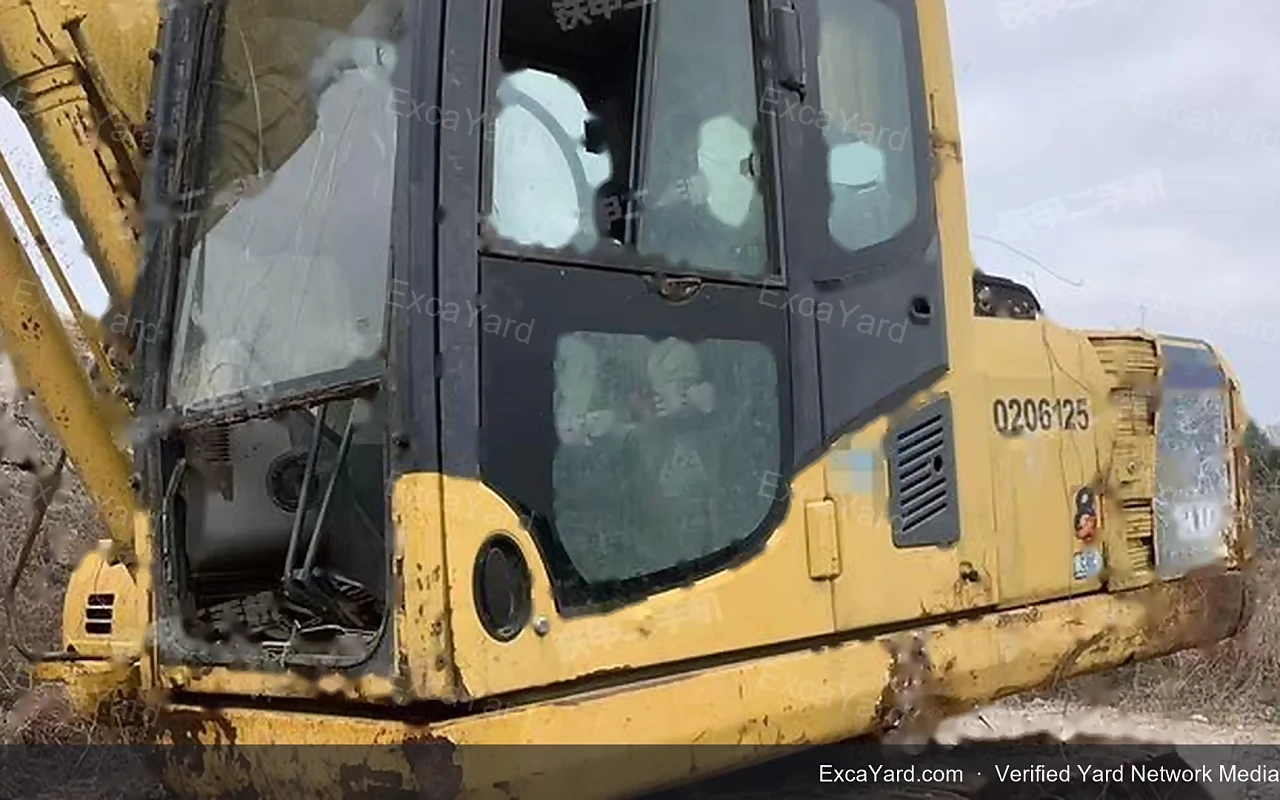
Worked example. Komatsu PC200-8, 2018 build year, 7,400 hours, Grade B condition, Shanghai yard.
| Cost item | USD | KES @ 129 |
|---|---|---|
| FOB Shanghai (Grade B, 2018 PC200-8) | 34,800 | 4,489,200 |
| Ocean freight Shanghai → Mombasa (RoRo, 32 days) | 3,650 | 470,850 |
| Marine insurance (0.55% CIF) | 212 | 27,348 |
| CIF Mombasa value | 38,662 | 4,987,398 |
| KRA import duty (25% MFN) | 9,666 | 1,246,914 |
| KRA VAT (16% on CIF + duty) | 7,732 | 997,428 |
| Import Declaration Fee (2% of CIF) | 773 | 99,723 |
| Railway Development Levy (1.5% of CIF) | 580 | 74,820 |
| KEBS PVoC inspection fee | 720 | 92,880 |
| KENTRADE single-window fee | 60 | 7,740 |
| KPA terminal handling and storage (first 7 days) | 480 | 61,920 |
| SGR transit Mombasa → ICDN Nairobi | 1,650 | 212,850 |
| Clearing agent fee (Nairobi-based) | 580 | 74,820 |
| Inland transport ICDN → buyer site (typical) | 380 | 49,020 |
| Total landed up-country Kenya | ~61,300 | ~7,907,700 |
| Landed cost as % of FOB | +76% | |
A Grade A 6,000-hour PC200-8 with the same paperwork lands ICDN at approximately USD 67,000-71,000. A Grade C 9,500-hour Kenya-eligible machine lands at USD 52,000-55,000.
The five mistakes that burn first-time importers seven figures in KES
Field-observed across the 2024-2026 ExcaYard Kenyan buyer cohort. Each of these has cost real importers real money.
Mistake 1: Buying a 2015 or older machine
The 8-year age cap is rejected at PVoC stage in China — the inspection body refuses to issue the CoC. A buyer who pays deposit on a 2015 machine in good faith faces a difficult conversation with the yard about deposit refund. ExcaYard rejects 2017 and older Kenya-bound machine inquiries at the quote stage to prevent this. Confirm the year of manufacture on the engine plate, the chassis VIN plate, and the OEM data plate — three sources must agree before deposit.
Mistake 2: Trying to ship without a Form 25 or with a defective CoC
A KEBS PVoC CoC that has any item flagged "non-conforming" cannot be used for clearance. Buyers occasionally accept a CoC with a hydraulic leak flag or a tyre wear flag, believing it can be cleaned up later. KEBS Mombasa rejects this on file inspection and the buyer pays for a second domestic inspection plus demurrage. Fix all flagged items at China origin before the CoC is reissued.
Mistake 3: Underestimating Mombasa demurrage
Kilindini Container Terminal free-storage window is 4 days from container off-take. Day 5 onward demurrage begins at the schedule above, and the rates step up at day 8, day 14, and day 21. A 21-day demurrage event on a 20-ton excavator on a flatrack is approximately USD 4,200-5,800. The single most effective mitigation: pre-arrange the clearing agent before the vessel arrives and have the IDF lodged and the duty payment ready on day 1 of landing.
Mistake 4: Trying to clear at Mombasa for an up-country machine
Buyers based in Nairobi, Eldoret, Nakuru, Kisumu, or Trans-Nzoia sometimes attempt Mombasa-direct clearance under a mistaken assumption it is cheaper. It is not — the inland trucking cost from Mombasa to Eldoret is approximately USD 2,200-2,900 per machine on a heavy-haul flatbed, versus USD 1,650 SGR rail to ICDN Nairobi plus USD 380-700 short-haul from ICDN to the final site. The SGR route is also faster and lower-risk for axle-weight inspection on the Mombasa road. Default to ICDN clearance.
Mistake 5: Choosing the wrong clearing agent
Mombasa has approximately 380 licensed clearing agents and ICDN Nairobi has approximately 220. Competence varies enormously. A defective agent who mis-files the IDF, mis-classifies the HS code, or fails to apply the EAC Common External Tariff correctly can cost the buyer USD 1,500-4,000 in incorrect duty payment that takes 90+ days to refund through KRA. ExcaYard maintains a vetted list of three Nairobi-based agents and two Mombasa-based agents used across 2024-2026 shipments. The buyer is free to use their own agent; ExcaYard's only requirement is that the agent's KRA Tax Compliance Certificate is active at the time of filing.
Mombasa vs ICDN Nairobi — which to clear at?
The choice is operationally important and affects total cost by USD 800-1,400.
- Mombasa (Kilindini Container Terminal): Default for Mombasa, Malindi, and Kilifi-based buyers. Direct off-take, shortest dwell time, no SGR transit. Best for coastal contractors and for machines destined to the South Coast (Diani, Ukunda, Lunga Lunga).
- ICDN Nairobi (Embakasi): Default for all up-country buyers. Rail-linked under bond from Mombasa, 3-5 day transit, cleared at ICDN by a Nairobi agent. Best for Central Province, Western, Rift Valley, and Eastern Kenya buyers. The SGR transit cost is fixed and predictable; the up-country trucking from ICDN is short.
- Mombasa to up-country direct truck: Avoid unless the machine is destined for a coastal site. Inland truck is more expensive than SGR for the Mombasa-Nairobi leg, and the axle-weight inspection regime on the A109 road regularly catches improperly loaded flatbeds.
Payment and currency mechanics
The standard payment mechanic for Kenyan-bound used excavator imports in 2026 is T/T (telegraphic transfer / SWIFT) in USD from the buyer's Kenyan commercial bank (KCB, Equity, Co-op Bank, NCBA, Stanbic typical) to the Chinese exporter's Bank of China account. Two transfer points are standard:
- 30% deposit on order confirmation — locks the specific machine VIN, triggers KEBS PVoC inspection scheduling and Form E filing.
- 70% balance on Bill of Lading copy — typically 4-6 working days before vessel arrival at Mombasa.
L/C (Letter of Credit) is normal for buyers of 3+ machines per order — most Kenyan commercial banks issue at approximately 0.6-0.9% per quarter, which is worth the cost on a USD 150,000+ order to lock the exchange rate. Wise multi-currency transfers are increasingly used for the deposit leg on smaller orders.
Forbidden payment methods: any crypto-asset wire, any hawala / mpesa-to-foreign settlement, any cash settlement at Mombasa. These trigger Central Bank of Kenya and AMLA review and the import file is held.
ExcaYard's role in a Kenyan import
The division of work is:
- ExcaYard handles in China: yard verification, machine VIN and hour-meter cross-check (see [[used-excavator-hour-meter-fraud-spot-it-2026]]), KEBS PVoC CoC scheduling and inspection coordination, Bill of Lading preparation, deposit and balance receipt, vessel booking on the Mombasa-routed liner services.
- Buyer's local clearing agent handles in Kenya: IDF lodging via KRA iCMS, duty and VAT payment, KEBS Mombasa CoC verification, KPA off-take coordination, SGR booking to ICDN where applicable, ICDN clearance, inland transport.
ExcaYard maintains working relationships with three Nairobi-based clearing agents and two Mombasa-based agents. Introduction is free; commercial terms are between buyer and agent.
FAQ
What is the cheapest legal way to import a used PC200-8 to Kenya in 2026?
Source from a CCPIT-registered Shanghai or Ningbo yard with a 2018 or newer build (under the 8-year age cap), ship RoRo to Mombasa, route on SGR to ICDN Nairobi for up-country clearance. Total landed up-country for a Grade B 7,400-hour PC200-8 is approximately KES 7.9 million (USD 61,300) in 2026.
Why is Kenya so much more expensive to land in than Indonesia or the Philippines?
Three reasons: (1) no ACFTA preferential tariff (Kenya pays 25% MFN duty vs ACFTA 5% in ASEAN), (2) longer ocean freight (28-35 days Shanghai → Mombasa), (3) the IDF + RDL stack on top of duty and VAT. The compounded effect is +55-62% on FOB versus +25-30% for ACFTA destinations.
Can I import a 2015 machine?
No. The 8-year age cap is enforced at KEBS PVoC stage in China. A 2017-built unit is the practical boundary for 2026 imports — source 2018 or newer for safety. The price premium over a 2015-2016 unit is typically USD 4,000-6,500 at Shanghai FOB; pay it.
Do I need to clear at Mombasa or ICDN Nairobi?
Up-country buyers should clear at ICDN Nairobi. The SGR transit cost is USD 1,650 fixed; the inland truck Mombasa-Eldoret is USD 2,200-2,900 and slower. Coastal buyers (Mombasa, Kilifi, Malindi) clear at Mombasa directly.
What is the typical resale retention after one year?
For Grade B Komatsu and Caterpillar 20-ton class machines, 12-month resale retention is approximately 78-86% of landed cost. Hitachi retains 80-88% — strongest local brand affinity. Sany and Doosan retain 65-75%. Heavy-utilisation mining-use machines in West Pokot and Migori depreciate faster: 60-70%.
How does ExcaYard guarantee the machine matches the spec?
ExcaYard's quote document locks the specific machine VIN, year of manufacture, hour meter reading, and a 20-photo set of the machine before deposit. The KEBS PVoC inspection independently verifies the same data. Any discrepancy between quote and PVoC findings triggers a re-quote or deposit refund at the buyer's option. Service inquiries: WhatsApp +86 15052273039 (8615052273039).
References
This guide draws on the KEBS PVoC programme rules updated through 2025, the EAC Common External Tariff schedule effective 2024, KRA iCMS import procedures, KPA Kilindini terminal handling tariffs, and ExcaYard's own 2024-2026 shipment file of 116 documented Mombasa and ICDN Nairobi clearances. For the corresponding processes elsewhere see [[how-to-import-used-excavator-to-philippines-2026]], [[how-to-import-used-excavator-to-indonesia-2026]], and [[import-used-excavator-to-nigeria-2026]].
Buyers with active inquiries should reach the ExcaYard sales line on WhatsApp at +86 15052273039 for current Shanghai and Ningbo yard inventory and live landed-Nairobi quotes. Quotes are valid for 7 days and lock the specific machine VIN against the buyer's name for the deposit period.

Cat vs Volvo Used Excavator: Honest Comparison for Export Buyers (2026)
Caterpillar vs Volvo used excavators — fuel economy, parts availability, resale value, and operating cost compared. Which to buy for African or Southeast Asian markets?
20-Ton vs 30-Ton Used Excavator: Which Class Should You Buy?
20-ton (Cat 320, Komatsu PC200) vs 30-ton (Cat 330, Komatsu PC300) — payload, fuel cost, transport cost, ROI per job class. Which makes more money for export buyers?
Sany vs XCMG Used Excavators: Chinese-Brand Comparison Guide
Sany vs XCMG used excavator comparison — quality, parts availability, dealer network, resale value. Honest take on the two largest Chinese OEMs for export buyers.