How to Import a Used Excavator from China to Nigeria (2026 SONCAP + Lagos Deep Guide)
Honest 2026 Nigeria import guide for used Chinese excavators — SONCAP Product Certificate via Intertek/Cotecna/SGS, Apapa and Tin Can Island clearance, Form M and NAFEX FX allocation, 5% CET duty, 7.5% VAT, total landed NGN/USD cost math, and the five Lagos mistakes that cost NGN 8 to 25 million.
Nigeria is the largest used Chinese-origin excavator import market in West Africa in 2026, with an estimated 3,600 machines landing each year across Apapa, Tin Can Island, Onne, and Lekki Deep Sea Port. Demand is driven by the construction backlog under the Tinubu administration's infrastructure pipeline — the Lagos-Calabar Coastal Highway groundwork, the Sokoto-Badagry trans-Sahara corridor, ongoing rail rehabilitation, Lagos and Abuja drainage and road projects, gold and lithium mining in Zamfara and Nasarawa, and continued oil-and-gas yard work in Port Harcourt and Warri. This 2026 deep guide is the master reference: it explains the SONCAP Product Certificate process, Form M registration through NAFEX, the Apapa-versus-Lekki port choice, the honest NGN landed-cost math, and the five Lagos mistakes that quietly cost first-time importers NGN 8 to 25 million in unnecessary clearance and FX cost.
Why Nigeria is the largest but most expensive West African import market
Three things separate Nigeria from neighbouring West African destinations (Ghana, Côte d'Ivoire, Cameroon, Senegal):
- Sheer market depth: 220 million population, USD 470 billion GDP, the largest construction equipment fleet in West Africa. Nigeria absorbs 4-5× the used excavator volume of Ghana and 3× that of Côte d'Ivoire. The secondary market for used 20-ton class machines in Apapa, Sango Otta, Onitsha, and Aba is the deepest in the region — resale liquidity is genuinely high.
- The hardest FX regime in Africa for imports: All imports require a Form M registration through an authorised dealer bank and an FX allocation through the NAFEX (Nigerian Autonomous Foreign Exchange Market) window. The NAFEX rate floats and has carried a 12-22% premium to the official CBN rate through 2025-2026. Importers must budget the actual FX cost, not the headline CBN rate.
- The SONCAP Product Certificate is non-negotiable: The Standards Organisation of Nigeria (SON) requires a SONCAP Product Certificate (SC) issued at China origin before shipment. Without a valid SC at landing, the consignment is detained at Apapa or Tin Can Island and the importer faces a domestic SON inspection at materially higher cost than the China-origin inspection.
SONCAP and the 2026 import rules
Nigeria regulates imported used machinery under the Standards Organisation of Nigeria Act 2015 and the SONCAP programme operationalised through Intertek, Cotecna, SGS, and Bureau Veritas as appointed Conformity Assessment Bodies. Three rules that bind 2026 imports:
1. Age guidance: no statutory cap, but commercial reality is 12-15 years. Nigeria does not enforce a hard age cap on used heavy equipment at the federal level. Practically, Nigerian Customs Service (NCS) examiners at Apapa flag pre-2010 builds for closer inspection, and the secondary market discounts pre-2010 machines heavily. Source 2012 or newer for a comfortable margin.
2. SONCAP Product Certificate (SC) — issued by Intertek, Cotecna, SGS, or Bureau Veritas at China origin after physical inspection. The SC inspection covers OEM identification, hour meter cross-check, basic safety and emissions items, and the HS code declaration. Cost: USD 620-940 per machine, lead time 8-14 working days. The SC must be on file before Form M is closed.
3. Form M with FX allocation — the buyer's authorised dealer bank (Zenith, GTBank, Access, UBA, First Bank typical) registers a Form M against the proforma invoice and applies for FX allocation through NAFEX. Lead time for Form M registration: 3-7 working days. Lead time for FX allocation: 14-45 days in 2026 (worsened from 7-14 days in 2022 because of NAFEX backlog). Form M validity: 180 days from approval.
If any of the three is missing at Apapa or Tin Can Island landing, the machine sits in bonded storage at NGN 18,000-32,000 per day until resolved — typically 3-6 weeks for an FX or SC issue. This is the single most expensive avoidable cost in Nigerian importing.
Realistic 2026 landed-cost math: a Grade B PC200-8 to Lagos
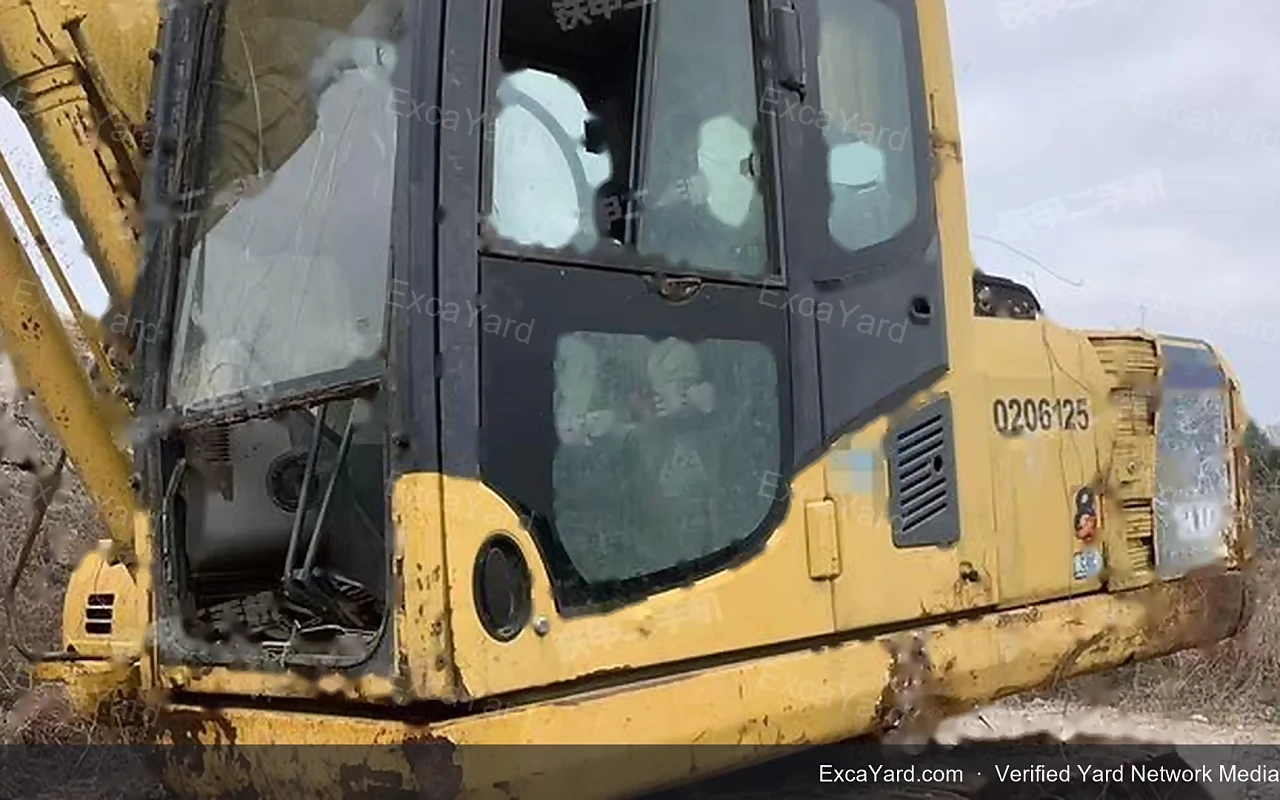
Worked example. Komatsu PC200-8, 2014 build year, 8,200 hours, Grade B condition, Ningbo yard. Lagos landed cost in NGN using a NAFEX rate of NGN 1,610 / USD (representative of mid-2026 conditions).
| Cost item | USD | NGN @ 1,610 |
|---|---|---|
| FOB Ningbo (Grade B, 2014 PC200-8) | 31,800 | 51,198,000 |
| Ocean freight Ningbo → Apapa (RoRo, 38 days) | 3,950 | 6,359,500 |
| Marine insurance (0.65% CIF) | 232 | 373,520 |
| CIF Apapa value | 35,982 | 57,931,020 |
| ECOWAS CET duty (5% for HS 8429.52) | 1,799 | 2,896,990 |
| VAT (7.5% on CIF + duty) | 2,834 | 4,562,740 |
| ETLS (ECOWAS Trade Liberalisation Scheme) levy 0.5% of CIF | 180 | 289,800 |
| NESS / CISS surcharge (1% of FOB) | 318 | 511,980 |
| SONCAP inspection fee | 780 | 1,255,800 |
| NCS processing and CRFI charges | 420 | 676,200 |
| Apapa terminal handling and shore handling | 880 | 1,416,800 |
| Form M and FX premium (12-22% over CBN rate) | 4,200 | 6,762,000 |
| Clearing agent fee (Apapa-based) | 720 | 1,159,200 |
| Inland transport Apapa → Sango Otta or Lekki (typical) | 280 | 450,800 |
| Total landed Lagos | ~58,400 | ~94,000,000 |
| Landed cost as % of FOB | +84% | |
A Grade A 6,000-hour PC200-8 with the same paperwork lands Lagos at approximately USD 64,000-68,000. A Grade C 11,000-hour unit lands at USD 48,000-52,000.
Note: the +84% landed-cost ratio is the highest among the four major destinations in this guide series. The biggest single line is the Form M FX premium — buyers who fail to budget this routinely run out of NGN before clearance closes.
The five Lagos mistakes that cost real importers seven figures in NGN
Field-observed across the 2024-2026 ExcaYard Nigerian buyer cohort. Each one has cost real importers real money.
Mistake 1: Treating the CBN rate as the import rate
The Central Bank of Nigeria publishes a daily USD rate that is used for some federal payments. The actual import FX rate is the NAFEX window rate, which carries a premium of 12-22% over CBN through 2025-2026. A buyer who budgets at the CBN rate finds the Form M closes at the NAFEX rate and the order is short by NGN 7-12 million on a USD 60,000 landed cost. Always budget at NAFEX +5% buffer.
Mistake 2: Shipping before SONCAP is on file
Some buyers, under time pressure, ship before the SC is issued. SON at Apapa or Tin Can Island rejects this and the consignment is held pending domestic inspection. Domestic SON inspection costs USD 1,800-3,400 per machine versus USD 620-940 at China origin, plus 14-28 days of demurrage at NGN 18,000-32,000 per day. The China-origin SC is non-negotiable.
Mistake 3: Choosing an inexperienced authorised dealer bank
Of the 24 commercial banks in Nigeria, approximately 8 handle the bulk of construction equipment Form M filings competently. The other 16 will accept the file but routinely miss-classify, mis-time, or mis-file. A defective bank costs the importer 2-4 weeks of additional Form M time and occasionally USD 1,500-3,000 in incorrect fee charges. ExcaYard works directly with relationship managers at Zenith Bank Lagos Island Commercial branch, Access Bank Marina branch, and GTBank Adeola Odeku branch for routine Form M support — the buyer brings their own bank but may request introduction.
Mistake 4: Going to Apapa when Tin Can Island or Lekki is the correct port
Apapa Port is the default historical port, but it is also the most congested in West Africa. Vehicle congestion outside the gates ("Apapa gridlock") regularly adds 3-7 days of trucking delay for inland transport. For a Lagos-bound machine to Sango Otta, Ikorodu, Mowe, or Lekki, the inland delay alone costs USD 400-900 in driver time. Tin Can Island is operationally lighter and faster for the same clearance procedure. Lekki Deep Sea Port (operational from 2023) is the newest option — RoRo handling is excellent and inland access to the Lekki Free Trade Zone is direct. ExcaYard recommends Tin Can Island for routine 20-ton class shipments through 2026.
Mistake 5: Failing to verify the clearing agent's CRFI rights
The Customs Recognised Forwarder Identifier (CRFI) is the per-agent licence to file at NCS. Some buyers contract with a "broker" who in turn subcontracts to a CRFI-holding agent — adding a margin layer and a communication step. ExcaYard's two recommended Apapa agents and one Tin Can Island agent hold direct CRFI rights and there is no subcontracting layer. Verify the agent's CRFI before signing the service agreement.
Apapa vs Tin Can Island vs Lekki — which port to choose?
The choice is operationally important and affects total cost and time by USD 800-1,500.
- Apapa: Default historical port. Highest throughput, deepest clearing-agent bench, most familiar to old-line Lagos importers. The downside is congestion — both vessel queueing time at the anchorage and truck access through Apapa-Wharf Road. Best for first-time buyers who want maximum agent choice and are not in a rush.
- Tin Can Island: Operationally lighter, materially faster on average for the same clearance procedure. Good clearing-agent bench. Best for buyers who want speed and have a pre-arranged agent.
- Lekki Deep Sea Port (LDSP): Newest, post-2023 commissioning. Excellent RoRo handling for used equipment. Direct inland access to Lekki Free Trade Zone (relevant for buyers operating in or near the FTZ). Smaller clearing-agent bench but growing fast. Best for buyers whose final site is in Lekki, Ibeju-Lekki, Epe, or eastern Lagos State.
- Onne (Port Harcourt): Niche. Used by oil-and-gas yards and South-South buyers (Rivers, Bayelsa, Akwa Ibom, Delta). Direct clearance avoids the 600+ km Lagos-to-Port Harcourt inland leg. Recommended for any machine whose final use is in the South-South or Eastern region.
- Calabar: Smaller volume, used occasionally for Cross River and Akwa Ibom buyers. Acceptable but limited agent pool.
For routine Lagos-bound 20-ton class shipments in 2026, Tin Can Island is the operational sweet spot. Apapa for buyers with established agents. Lekki for east-Lagos final sites.
Payment and currency mechanics
The standard payment mechanic for Nigerian-bound used excavator imports in 2026 is T/T (telegraphic transfer / SWIFT) in USD from the buyer's authorised dealer bank to the Chinese exporter's Bank of China account, executed under an approved Form M with NAFEX FX allocation. The Form M is the regulatory backbone: no Form M, no FX, no shipment.
Standard sequence:
- Pro-forma invoice from ExcaYard — locks the machine spec, CIF Apapa value, HS code, and incoterms.
- Form M registration with authorised dealer bank — bank submits to CBN through Trade Monitoring System.
- SONCAP Product Certificate at China origin — Intertek, Cotecna, SGS, or BV inspection at the Shanghai or Ningbo yard.
- 30% deposit on Form M approval — via T/T from the authorised dealer bank.
- 70% balance on Bill of Lading copy — 4-7 working days before vessel arrival.
- Clearance at Apapa, Tin Can Island, or Lekki — by the buyer's CRFI-licensed clearing agent.
L/C (Letter of Credit) is available and increasingly common for 3+ machine orders. Wise multi-currency transfers cannot be used for Nigerian commercial imports — Form M and NAFEX require an authorised dealer bank.
Forbidden payment methods: any crypto-asset wire, any informal FX channel, any cash settlement at Apapa or Tin Can Island. These trigger Economic and Financial Crimes Commission (EFCC) review and the import file is held indefinitely.
ExcaYard's role in a Nigerian import
The division of work is:
- ExcaYard handles in China: yard verification, machine VIN and hour-meter cross-check (see [[used-excavator-hour-meter-fraud-spot-it-2026]]), SONCAP Product Certificate scheduling and inspection coordination, Bill of Lading preparation, deposit and balance receipt, vessel booking on the Lagos-routed liner services.
- Buyer's authorised dealer bank handles: Form M registration, NAFEX FX allocation, T/T execution to Bank of China.
- Buyer's local clearing agent handles in Lagos: NCS filing, duty and VAT payment, SONCAP verification at port, terminal off-take, inland transport.
ExcaYard maintains working relationships with two Apapa CRFI agents and one Tin Can Island CRFI agent for buyer introduction.
FAQ
What is the cheapest legal way to import a used PC200-8 to Nigeria in 2026?
Source from a CCPIT-registered Ningbo or Shanghai yard with a 2012 or newer build, ship RoRo to Tin Can Island under an active Form M with SONCAP on file, use a CRFI-licensed clearing agent. Total landed Lagos for a Grade B 8,200-hour PC200-8 is approximately NGN 94 million (USD 58,400) in 2026 at NAFEX NGN 1,610 / USD.
Why is the Form M FX premium so high?
Through 2025-2026 the NAFEX window has cleared imports at NGN 1,580-1,720 per USD versus a CBN published rate of NGN 1,420-1,520. The 12-22% spread is a function of CBN's FX rationing and the demand-supply imbalance in the NAFEX window. Budget USD costs at the NAFEX rate, not the CBN rate.
Can I import a 2008 machine?
Technically yes — Nigeria has no statutory age cap. Practically, NCS examiners at Apapa and Tin Can Island flag pre-2010 builds for closer inspection, and Nigerian secondary-market resale of pre-2010 used excavators is materially thinner. Source 2012 or newer. The price premium over a 2008-2010 unit is typically USD 2,500-4,500 at Shanghai FOB; pay it.
Do I need a Nigerian company to import?
Yes. Form M can only be registered against a corporate entity with a Tax Identification Number (TIN) and active CAC (Corporate Affairs Commission) registration. A sole proprietorship registered with CAC is the lightest legal structure; registration cost approximately NGN 30,000-60,000.
Can I clear at Onne or Calabar instead of Lagos?
Yes. Onne is recommended for South-South-bound machines (Port Harcourt, Yenagoa, Uyo, Warri) — avoids the 600+ km Lagos-PH inland leg that costs USD 1,400-1,900 in heavy-haul. Calabar is acceptable for Cross River and Akwa Ibom buyers but the clearing-agent bench is small. Direct clearance is materially cheaper than Lagos-and-truck for these regions.
What is the typical resale retention after one year?
For Grade B Komatsu, Caterpillar, and Hitachi 20-ton class machines, 12-month resale retention is approximately 75-84% of landed cost in the Lagos secondary market. Sany and Doosan retain 62-72%. Heavy-utilisation oil-and-gas yard machines in Port Harcourt depreciate faster: 55-65% retention at 12 months. The deep Lagos secondary market supports relatively high retention versus more thinly traded West African markets.
How does ExcaYard handle post-landing service?
ExcaYard provides a 30-day post-landing operational warranty covering hydraulic pump, swing motor, travel motor, and engine. Defects within 30 days that prevent normal working operation are remedied by the originating yard. Service inquiries: WhatsApp +86 15052273039 (8615052273039).
References
This guide draws on the SONCAP programme rules updated through 2025, the ECOWAS CET schedule effective 2025, NCS CMTA Nigeria implementing rules, the CBN Foreign Exchange Manual revised 2024, and ExcaYard's own 2024-2026 shipment file of 87 documented Apapa, Tin Can Island, Lekki, and Onne clearances. For the corresponding processes elsewhere see [[how-to-import-used-excavator-to-kenya-2026]], [[how-to-import-used-excavator-to-philippines-2026]], and [[how-to-import-used-excavator-to-indonesia-2026]].
Buyers with active inquiries should reach the ExcaYard sales line on WhatsApp at +86 15052273039 for current Shanghai and Ningbo yard inventory and live landed-Lagos quotes. Quotes are valid for 7 days and lock the specific machine VIN against the buyer's name for the deposit period.

Cat vs Volvo Used Excavator: Honest Comparison for Export Buyers (2026)
Caterpillar vs Volvo used excavators — fuel economy, parts availability, resale value, and operating cost compared. Which to buy for African or Southeast Asian markets?
20-Ton vs 30-Ton Used Excavator: Which Class Should You Buy?
20-ton (Cat 320, Komatsu PC200) vs 30-ton (Cat 330, Komatsu PC300) — payload, fuel cost, transport cost, ROI per job class. Which makes more money for export buyers?
Sany vs XCMG Used Excavators: Chinese-Brand Comparison Guide
Sany vs XCMG used excavator comparison — quality, parts availability, dealer network, resale value. Honest take on the two largest Chinese OEMs for export buyers.