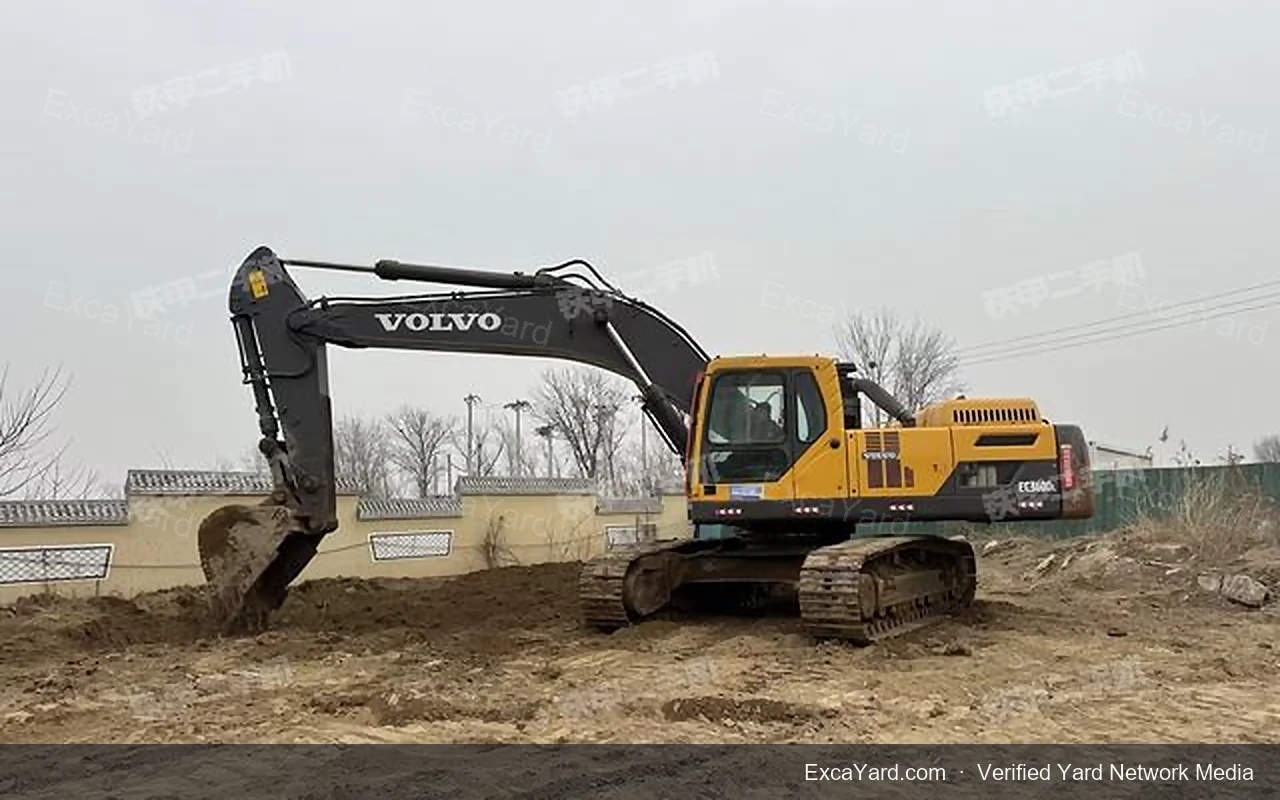
How to Import a Used Excavator to the Philippines: 2026 Complete Guide
Step-by-step guide to importing a used excavator from China to the Philippines — port choice (Manila / Cebu / Davao), BoC clearance, customs duty, payment terms, and total landed cost worked example.
The Philippines is one of our largest export destinations. The Build Better More infrastructure program, Mindanao’s nickel and gold mining boom, and steady real estate construction across Luzon all generate consistent demand for used excavators in the 20-35 ton class. This guide walks through the actual import process based on shipments we have handled over the past five years.
Compared to other major export markets, the Philippines is one of the easier countries to import used machinery into. No mandatory pre-shipment inspection, electronic customs system, and decent port infrastructure. But the choice of port matters more here than almost anywhere else.
Step 1: Choose the right port
The Philippines is an archipelago of 7,000+ islands. The port you ship to determines hundreds of dollars of inland trucking cost and weeks of project timeline.
Manila (North Harbor / South Harbor) handles the bulk of national imports and is the right choice for Luzon construction, NCR projects, and any destination in the northern half of the country. Best ocean shipping schedules from China — typically 12-15 days from Shanghai. Manila customs is busy but well-equipped.
Cebu serves the Visayas region (central Philippines). For destinations on Cebu, Bohol, Negros, Panay, or Leyte, Cebu port saves significant inter-island trucking. Slightly less frequent ocean shipping schedules than Manila but still 14-17 days from China.
Davao is the gateway to Mindanao. For any mining destination (Surigao, Compostela Valley, Davao del Sur), the Davao route saves 7-14 days of additional inter-island shipping versus landing in Manila and re-shipping south. Mining destinations specifically should plan around Davao.
Subic Bay is sometimes used for free-zone import and re-export operations, particularly when a buyer wants to test machines locally before final delivery.
Choosing the wrong port is the single most expensive mistake in Philippines imports. We have seen buyers ship to Manila and then truck their machine 600 km to a Mindanao project, paying twice what direct-to-Davao shipping would have cost.
Step 2: Pre-shipment documentation
Unlike Nigeria, Kenya, or Saudi Arabia, the Philippines does not require mandatory pre-shipment inspection (PSI) or origin-side conformity certificates for used construction machinery. This simplifies documentation significantly.
Standard documents we provide for Philippines shipments:
- Commercial Invoice (CI) — machine spec, price, terms
- Packing List (PL) — dimensions, weight, container/RoRo arrangement
- Bill of Lading (B/L) — issued by the carrier, original copies released against payment
- Certificate of Origin (CO) — from CCPIT, confirming Chinese manufacture and our exporter status
- Inspection report — our 150-point internal report (not a regulatory requirement but standard practice)
- Photos — pre-shipment photos including hour meter and serial plate
If the importer is registered with the Bureau of Customs and has a Tax Identification Number (TIN), no additional pre-shipment paperwork is required. First-time importers will need to register before the shipment arrives.
Step 3: Payment terms
Two payment structures dominate Philippines transactions:
30/70 TT (telegraphic transfer) is the most common. 30% deposit upon order confirmation triggers our yard payment and inspection process. The remaining 70% is paid against a copy of the Bill of Lading once the machine is loaded for shipment. The original B/L is released to the buyer within 5-7 days after final payment clears.
LC at sight (Letter of Credit) is used for orders above $80,000 or when the buyer prefers stronger payment protection. Setup takes 7-14 days through any major Philippine commercial bank. LC bank charges are paid by the buyer; we cover our bank’s charges.
Filipino importers occasionally request consignment terms or extended credit. We do not extend credit — every shipment is paid in full before B/L release. This is standard international trade practice and exists for AML compliance.
Step 4: Customs duty and tax structure
For used construction machinery (HS code typically 8429.5210), the Philippines tariff structure is:
- Import duty: 1-10% depending on HS classification (most used construction machinery falls in the 1-5% range)
- VAT (Value Added Tax): 12% of (CIF value + duty)
- Customs documentary stamps: minor (under $50)
- Arrastre and wharfage: port handling fees, typically $200-400
Total landed taxes typically work out to 15-20% of CIF value. Final calculation should always be confirmed by your Philippine customs broker against the specific HS code your shipment is classified under.
Step 5: Total landed cost worked example
For a 2018 Cat 320D with EXW Shanghai price $52,000:
| Item | USD |
|---|---|
| Machine EXW Shanghai | 52,000 |
| Inland transport to Shanghai port | 700 |
| Container loading and lashing | 600 |
| 40HQ container ocean freight to Manila | 1,650 |
| Marine insurance (0.5% of CIF) | 275 |
| Total CIF Manila | 55,225 |
| Manila port arrastre + wharfage | 320 |
| Customs duty (3% × CIF) | 1,657 |
| VAT (12% × (CIF + duty)) | 6,826 |
| Customs broker fee | 600 |
| Container demurrage buffer (3 days) | 200 |
| Container delivery to Metro Manila site | 450 |
| Total Landed Cost (Manila site) | ~65,278 |
That is approximately a 25% markup over EXW Shanghai. For Davao or Cebu, add approximately $700-1,200 in ocean freight; for trucking to provincial Luzon destinations, add another $200-800.
Step 6: Container vs RoRo decision
For machines up to 22 tons (Cat 320, Komatsu PC200 class), container shipping is almost always cheaper. Both 40HQ and 40’ flat-rack options are available. We typically use 40HQ with boom removed and lashed in the boom-rest position.
For 25+ ton machines (Cat 330, Komatsu PC300 class), RoRo via Höegh Autoliners or Wallenius Wilhelmsen becomes competitive. RoRo from Shanghai to Manila is approximately $2,400-3,200 plus $300-500 in lashing and surveyor fees.
For 50+ ton mining-class machines, break-bulk shipping is the only option. These shipments require crane loading at Shanghai or Tianjin and crane unloading at the destination port — Manila North Harbor can handle this; Davao has limited heavy-lift crane capacity and may require routing via Manila first.
Step 7: Customs clearance timeline
Manila customs typically clears used construction machinery within 7-12 business days from vessel arrival, assuming complete documentation. The process:
- Vessel arrives at Manila North Harbor
- Importer’s customs broker files entry through ASYCUDA (Philippines’ electronic customs system)
- Duty and VAT assessed and paid
- Physical examination by customs officer (random selection — about 30% of machinery shipments are examined)
- Release for delivery
Cebu and Davao process times are similar but with slightly less frequent broker availability. We recommend pre-clearance coordination: have your broker file the entry before the vessel arrives so duty assessment happens immediately on arrival.
Common mistakes to avoid
- Wrong port choice: shipping to Manila for a Davao destination, costing $1,500+ in unnecessary inter-island shipping.
- No customs broker pre-engaged: arriving at the port to discover you need to find and contract a broker, losing 5-10 days.
- Incorrect HS code on Commercial Invoice: triggers reassessment and delays. We always use 8429.5210 for crawler-mounted used excavators, but the broker should confirm against the specific configuration.
- Underestimating storage costs: port storage in Manila accrues at $40-60/day after the free demurrage period. Plan to clear within 5-7 days of arrival.
- Skipping pre-shipment photos: photos from origin help resolve any condition disputes after arrival. We provide them as standard but some exporters do not.
- Buying machines older than 15 years: Philippines does not have a strict age limit like Vietnam, but very old machines have weaker parts availability and command lower resale.
Mindanao mining buyers — specific notes
Mining operations in Surigao del Norte, Surigao del Sur, Davao Oriental, and Compostela Valley are the strongest sustained source of demand in the country. For these destinations:
- Davao port is the right choice (not Manila)
- 35-ton class machines (Cat 336, Komatsu PC350, Hitachi ZX350) are the popular spec
- RoRo shipping is standard for this class
- Heavy-duty (H-spec) undercarriages are valued — the rocky mining terrain accelerates standard undercarriage wear
- Local mining trucking networks can move machines from Davao port to inland sites — we can recommend logistics partners
What we provide for Philippines shipments
For every Philippines export, we coordinate:
- Machine sourcing across our China yard network
- 150-point inspection report (PDF)
- Origin documentation package (CI / PL / B/L / CO)
- Container loading or RoRo dispatch
- Pre-departure photos and weight confirmation
- B/L release upon final payment
We do not handle: Philippine customs clearance (your local broker), domestic trucking from port to site, or local installation support. We can recommend brokers we have worked with previously in Manila, Cebu, and Davao.
Ready to import? Get a CIF quote to your Philippine port — we typically respond within 24 hours with a fully-loaded landed cost calculation for your specific destination.
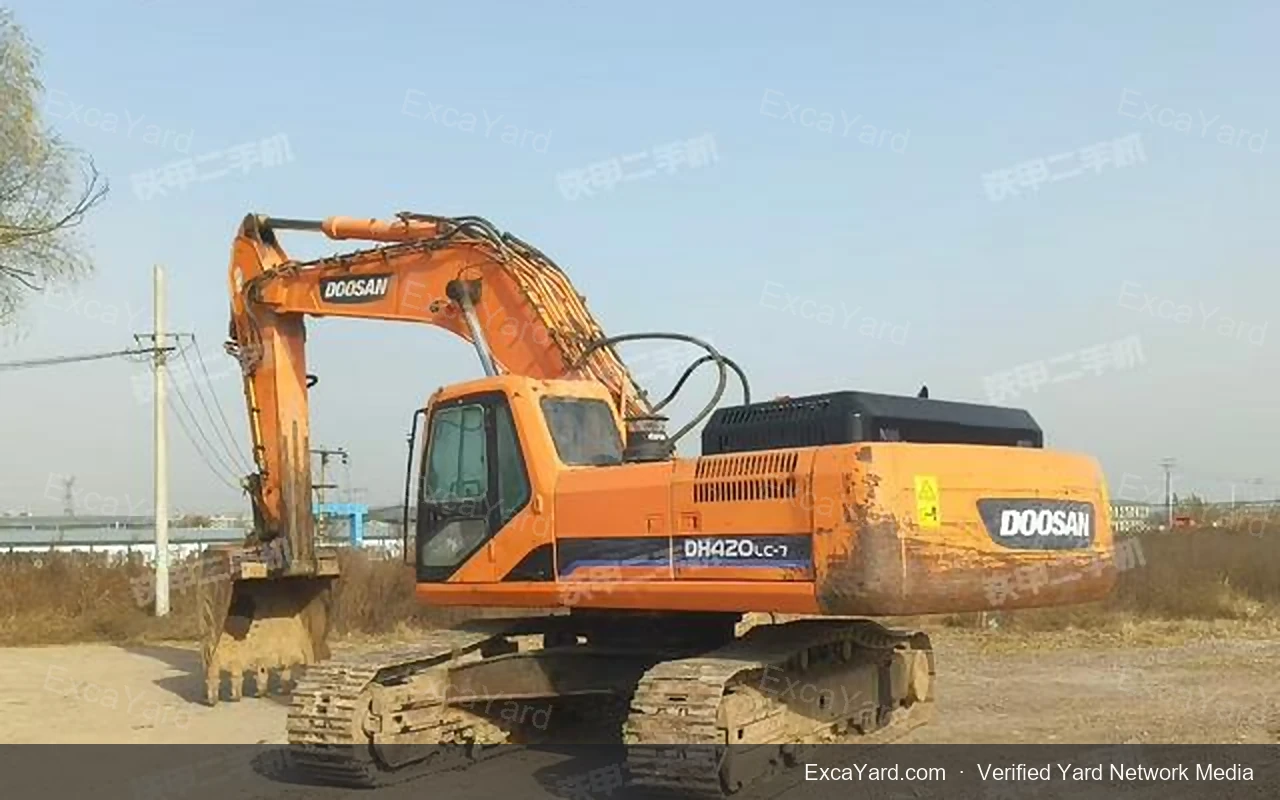
How to Import a Used Excavator to Nigeria: 2026 Complete Guide
Step-by-step guide to importing a used excavator from China to Nigeria — SONCAP, Form M, customs duties, port choice, total landed cost. Real numbers from real shipments.
How to Import a Used Excavator to Indonesia: 2026 Complete Guide
Indonesia import procedure for used excavators from China — Tanjung Priok, SNI standard, B2B import license, customs duty, total landed cost with real numbers.
How to Import a Used Excavator to Kenya: 2026 Complete Guide
Step-by-step Kenya import guide for used excavators from China — Mombasa port, KEBS PVoC, duty/VAT, age limits, total landed cost. Real shipment numbers.