
Used Caterpillar 320D Excavator at $15,000: Unit Economics and Inspection
Used Caterpillar 320D excavator, 2013, 10,690 hours, Grade B, $15,000. Run the unit economics first, then inspect the five systems that decide whether the machine pays for itself.
What $15,000 Buys in a Used Caterpillar 320D Excavator
Fifteen thousand dollars is close to the floor of the 20-tonne crawler market, and this listing shows exactly what that money buys: a 2013 Caterpillar 320D with 10,690 hours on the meter, graded B, fitted with a 1.6 m³ bucket. If you are shopping for a used Caterpillar 320D excavator at the bottom of the price band, the real question is not whether the machine is cheap. It is whether the life left in it is worth more than the repairs the price already assumes you will pay for.
That is an accounting question before it is a mechanical one. A $15,000 machine that needs $9,000 of undercarriage and hydraulic work in the first year is a $24,000 machine, and at that point the comparison set changes completely. So run the numbers before you book a flight or a surveyor.
| Field | Recorded value |
|---|---|
| Model | Caterpillar 320D |
| Year | 2013 |
| Operating hours | 10,690 |
| Price (USD) | 15,000 |
| Grade | B |
| Operating weight | 32.0 t (as recorded — confirm on the serial plate) |
| Bucket capacity | 1.6 m³ |
| Engine model | Not recorded on this listing |
One field in that table deserves a second look. The weight column reads 32.0 t while the machine is sold as a 20-tonne-class 320D, and both cannot be true. Get the serial plate photographed before you price freight or a lifting plan. The plate is what the forwarder and the customs broker will work from, and it is what settles the question.
Ten Thousand Hours on a 2013 Machine
Divide the meter by the calendar and you get a useful number: 10,690 hours across 13 years works out to about 822 hours a year. That is a working machine, not a museum piece, but it is also not a machine that ran double shifts in a quarry. Roughly 820 hours a year sits in the range of a contractor who used it steadily on civil work and parked it in the wet season.
Now divide the price by the meter. Fifteen thousand dollars over 10,690 hours is about $1.40 per hour of past service. That figure is not what the machine will cost you to run. It is the capital you are being asked to sink per hour already on the clock, and it is the cleanest way to compare two listings that differ in age. A younger machine at $29,000 and 10,000 hours asks about $2.90 per hour of meter; this one asks half that. You are buying depreciation, not youth.
The catch is that wear is not linear in dollars. The first 8,000 hours consume filters, oil and tracks. The next 3,000 consume pumps, hoses, pins, and the patience of whoever signs the repair invoices. At 10,690 hours, this 320D sits in the second bracket. Price it that way.
Unit Economics: The Three Numbers a 320D Must Clear
A used crawler does not need a business plan. It needs three numbers to clear, in this order.
Capital recovery. Take the purchase price, add the landed cost, add the first-year repair budget, then divide by the months you expect to own the machine. If you plan to hold it for 30 months and your all-in number is $24,000, the machine must return $800 a month before it earns you a cent.
Hourly cost to run. Fuel, operator, grease, filters, and a reserve for the repair you cannot schedule yet. Fill this from your own site, not from a blog. The only number this listing can give you is the capital component: $1.40 per meter hour, which becomes $0.40 per hour if you put another 4,000 hours on it.
Utilisation. This is where cheap machines die. A $15,000 unit that works 60 hours a month is expensive per hour. The same unit at 180 hours a month is a bargain, because the fixed capital spreads thin and the wear items get replaced on a predictable schedule instead of failing from disuse.
Write the three numbers down before you inquire. If you cannot fill them in, the price is not the problem — the plan is.
Grade B, Read Correctly
Grade B on this listing means mechanically sound with cosmetic wear disclosed. That is a specific promise and it is not the same as “needs nothing”. At 13 years and nearly 11,000 hours, a B grade is honest shorthand for a machine that starts, digs and travels, with paint, seals and pins that show their age.
The mistake buyers make with a B machine is treating the grade as a discount and the price as the budget. The grade tells you where to look, not what you will spend. Budget for the wear items that a B grade explicitly leaves on your side of the table: bucket pins and bushings, track chains and sprockets, hoses that have gone hard, and a seat that has hosted a decade of operators.
Grade also affects resale. A B machine bought at the bottom of the market and maintained properly can be sold as a B machine later, provided you keep the service records. A B machine run into the ground becomes a C, and a C is priced by the kilogram.
What a Used Caterpillar 320D Excavator Inspection Should Cover
Five systems decide whether this specific unit is a $15,000 machine or a $15,000 problem. Inspect them in this order, because the first two can end the conversation.

Hours against wear. The meter says 10,690. The meter is a display, not a proof. Cross-check it against the wear pattern: a machine with 10,690 genuine hours should show consistent undercarriage stretch, pedal and seat wear, and hydraulic hose age. If the meter is low and the tracks are new, ask why. If the meter is high and everything looks fresh, ask what was replaced and keep the invoices.
Undercarriage by measurement. Do not look at track chains; measure them. Chain pitch stretch, sprocket tooth height, roller diameter, idler wear and bushing rotation together tell you how many hours the machine actually spent travelling. On a 320D, undercarriage is the single largest predictable repair bill, and it is the easiest thing to hide with a pressure wash.
Structural cracks. Walk the boom and arm with a light, paying attention to the welds around the boom foot, the stick cylinder mounts and the bucket linkage. Cracks in these areas are repairable, but they change the price by thousands and they tell you the machine worked harder than the meter suggests.
Hydraulic behaviour. Warm the machine, lift the boom, stop, and watch for drift. Time the cycle. Listen to the pump at full load. A 320D with a tired main pump still digs, which is exactly why buyers miss it until the first hot afternoon.
Engine and drivetrain. Check for blow-by at the breather, oil colour and consumption, coolant condition, and play in the swing and final drives. An oil sample is cheap and tells you more than an hour of listening.
The inspection note for this unit is shared on inquiry. Read it before you negotiate, and treat every line as a question you are allowed to ask.
The $15,000 Headline and the Landed Number
The listed figure is the machine price at the source yard. It is not the number that leaves your account. Freight, marine insurance, port charges, inland transport and import duty all land on top, and the only honest way to compare two listings is to ask for the same three quote lines from each: the machine, the freight to your port, and the documentation.
Do not accept a single blended number. When a seller quotes one figure that includes everything, you cannot tell whether you are paying for the machine or for the freight, and you cannot compare it to any other offer. Ask for the breakdown, in writing, before you discuss the final price.
Also ask what is included with the unit: bucket, any spare parts, manuals, and the current photo set. On a machine at this price, a spare bucket or a set of filters is real money, and it is often easier to negotiate than the headline.
Who This Unit Fits
This 320D suits a buyer who already has work for a 20-tonne crawler, a mechanic within reasonable reach, and the patience to fix wear items on a schedule rather than in a panic. It also suits a buyer who wants a known model with a parts network that reaches most markets, because the 320D is one of the most widely supported crawlers ever built.
It does not suit a first-time importer with no inspection plan, or a buyer who needs a machine to earn from day one with zero workshop time. A Grade B machine at this age will ask for attention. If that sentence makes you uncomfortable, this is the wrong end of the market for you, and paying more for a newer unit is the cheaper decision.
Before You Wire a Deposit
- Confirm the hours in person or through a third-party inspection.
- Measure the undercarriage and get the numbers in writing.
- Ask for the last oil sample and the service records, if they exist.
- Confirm exactly what ships with the machine.
- Get the freight quote for your port before agreeing the price.
- Read the inspection note line by line, and price the disclosed items yourself.
FAQ: Used Caterpillar 320D Excavator Questions
Can the hours on this used Caterpillar 320D excavator be verified? The hours are shown on the machine meter and checked during inspection. No seller can prove a meter was never touched, which is why the wear pattern matters more than the display. Compare the meter to the undercarriage, the pins and the hose dates.
What does Grade B mean in practice? Mechanically sound, with cosmetic wear disclosed. It is a working machine, not a rebuilt one. Budget for pins, bushings, tracks and hoses rather than expecting a turnkey unit.
Are parts hard to find for a 320D? No. Genuine and aftermarket parts for this model are stocked in most regions, including Africa and Asia. That availability is a large part of why the 320D holds its resale value.
How does payment usually work? Standard terms are a 30% deposit by bank transfer with the 70% balance before shipment. Letters of credit are possible for established buyers, and other structures can be discussed for bulk orders.
Next Step
If the arithmetic works for your site, look at the full listing for the used Caterpillar 320D excavator, check the rest of the Caterpillar range, or send your destination port and job profile through the contact form and ask for the freight breakdown alongside the machine price.

Used Komatsu PC2008M0 Excavator: The Real Cost of a $27,500 Machine
A used Komatsu PC2008M0 excavator at $27,500 with 3,600 hours. Ownership cost per hour at three utilisation levels, how the PC2008M0 price compares with its class, and the inspection lines that matter.
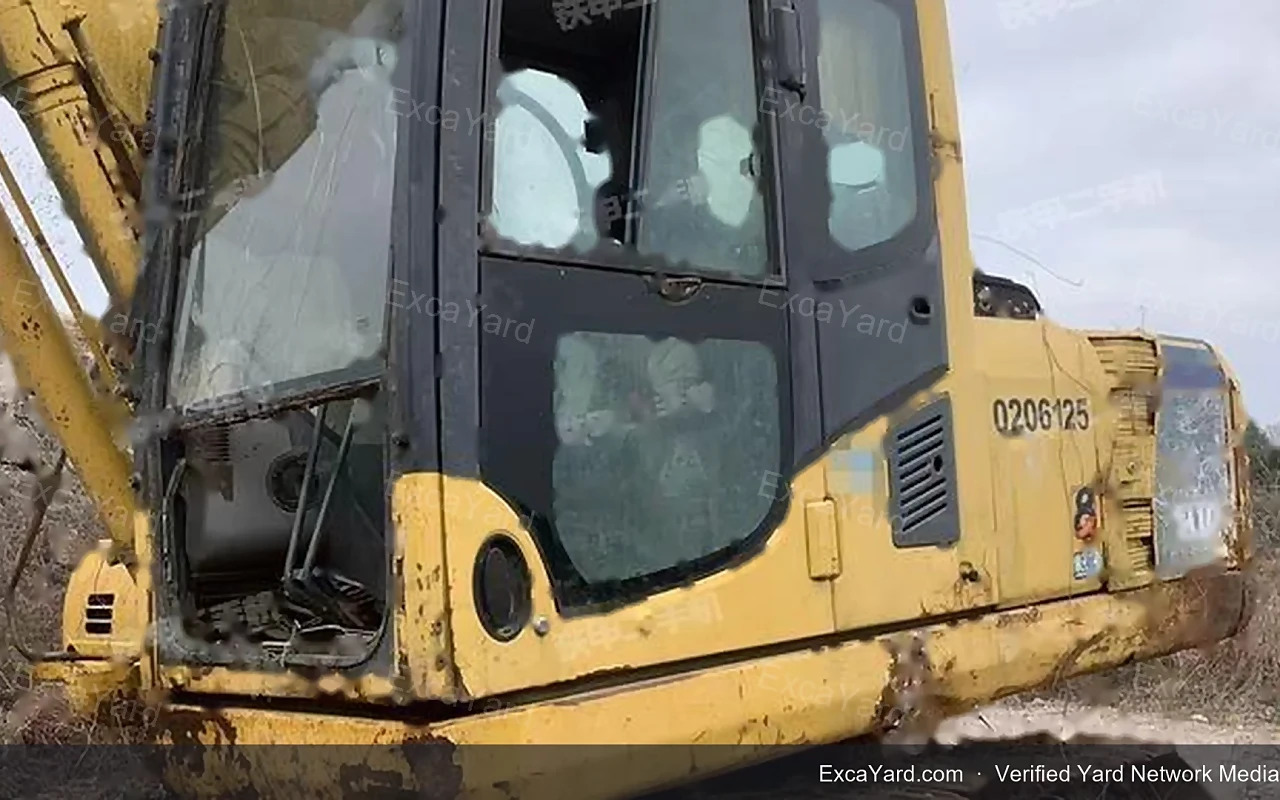
Cat 320 vs Komatsu PC200: Honest Comparison for Used Buyers (2026)
Choosing between a used Cat 320 and a used Komatsu PC200? Real-world differences in fuel economy, parts availability, resale value, and operating cost for export buyers.

Used Excavator Inspection Checklist: 50-Point Field Guide for International Buyers
A practical 50-point inspection checklist for buying a used excavator from China or any export market. Engine, hydraulics, undercarriage, cab — what to actually check, common red flags, when to walk away.