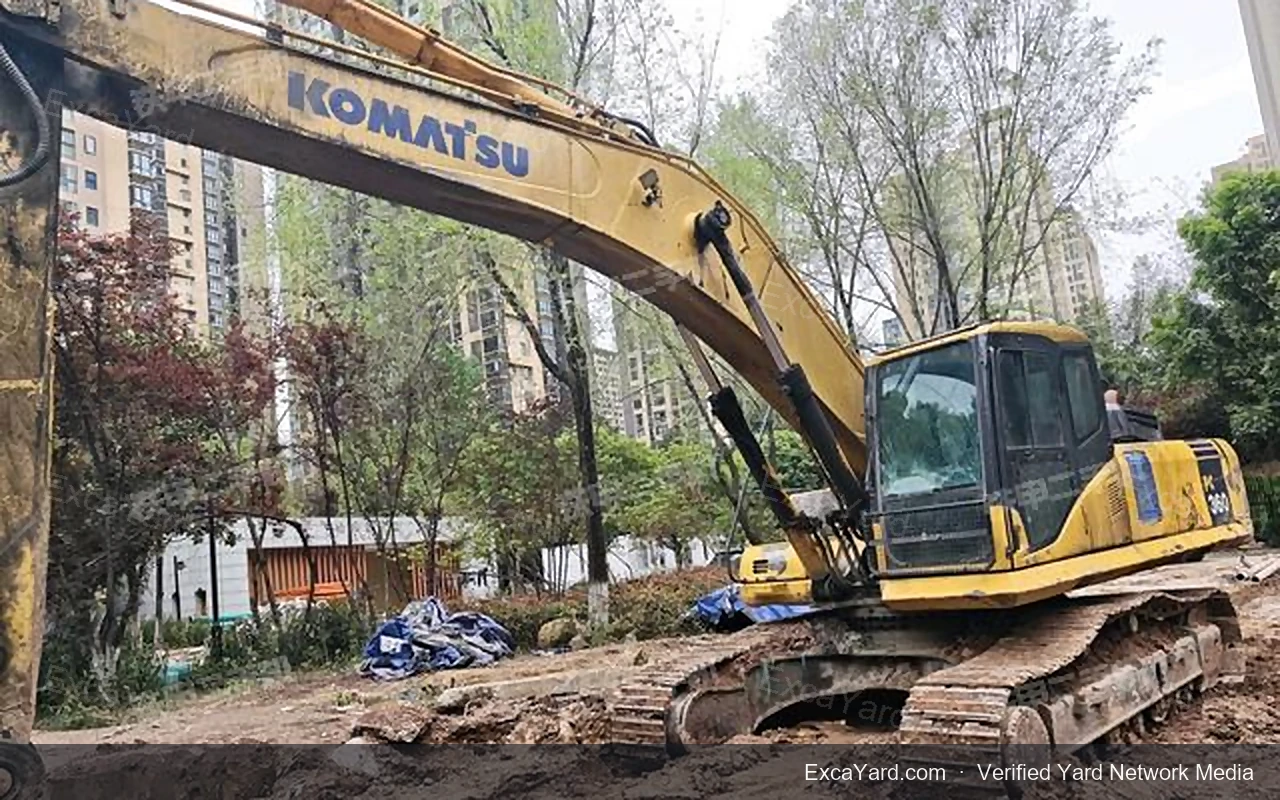
Used Komatsu PC2008M0 Excavator: The Real Cost of a $27,500 Machine
A used Komatsu PC2008M0 excavator at $27,500 with 3,600 hours. Ownership cost per hour at three utilisation levels, how the PC2008M0 price compares with its class, and the inspection lines that matter.
The price is the smallest number in this deal. A used Komatsu PC2008M0 excavator at $27,500, built in 2020 with 3,600 hours on the meter, is easy to look at and hard to price correctly, because the sticker describes what the seller wants and says nothing about what the next several thousand hours will cost you. So let us treat the machine as a ledger instead of a photograph: capital on one side, hours produced on the other, and every assumption written down where you can argue with it.
Everything below is either a field from the listing for stock EXY-KOMAPC2008M0-153 or arithmetic performed on those fields. Where a number depends on your market, it is labelled as an input, not presented as a fact.
The machine as a set of entries
| Line | Entry |
|---|---|
| Make and model | Komatsu PC2008M0 |
| Build year | 2020 |
| Meter | 3,600 hours |
| Operating weight | 20.08 t |
| Bucket | 1.0 m³ |
| Grade | A |
| Ask | $27,500 |
| Location | Partner yard, Beijing, China |
| Stock number | EXY-KOMAPC2008M0-153 |
| Stated hour verification | ECU readout and service log |
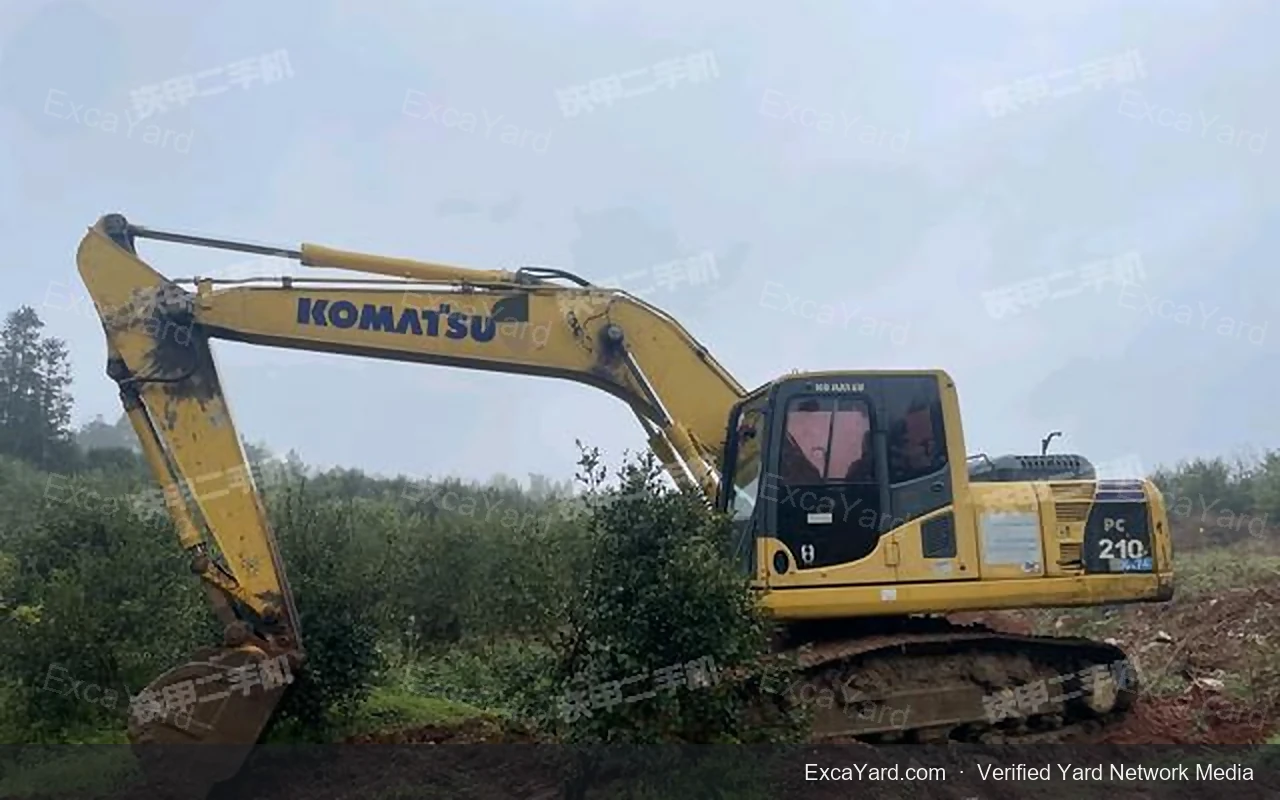
Five of those lines are facts about iron. One is a judgement about presentation. One is money. The rest of this article is about the relationship between the money line and the hours line, because that ratio is the only thing you can actually compare across sellers.
Three numbers decide whether it earns
First number: $7.64. Divide $27,500 by 3,600 hours. That is the capital already consumed for every hour this machine has run. It is the highest figure you will see in this article, and it is the one most buyers never compute.
Second number: hours per month. Not the hours on the meter. The hours you will add. A 20-tonne machine that runs 150 hours a month and one that runs 250 hours a month have the same purchase price and wildly different cost per hour, because the capital is spread over different volumes of work.
Third number: the reserve. The amount you set aside per hour for the wear that is already in the machine and the wear you will add. You cannot read it from the listing. You have to build it from your own repair experience, and it should be a real number in your bid sheet, not a rounding error.
Get those three right and the purchase decision becomes ordinary. Get them wrong and a cheap machine becomes an expensive lesson.
What the used Komatsu PC2008M0 excavator costs per hour
Take the $27,500 capital and spread it over three years of ownership at three realistic workloads. No financing, no resale value assumed, no repairs included. This isolates what the machine itself costs you per working hour.
| Hours per month | Hours over 36 months | Capital cost per hour | Capital cost per month |
|---|---|---|---|
| 150 | 5,400 | $5.09 | $764 |
| 200 | 7,200 | $3.82 | $764 |
| 250 | 9,000 | $3.06 | $764 |
The monthly figure never moves, which is the point. The machine costs you $764 a month in capital whether it works or not. Utilisation is what converts that fixed number into a per-hour figure you can put in front of a customer.
At 200 hours a month, the capital component of an eight-hour day is about $31. Add fuel, operator, maintenance and the reserve, and you have your true daily owning cost. Those three inputs vary too much by country to put in a table here, and inventing them would make the whole exercise worthless.
The 150-hour scenario is the one that fails quietly. At $5.09 per hour of capital, a machine running 150 hours a month needs a noticeably higher rate per hour to return the same money as the same machine at 250 hours. Buyers who calculate their rate on a busy month and then operate a quiet year are the ones who discover this six months late.
What 3,600 hours has already taken
A 2020 machine at 3,600 hours has used roughly a third of a typical first life. That is a comfortable place to buy. The undercarriage is into its wear curve but not at the end of it. Pins and bushings have taken a set. Hydraulic components have proven they work, which is more than a 300-hour machine can tell you.
What it has not done is generate a repair history you can rely on. The listing states hours were verified through the ECU and a service log. Ask to see both. A 2020 unit should have a short, clean, continuous paper trail: delivery, first service, then intervals. Three or four invoices with hour stamps tell you more about the machine than any description.
The reserve question is therefore practical rather than theoretical. Over the next 5,000 hours you will replace wear parts, hoses, maybe a final drive. Price those events from your own market, divide by 5,000, and add the result to your hourly cost. If the answer makes the job unprofitable, the machine is not the problem. The job is.
Where the used Komatsu PC2008M0 excavator price sits in its class
Here is every 20-tonne-class unit in the current ExcaYard file, sorted by meter reading. All of them sit between 20.0 and 21.5 tonnes, so the weight is not what separates them.
| Machine | Year | Hours | Grade | Price | Capital per recorded hour |
|---|---|---|---|---|---|
| Komatsu PC2008M0 | 2020 | 3,600 | A | $27,500 | $7.64 |
| Hitachi ZX2005A | 2021 | 7,000 | A | $22,500 | $3.21 |
| Hyundai R215VS | 2021 | 7,600 | A | $22,500 | $2.96 |
| Sany SY205C | 2020 | 8,500 | B | $20,000 | $2.35 |
| Volvo EC210D | 2019 | 7,850 | A | $18,000 | $2.29 |
| Kobelco SK210LC8 | 2015 | 4,200 | B | $13,500 | $3.21 |
| Kobelco SK2008 | 2015 | 6,200 | B | $12,000 | $1.94 |
Read the last column carefully, because it is easy to misread. A low number does not mean a good machine. It means the previous owner’s hours were cheap for you to inherit, which usually means there are fewer of them left. The $1.94 on the oldest Kobelco is not a bargain signal; it is a statement that most of that machine’s working life has already been spent.
The useful comparison is between machines of similar age. A 2020 Komatsu at 3,600 hours costs $7.64 per recorded hour. A 2020 Sany at 8,500 hours costs $2.35. The Komatsu is 3.25 times more expensive per hour of prior use and carries 4,900 fewer hours. Whether that trade is good depends entirely on what those 4,900 hours would have cost you in repairs, downtime and lost jobs. Nobody can answer that from a table. You answer it from your own fleet history.
What the table does prove is that hours, not tonnage, set this price band. A 2019 Volvo with 7,850 hours is $9,500 cheaper than a 2020 Komatsu with 3,600. Same class, similar reach, different remaining life. If you shop by brand alone you will overpay; if you shop by hours alone you will buy someone else’s rebuild.
Turning hours into a bid
The practical use of all this is a bid sheet that does not lie to you. Build it in four lines.
- Owning cost per hour. Capital divided by the hours you expect to run during your ownership. Use the table above, or your own horizon.
- Reserve per hour. Your estimate of wear and repair cost over that same horizon.
- Running cost per hour. Fuel, lubricants, operator, insurance, site moves. All local inputs.
- Target margin. Your number, not the market’s.
Add the first three, add margin, and you have the hourly rate a job must clear. Then sanity-check it against what your market actually pays for a 20-tonne machine. If the required rate is above the market, the machine is not the right asset for that market, no matter how good the listing looks.
At 200 hours a month, the capital line contributes about $3.82 and the reserve might add a similar order of magnitude depending on your experience. That is a manageable number. At 100 hours a month it doubles, and the same machine that looked cheap starts to look like a liability.
PC2008M0 inspection priorities
A PC2008M0 inspection should be boring. Boring means predictable: the same checks, in the same order, producing the same evidence regardless of how enthusiastic the seller is.
- Meter and documents. ECU readout, dashboard, serial plate in one continuous shot. Service log with hour stamps. If the log stops two years ago, ask why.
- Undercarriage. Track chain height, sprocket teeth, roller and idler surfaces, track tension. This is the largest single wear item on the machine.
- Pins and bushings. Boom foot, boom-to-stick, stick-to-bucket, bucket linkage. Take up play with the bucket on the ground and check again in the air.
- Structure. Welds on boom, arm, carbody and counterweight mounting. Non-factory welds are a price event, not necessarily a rejection.
- Hydraulics. Cylinder rod chrome, hose date codes, seepage at the swing motor and travel motors, oil colour on the dipstick.
- Function cycle from cold. Start cold, idle, full throttle, then every function under load. Listen for the swing brake and check travel tracking on flat ground.
The order matters because the first item can invalidate the rest. A machine with an unverifiable meter is not a $27,500 machine; it is an unknown machine wearing a $27,500 label.
When this unit stops being the cheap option
Three conditions turn a good buy into a bad one, and all three are visible before you wire money.
The utilisation assumption collapses. If the job that justified 200 hours a month shrinks to 100, your capital cost per hour doubles and your bid sheet is suddenly fiction.
The parts channel is slow. This model is well supported in most export markets, but “well supported” is a claim about averages, not about your town. Check who stocks filters, seals and undercarriage for this model within reach of your yard before you commit, not after the first failure.
The exit is crowded. A 2020 machine at 3,600 hours will still be a 2020 machine when you sell it. Its resale value depends on how many similar units are on the market that month, which you cannot control. Buying at a fair price is your only real protection.
FAQ
Is $27,500 a fair price for a used Komatsu PC2008M0 excavator? It is consistent with the rest of the file for a 2020 Grade A unit at 3,600 hours. Fairness depends on what you compare it to: against higher-hour 2020 machines it is expensive, against newer low-hour units it is cheap. The number only becomes meaningful once you attach your own utilisation and reserve.
What does the PC2008M0 price include? The listed price covers the machine as described. Freight, insurance, port costs, inland transport and import duty sit outside it. Ask for a landed figure before you compare it with a local machine.
How do I verify hours on this unit? The listing states ECU readout plus service log. Request both as evidence: a photo or screen recording of the readout with the serial plate visible, and invoices that show hour readings at each service interval.
What should a PC2008M0 inspection focus on? Meter evidence first, then undercarriage, pins and bushings, structural welds and a cold-start function cycle. Undercarriage and pins are where a 3,600-hour machine will demand money first.
The last line of the ledger
A used Komatsu PC2008M0 excavator at $27,500 and 3,600 hours is a reasonable asset with a computable cost, provided you compute it before you buy rather than after. The capital line is fixed at $764 a month. Everything else is a decision you make with your own numbers.
The full photo set and specification for this unit are on the used Komatsu PC2008M0 excavator page. For model background and the wider range, see the Komatsu brand page. If you want a landed cost for your port and a straight answer on whether this unit suits your workload, send the ExcaYard team your details.
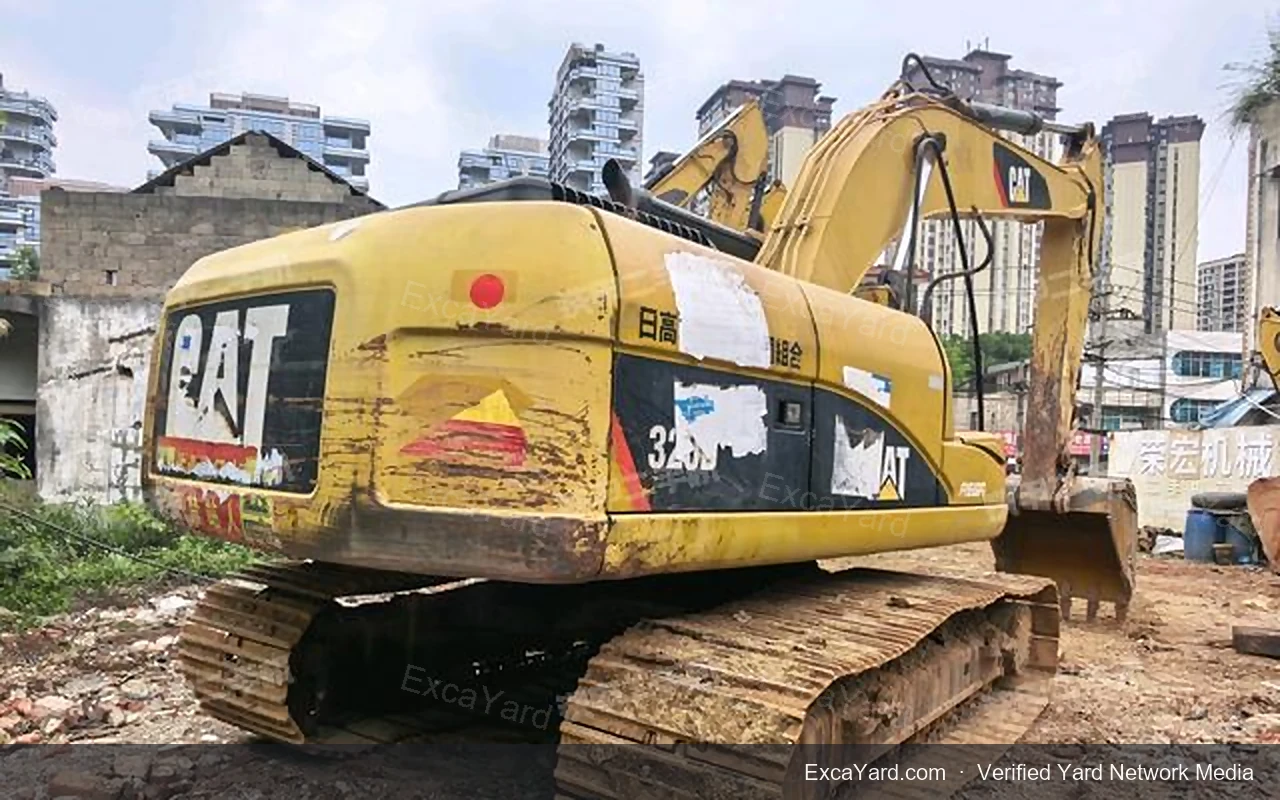
Used Caterpillar 320D Excavator at $15,000: Unit Economics and Inspection
Used Caterpillar 320D excavator, 2013, 10,690 hours, Grade B, $15,000. Run the unit economics first, then inspect the five systems that decide whether the machine pays for itself.
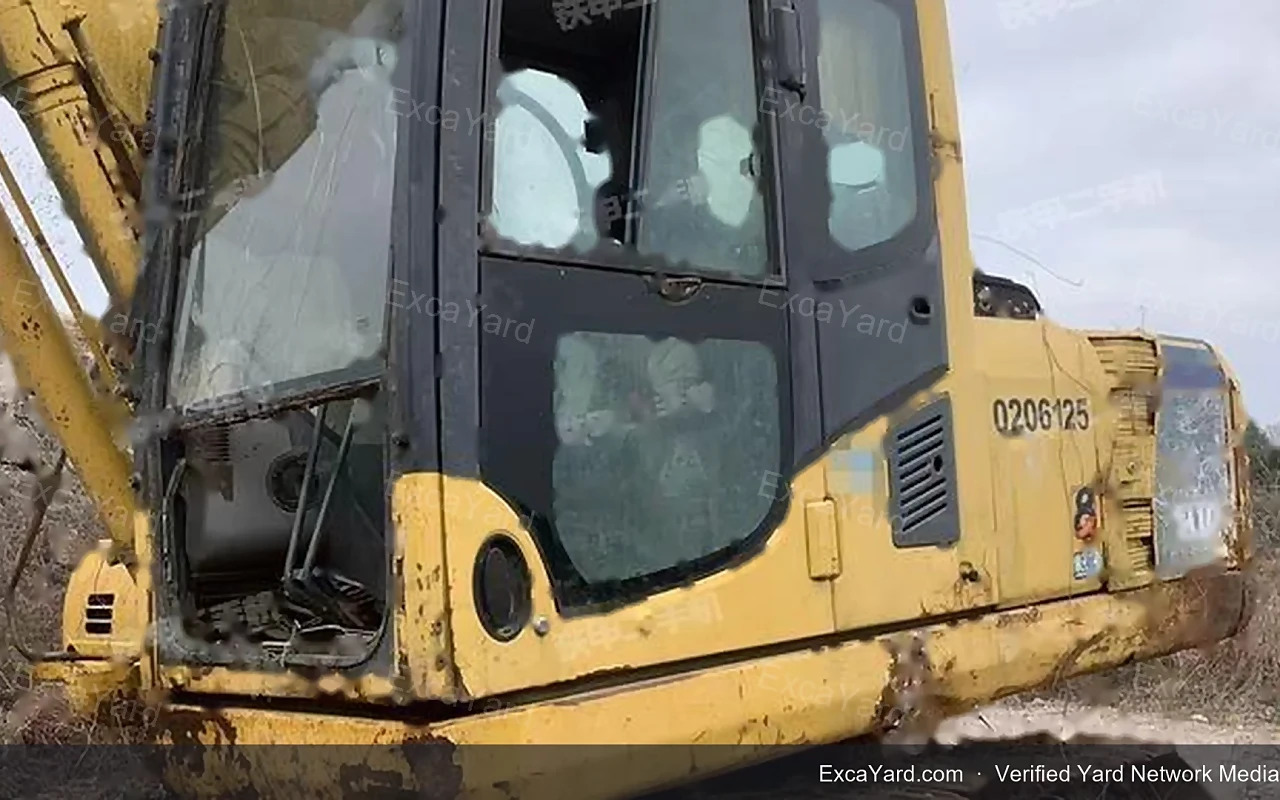
Cat 320 vs Komatsu PC200: Honest Comparison for Used Buyers (2026)
Choosing between a used Cat 320 and a used Komatsu PC200? Real-world differences in fuel economy, parts availability, resale value, and operating cost for export buyers.
20-Ton vs 30-Ton Used Excavator: Which Class Should You Buy?
20-ton (Cat 320, Komatsu PC200) vs 30-ton (Cat 330, Komatsu PC300) — payload, fuel cost, transport cost, ROI per job class. Which makes more money for export buyers?