Used Caterpillar 336D2 Excavator: A $22,000 Price That Demands Inspection
A 2018 used Caterpillar 336D2 excavator at 33.6 t, 9,999 h and $22,000. What the 336D2 price can and cannot tell you, how to test the hour reading, and the inspection order that protects your deposit.
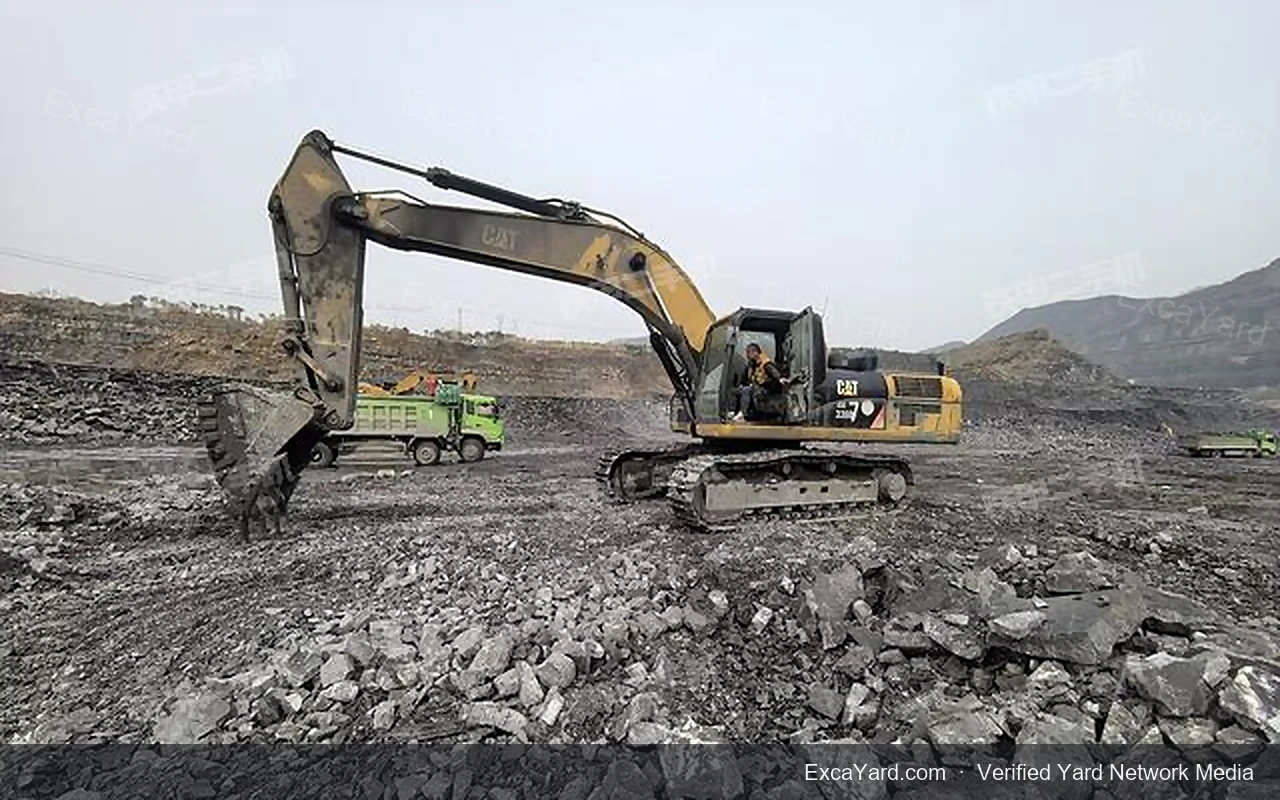
A used Caterpillar 336D2 excavator advertised at $22,000 will do one of two things to a buyer: end the search early, or start a proper investigation. This listing belongs in the second category. The machine is a 2018 unit, recorded at 9,999 hours, listed at 33.6 tonnes with a 1.68 m³ bucket, graded B, and offered from a partner yard in Shiyan.
None of those fields is a warning on its own. Together they describe a heavy machine with a long meter reading being sold at a price that sits below lighter, younger units in the same inventory. That is not proof of a problem. It is a reason to inspect in a fixed order, with the most expensive failure modes tested first, before any deposit moves.
The claim sheet, before interpretation
| Field | Recorded value |
|---|---|
| SKU | EXY-CATE336D2-206 |
| Model year | 2018 |
| Meter hours | 9,999 |
| Operating weight | 33.6 t |
| Bucket capacity | 1.68 m³ |
| Condition grade | B |
| Price | $22,000 |
| Location | Shiyan, China |
The badge suggests the 36-tonne family; the listing records 33.6 t operating weight, and that is the figure to plan freight around. No engine model is recorded, so none is named here. No repair history is published, which is exactly what a Grade B disclosure usually means: mechanically sound, cosmetic wear present, undercarriage in the 40–60% remaining band, or one minor repair recommended. Those are ExcaYard’s published grade definitions, and they are a description of condition, not a promise about the future.
See the full listing for this used Caterpillar 336D2 excavator for the photo set and the current price.
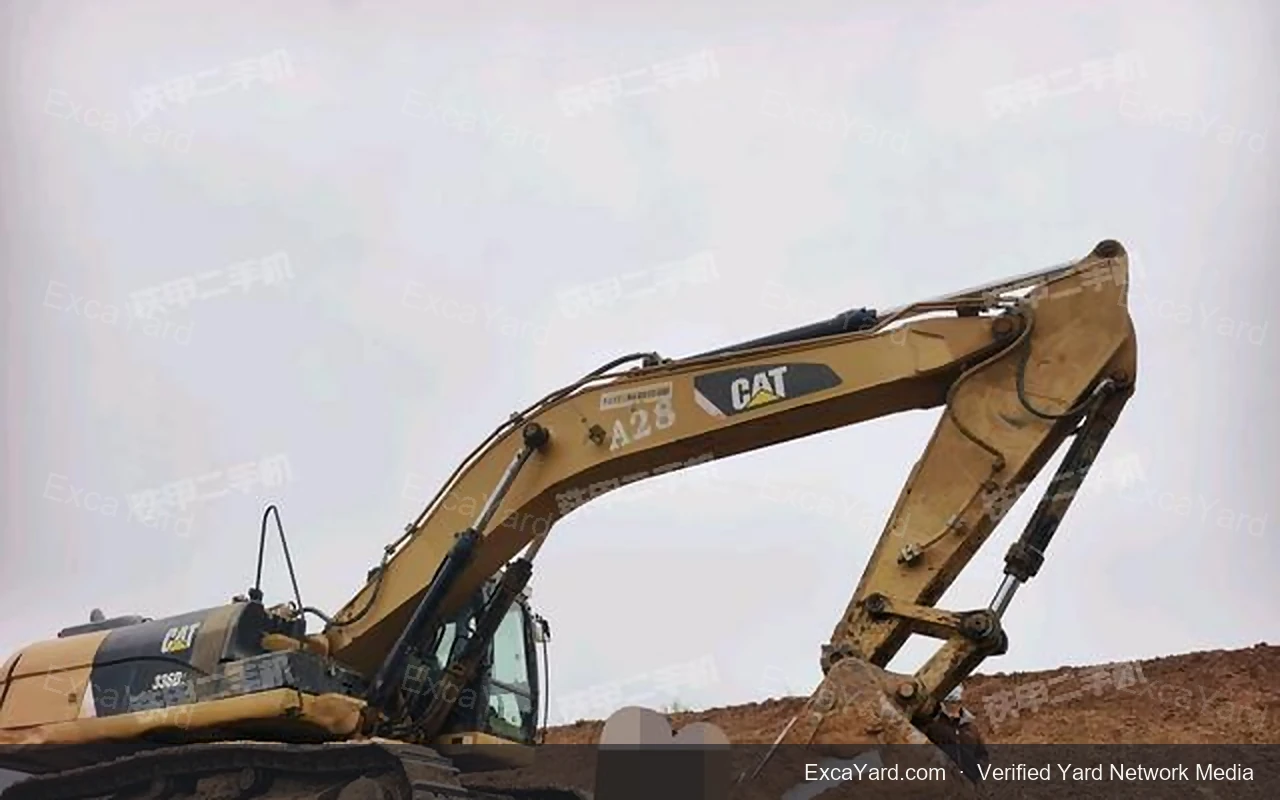
Why the used Caterpillar 336D2 excavator wears a $22,000 sticker
Run the simplest ratio available: price divided by meter hours. That gives $2.20 per recorded hour. Now run it on a 2020 unit in the same inventory at 4,000 hours and $38,000, and the answer is $9.50 per hour. The older, heavier machine is being offered at less than a quarter of the per-hour cost of the younger one.
Three things can produce that gap, and only one of them is good news:
- Hours are real and the price reflects them. A 33.6 t machine near 10,000 hours has consumed a large share of its major components’ first life. The market discounts that, and the discount is rational.
- Grade B is doing its job. Cosmetic wear, a tired undercarriage or a disclosed minor repair can move a price substantially without hiding anything.
- Something in the file is thinner than the price implies. Not necessarily fraud — missing service records, a repaired structure, a replaced component of unknown origin. All of these are common in export inventory and all of them are checkable.
The ratio cannot distinguish among them. Only an inspection can, which is why the order of checks matters more than the length of the checklist.
Four explanations that fit this number
| Hypothesis | What would confirm it | What would kill it |
|---|---|---|
| Hours are genuine and high | Wear pattern, service stamps and ECM data all agree | Meter and wear disagree by thousands of hours |
| Undercarriage is near the end of its life | Link height, sprocket teeth, roller wear measured | Undercarriage measures fresh against the meter |
| A disclosed repair explains the grade | The report names it, with photos and parts used | No report, or a vague “minor issue” |
| The machine is priced to move quickly | Seller accepts inspection without conditions | Pressure to pay before inspection |
Treat each line as a task, not a belief. A seller who welcomes the inspection and supplies the file is telling you something useful. A seller who resists it has already answered the question.
The 9,999-hour reading and the rollover problem
A five-digit hour meter turns over at 10,000. A machine displayed at 9,999 is therefore one hour short of a number that resets, and that coincidence deserves a check before it deserves suspicion.
The practical test has three parts. Photograph the dash with the key on and the machine cold. Pull the ECM total hours with a diagnostic tool and compare the two readings. Then compare both against the wear pattern: track links, sprocket teeth, bucket pins, cylinder rods and the seat and controls. A genuine 9,999-hour machine shows consistent, heavy but even wear. A machine that has rolled over shows wear beyond its displayed figure, usually first in the undercarriage and the pins.
If the ECM cannot be read, that is information too. On a Cat of this generation, a refused or failed diagnostic connection is a reason to slow down, not a reason to walk away by itself — but it should be resolved before money moves.
Used Caterpillar 336D2 excavator inspection, ordered by repair cost
Most checklists are organised by system. Buyers should organise them by exposure instead, because a machine can pass twenty cheap checks and fail one expensive one. Order the 336D2 inspection the same way on every candidate, so two machines can be compared on findings rather than on adjectives.
First: structure. Boom and stick welds, the boom foot, the carbody, the counterweight mounting and the area around the swing bearing. Cracks and previous repairs are the only findings on this list that can make a machine economically unrepairable in a buyer’s market.
Second: undercarriage. On a 33.6 t machine this is the largest consumable assembly, and at this hour reading it is where the money is most likely to be hiding.
Third: hydraulics. Main pump, control valve, swing motor, cylinder rods and seals. A weak pump is expensive and easy to disguise in a warm yard.
Fourth: engine and cooling. Cold start, blow-by, oil condition, coolant condition, radiator and oil cooler fins.
Fifth: cab, electrics and cosmetics. Real costs, but rarely deal-breakers. Negotiate them after the first four are settled.
Undercarriage on a 33.6-tonne machine
Grade B allows 40–60% remaining, which is a wide band. Two machines can carry the same grade with a large difference in remaining life, so ask for measurements rather than a percentage.
Request the track link height, the sprocket tooth profile, roller and idler surface condition, and the bushing turn history if it exists. Photos should be taken with a scale in frame. Then ask the question that matters: how many hours of work does the seller expect before the next undercarriage intervention? A confident, specific answer supported by measurements is worth more than a percentage typed into a message.
Also check track tension and the track frame. A machine that worked in wet ground can carry packed material and a worn chain that photographs badly and measures worse.
Hydraulics: the test that exposes a weak pump
Warm the machine properly. Cold hydraulics hide slowness. Then run a sequence and time it: boom up, boom down, stick in, stick out, bucket curl, swing 180°, travel each track. The absolute times are less important than consistency and response.
Listen for a pump that groans under load, feel for a stick that drifts when held, and watch for any function that is slower than its neighbours. Check every cylinder rod for scoring, pitting and weeping at the wiper. Inspect hose ends and fittings after ten minutes of work, not before. Pull a hydraulic oil sample and read it, because colour in a photo proves very little.
A 1.68 m³ bucket on a 33.6 t carrier is a serious digging tool, and the stresses it puts through the linkage show up in pin and bushing play. Work the bucket by hand and watch for movement at each joint.
Engine, cooling and the cold start
The cold start is the single most useful engine test, and it only works if the machine has not been run before you arrive. Ask for it in writing: no pre-warming, no starting fluid.
A healthy engine catches quickly, settles into a steady idle and clears its exhaust within seconds. Sustained blue smoke, heavy black smoke under load, or a machine that needs throttle to stay running are all findings. Check the oil for milkiness, look under the filler cap for emulsion, and open the radiator cap only when cold. Dust-packed cooling fins are common on machines from single-site work and cause overheating under load even when the yard test looks fine.
Corroborating hours with documents and wear
The strongest file is boring: serial plate photo, meter photo, ECM readout, service records, repair invoices and a measured wear report. Missing records do not prove a machine is bad, but they do mean the 336D2 price should reflect the uncertainty.
Check that the serial plate matches the documents and photos, and confirm the shipped configuration — a different boom or a missing quick coupler changes your commissioning plan.
Three outcomes, three decisions
The file closes. Structure clean, undercarriage measured and consistent, hydraulics strong, hours corroborated. At $22,000 for a 33.6 t Cat, that is a machine worth moving on quickly, and the inspection has converted a suspicious price into an explainable one.
The file closes with a number. One or two findings with known repair costs. Now the price is a negotiation input, not a red flag. Decide on the total cost of ownership, not on the sticker.
The file does not close. Refused diagnostics, inconsistent hours, structural repairs without documentation, or pressure to skip the inspection. Walk. There will be another 336D2, and the deposit is the only thing you cannot recover.
A sound machine whose high hours make it a short-hold asset can still work for a contractor with steady work and a maintenance budget; it is a poor fit for a rental fleet planning to resell in two years.
FAQ
Is $22,000 a realistic price for a used Caterpillar 336D2 excavator? It is the listed price for this 2018 unit at 9,999 recorded hours and Grade B. Whether it is realistic depends on the undercarriage, hydraulics and structural findings. Treat the number as a starting point for inspection, not a market verdict.
How is the hour reading supported on this 336D2? The meter reading is verified during inspection and independent verification is recommended. Compare the dash, the ECM and the wear pattern before you rely on it.
What does Grade B mean on this machine? Mechanically sound with disclosed cosmetic wear, undercarriage in the 40–60% remaining band, or one minor repair recommended, per the published grading standard.
What are the payment terms? 30% deposit by T/T, 70% balance before shipment, with an L/C at sight available for established buyers.
Can the machine be inspected before the balance is paid? That should be the condition of the deal. Schedule the inspection to complete before the balance leaves, and make the report part of the release.
Where can I compare used excavator 336D2 for sale units? Review the Caterpillar inventory and compare hour readings, grades and configurations on the same basis.
Put the inspection before the deposit
If the work needs a 33.6 t machine with a 1.68 m³ bucket, this listing is worth the cost of a proper inspection — precisely because the price invites a shortcut. Ask for the serial plate, the ECM printout, undercarriage measurements and a cold-start video, then have it checked by someone who is not paid by the seller.
Contact ExcaYard with the job details and the findings you want verified.

Used Excavator Inspection Checklist: 50-Point Field Guide for International Buyers
A practical 50-point inspection checklist for buying a used excavator from China or any export market. Engine, hydraulics, undercarriage, cab — what to actually check, common red flags, when to walk away.
How to Check if Excavator Operating Hours Are Genuine (Anti-Fraud Guide)
Used excavator hour meter fraud is common. Step-by-step guide to verify operating hours: ECM cross-check, undercarriage wear, hydraulic stamps, photo evidence.
Used XCMG XE200DA Excavator: Verifying the 2023 Premium
A used XCMG XE200DA excavator, 2023, 3,000 hours, $39,500: how to test whether the near-new premium is real, which evidence to demand and when to walk away.