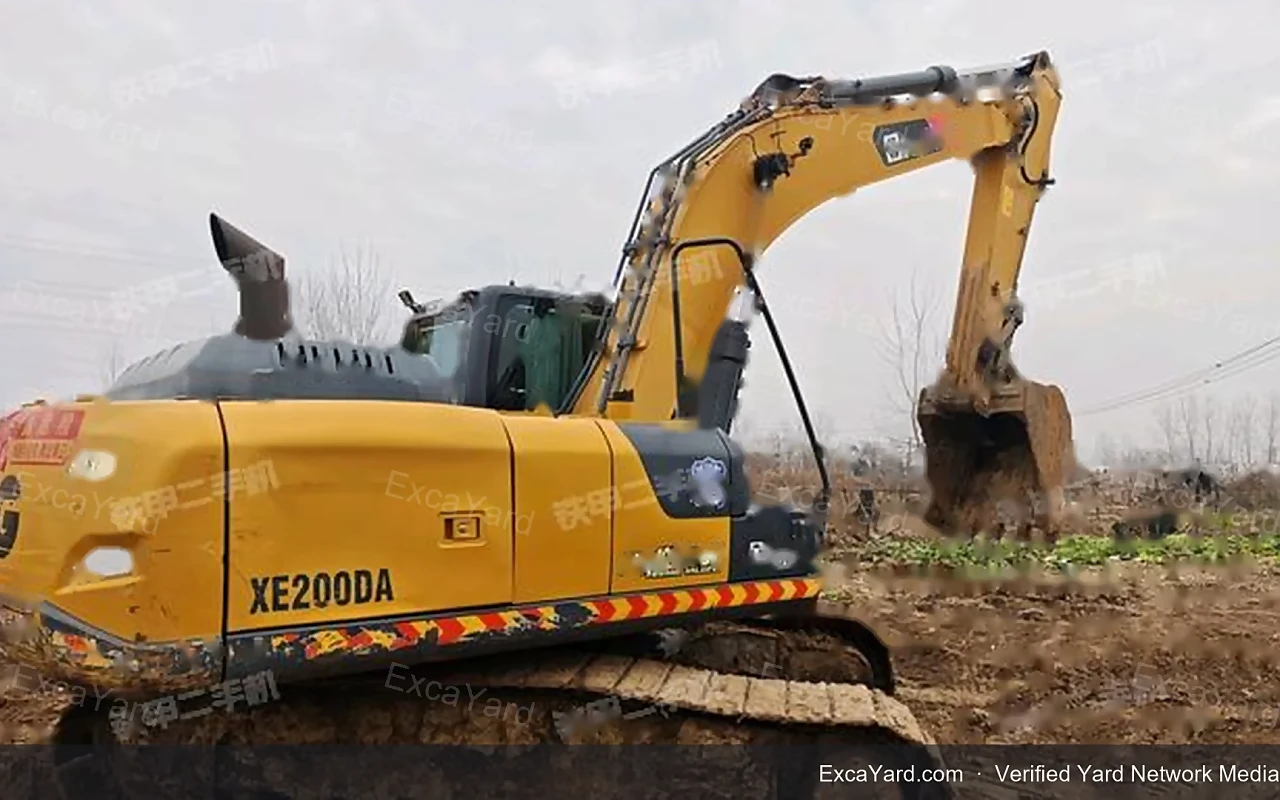
Used XCMG XE200DA Excavator: Verifying the 2023 Premium
A used XCMG XE200DA excavator, 2023, 3,000 hours, $39,500: how to test whether the near-new premium is real, which evidence to demand and when to walk away.
A used XCMG XE200DA excavator is one of the few ways to buy a 20-tonne machine that is still young: this listing is a 2023 unit with 3,000 hours, a 1.0 m³ bucket, Grade A condition and a $39,500 asking price, held in Jinhua under SKU EXY-XCMGXE200DA-058. That combination is attractive precisely because it is uncommon. Most export inventory in this class is older and has run far more hours. The whole purchase therefore comes down to one question: is the premium you pay for near-new backed by evidence you can check?
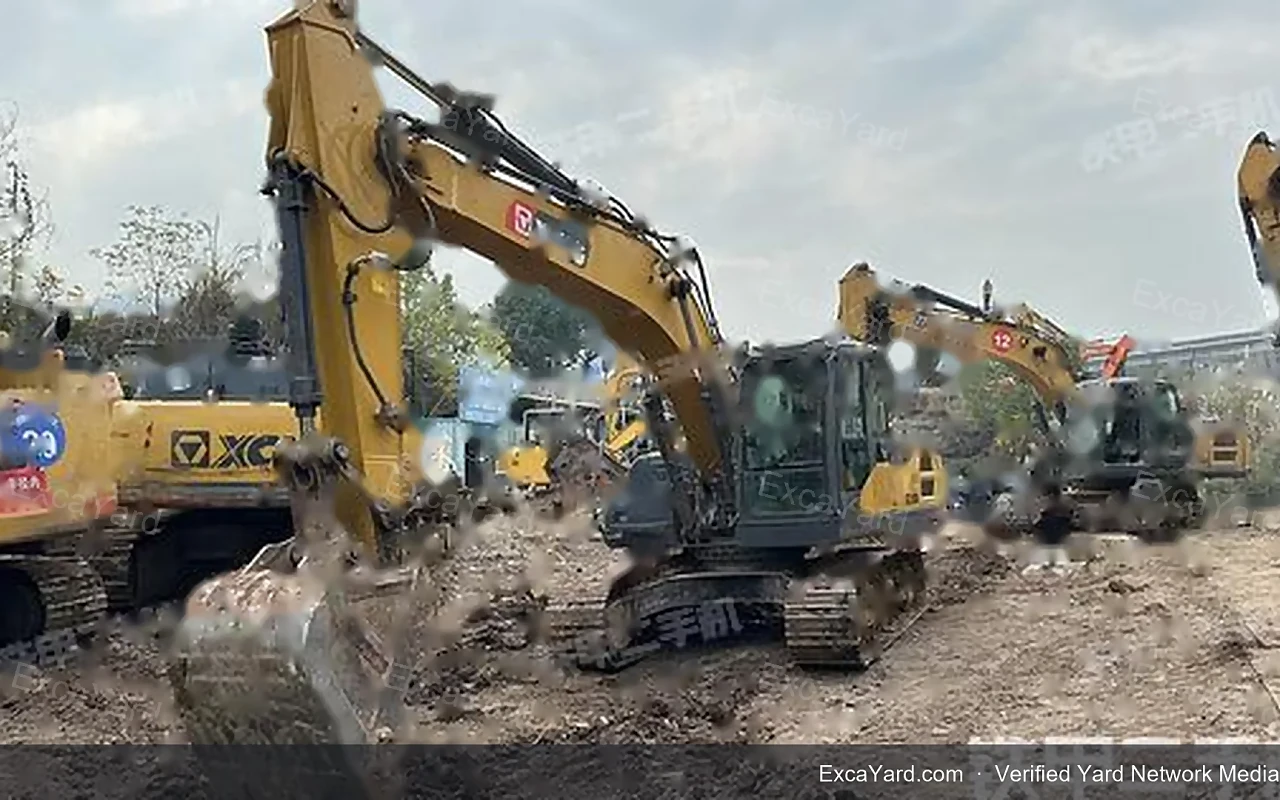
A near-new listing changes the risk, not the rules
Buying a three-year-old machine reduces the chance of hidden structural fatigue. It does not remove the need for inspection. In some ways it raises the stakes, because the price gap between this unit and an older 20-tonne machine is large enough that a single missed fault can erase the advantage.
The listing record is short and specific:
| Field | Value |
|---|---|
| Year | 2023 |
| Hours | 3,000 |
| Operating weight | 20.0 t |
| Bucket | 1.0 m³ |
| Grade | A |
| Asking price | $39,500 |
| Location | Jinhua |
Three thousand hours on a 2023 machine implies roughly 1,000 hours a year if it went to work soon after delivery. That is a normal-looking utilisation figure, and “normal-looking” is exactly why you should verify it rather than admire it.
Most used excavator XE200DA for sale offers are written to make the year and the hour count do all the persuading. Those two numbers are a fair starting point, but they are also the easiest to repeat from a listing without checking. Treat them as the opening of a conversation, not the conclusion.
Used XCMG XE200DA excavator: what $39,500 asks you to believe
The price asks you to accept four claims at once: that the hours are original, that the condition is genuinely Grade A, that the machine has no hidden repair history, and that XCMG is the right brand for your market. Each claim is testable, and each has a different failure cost.
- If the hours are wrong, you have paid near-new money for a used machine.
- If the grade is optimistic, your first repair bill arrives earlier than planned.
- If the repair history is hidden, structural or hydraulic work may already be pending.
- If the brand is wrong for your market, resale and parts access suffer for years.
The listing states that hours are verified through the machine’s electronic control unit and seller-provided records, and that a detailed inspection report is available. That is a good starting position. Your job is to convert those statements into documents tied to this serial number.
XCMG XE200DA price: three ways to read 3,000 hours
Price comparisons in this class are unusually clear, because several 20-tonne units appear in the same listing snapshot:
| Model | Year | Hours | Grade | Asking price | Price per listed hour |
|---|---|---|---|---|---|
| XCMG XE200DA | 2023 | 3,000 | A | $39,500 | ~$13.20 |
| Komatsu PC2008M0 | 2020 | 3,600 | A | $27,500 | ~$7.60 |
| Sany SY200C | 2022 | 7,800 | A | $25,000 | ~$3.20 |
| Hitachi ZX200-5A | 2021 | 7,000 | A | $22,500 | ~$3.20 |
| Volvo EC210D | 2019 | 7,850 | A | $18,000 | ~$2.30 |
The XE200DA asks about 43% more than the Komatsu, which is three years older and has 600 more hours. It asks more than 50% above the Sany, which is only one year older but has 4,800 more hours. Price per listed hour is not a valuation; it is a quick way to see how much of the asking price is buying youth rather than metal.
Three readings follow, and all three can be true at once:
- Youth has value. Fewer hours means more remaining life in the undercarriage, pins and hydraulic components, assuming the machine was serviced.
- Brand position has a price. XCMG does not carry the resale premium of Komatsu or Hitachi in most markets, so a higher price than a Komatsu needs condition and age to justify it.
- The clock is already running. A machine at 3,000 hours will not stay near-new. If you plan to keep it for years, you are buying the front half of its life at a premium; that is fine only if the work is confirmed.
XE200DA inspection: build the evidence pack in this order
Do not start with a video walkaround. Start with documents, then move to the machine. This order stops a clean paint job from setting your expectations.
Step 1: identity. Photo of the serial plate, photo of the dash with hours visible, and the machine’s documents. The serial must match the listing, the invoice and the inspection report.
Step 2: hour evidence. ECU readout, seller records, and the inspection report should agree. Ask when the reading was taken and by whom. A 2023 machine should also have a plausible service trail for its first services.
Step 3: structure. Boom and arm welds, counterweight, stick and bucket linkage, track frame. Look for repair welds, fresh paint over seams, and mismatched panel colours.
Step 4: undercarriage. Chains, sprockets, rollers, idlers and shoes, photographed on both sides. At 3,000 hours these should show wear, not exhaustion; if they look new, ask why.
Step 5: hydraulics and operation. Continuous video of cold start, idle, full throttle, boom and arm movement, bucket curl against resistance, swing both directions, and straight travel. Listen for load changes and watch for hesitation.
Step 6: cab and electrics. Seat, pedals, joystick boots, monitor, error codes, air conditioning, lights. On a near-new machine, a worn cab is a contradiction worth resolving.
If any step produces a vague answer, the premium is not yet justified. That is not an accusation; it is the standard any near-new price should meet.
Verifying a 2023 hour meter without insulting the seller
Hour-meter conversations go wrong when they sound like an accusation. A better framing is procedural: “For a machine at this price, our process requires an ECU reading and a dated service record. Can you send both?” Most serious sellers accept that instantly, because it protects them too.
What you want in hand:
- A dash photo where the serial plate and hour display are legible in one frame.
- An ECU or diagnostic readout, with the date and the reader identified.
- Service records showing the first service, subsequent services and the hours at each.
- A written statement of what the seller knows about ownership and use.
The listing already points to ECU verification and seller records. The failure mode is not the method; it is receiving a summary instead of the source. Ask for the source.
When the near-new premium is the wrong purchase
This machine is a poor fit in four situations.
Your budget is already tight. At $39,500 before freight, insurance and a first-service kit, this unit leaves little room for the unexpected. Two older 20-tonne machines may earn more than one near-new unit if your market has steady rental demand.
XCMG support is weak where you work. The listing notes a global parts network, but global networks have gaps. Check local distributors, common wear items and mechanic familiarity before you commit.
You need a machine to sit as a spare. Paying for youth and then leaving it idle wastes the very thing you bought.
You cannot complete the evidence pack. If documents or inspection access are unavailable, the premium is unverified. Waiting for a better-documented unit costs less than discovering the problem after arrival.
Payment, documents and the parts question
The listing offers 30% deposit with 70% before shipment, paid by letter of credit or wire transfer. Confirm the currency, the bank charges, the documents released against payment, and whether the quote is FOB or CIF. Ask for the commercial invoice, packing list, bill of lading and inspection report as a single document set, and check that the serial number appears consistently.
Parts are the quieter half of the decision. XCMG common wear items are available through distributors and the ExcaYard supply chain, and we can source parts on request. Before shipping, price a first-service kit: filters, seals and any wear parts you know your market cannot supply quickly. A machine that arrives complete earns sooner.
ExcaYard does not own the yards it lists from. We work through a network of verified partner yards, collect condition evidence against each serial number, and coordinate inspection and documents. That distinction matters when a listing looks unusually good: the evidence, not the photo, is what we stand behind.
FAQ: used XCMG XE200DA excavator
Is a used XCMG XE200DA excavator worth the premium over an older 20-ton machine? Only if the evidence supports it. Compare the asking price with older units, then check hours, undercarriage, hydraulics and documents. Youth is worth paying for when it is documented, and expensive when it is assumed.
How are the 3,000 hours verified? The listing uses the machine’s electronic control unit plus seller-provided records, with a detailed inspection report. Ask for the ECU readout, dated service records and a dash photo with the serial plate visible.
What should an XE200DA inspection cover first? Identity and hour evidence, then structure, undercarriage, hydraulics, operation and cab electrics. Documents first prevents a clean machine from setting your expectations.
Can ExcaYard arrange inspection before I pay a deposit? Yes. We can coordinate access to the partner yard, collect additional photos and video, and connect you with a third-party inspector. Payment should follow evidence.
Next step
If a near-new 20-tonne machine fits your work, review the full record on the used XCMG XE200DA excavator page, compare other XCMG units, then send your destination port and evidence requirements. We will tell you whether this unit clears the bar or whether an older, better-documented machine is the smarter buy.

Used Excavator Inspection Checklist: 50-Point Field Guide for International Buyers
A practical 50-point inspection checklist for buying a used excavator from China or any export market. Engine, hydraulics, undercarriage, cab — what to actually check, common red flags, when to walk away.
How to Check if Excavator Operating Hours Are Genuine (Anti-Fraud Guide)
Used excavator hour meter fraud is common. Step-by-step guide to verify operating hours: ECM cross-check, undercarriage wear, hydraulic stamps, photo evidence.
Used Caterpillar 320D2GC Excavator: 20-Ton Value and the Year-Hours Tradeoff
A 2017 used Caterpillar 320D2GC excavator with 6,000 hours at $19,500. What low annual hours mean for seals, hydraulics and resale, plus the 320D2GC inspection points that matter.