
Used Hitachi ZX2005 Excavator: Repair Reserve for a 2005 Unit
Used Hitachi ZX2005 excavator, 2005, 12,000 h, grade C, $12,000: repair reserve math, six wear points and go/no-go rules for an old 20-ton unit.
A 2005 Hitachi ZX2005 with 12,000 listed hours, grade C, a 1.0 m³ bucket, 20.05 tonnes and a $12,000 asking price is not a cheap version of a new machine. It is a different purchase category. This used Hitachi ZX2005 excavator is located with a partner yard in Lishui. ExcaYard does not own the yard or the unit; the network verifies listings and condition evidence. The question is not whether $12,000 is low. The question is whether price plus repair reserve plus downtime is lower than the alternative.
Used Hitachi ZX2005 Excavator: Read Grade C First
The grade is the first fact to process, not the price.
| Field | Listing value |
|---|---|
| SKU | EXY-HITAZX2005-099 |
| Brand | Hitachi |
| Model | ZX2005 |
| Year | 2005 |
| Hours | 12,000 |
| Operating weight | 20.05 t |
| Bucket | 1.0 m³ |
| Grade | C |
| Location | Lishui |
| Price | $12,000 |
| Engine model | Not recorded |
The listing’s own FAQ says that grade C units may have unverified histories. That is the most important sentence in the record. It does not mean the machine is unusable. It means the seller is not representing the hours or the history as confirmed, and the price is set accordingly.
A 21-year-old 20-tonne excavator can still work. It can also consume its purchase price in repairs if the wrong system is already failing. Grade C is a warning to inspect and to hold a reserve, not a reason to bargain harder without evidence.
The 12,000-Hour Baseline
From 2005 to 2026 is 21 years. Twelve thousand hours averages about 571 hours per year. That is a low average for a machine of this age. It may reflect seasonal work, long periods of idleness, multiple owners, or a meter that does not tell the full story. The listing does not guarantee the hours, so the average is a clue, not a conclusion.
Three ratios set the starting position:
- $12,000 ÷ 12,000 h = $1.00 per listed hour.
- $12,000 ÷ 20.05 t = $598.50 per tonne.
- $12,000 ÷ 1.0 m³ = $12,000 per cubic metre of bucket capacity.
Those numbers are low because the machine is old and grade C. They are not proof of a bargain. They are the reason a repair reserve has to be funded before the machine earns anything.
Repair Reserve: A Number, Not a Hope
A repair reserve is money set aside for the first year of ownership and left untouched until a quoted repair requires it. It is not a prediction of failure. It is a limit on how much uncertainty you are willing to carry.
For a $12,000 grade C machine, a practical starting range is 20 to 30 percent of the purchase price:
- 20 percent = $2,400.
- 25 percent = $3,000.
- 30 percent = $3,600.
Put the reserve in a separate account before the machine ships. Release it only against a written quote or a confirmed parts order, not against a rough estimate. If inspection finds a major item, do not quietly increase the reserve. Renegotiate the price or reject the machine. A reserve that grows after every surprise is not a reserve; it is an open-ended subsidy.
Used Hitachi ZX2005 Excavator: Six Wear Points That Set the Reserve
The reserve should be sized from evidence, not from a generic checklist. These six areas decide most of the risk on a 2005 20-tonne Hitachi.
- Undercarriage. Chains, sprockets, rollers, idlers and shoes. Ask for close-up photographs and a remaining-life estimate. Worn tracks affect stability, transport weight and the next major spend.
- Hydraulic pump and control valve. Look for pressure readings, cycle speed when hot, pump noise and leaks. A pump that is tired may still dig, but it will not improve.
- Cylinders, seals and hoses. Check rods for scoring, look for drift, and inspect hose date codes. A weeping cylinder is a quote, not a catastrophe; a scored rod is more expensive.
- Swing system. Listen for backlash and gear noise, test the brake, and check for oil around the swing gearbox. Swing repairs are labor-heavy.
- Engine. Cold start, blow-by, cooling system, exhaust color and oil leaks. A 2005 engine with 12,000 listed hours needs a compression or blow-by check if the history is thin.
- Structure and linkage. Boom and arm cracks, previous welds, pin and bushing play, carbody condition. Structural repairs are the ones that turn a cheap machine into a project.
Each item produces either evidence or a question. A seller who can answer five of six is easier to deal with than one who answers with “good condition” for all six.
What a $12,000 Machine Must Prove
A low price does not buy the right to skip paperwork.
- The serial plate, invoice and export documents should describe the same machine.
- The seller should state in writing that the hours are as shown and not guaranteed, matching the listing.
- Any structural repair or repaint should be disclosed before inspection.
- The attachment package should be listed: bucket, teeth, pins, bushings, any coupler.
- The machine should be available for a cold start and a loaded test, not just a photo session.
If the documents are incomplete, the price is not a bargain. It is an unpriced risk. A used excavator ZX2005 for sale at this age often has a thin file; the question is whether the seller is honest about what is missing.
Reserve Math: Three Outcomes
The inspection should sort the machine into one of three paths.
| Outcome | Finding | Decision |
|---|---|---|
| Clean for its age | Wear consistent, no major leaks, cold start good, documents complete | Buy and hold the base $2,400 reserve |
| One major system marginal | Pump or undercarriage near the end of life, no structural damage | Get a quote, renegotiate, hold $3,600 |
| Structural or hydraulic failure | Cracks, welds, metal in oil, heat fade, unverifiable identity | Walk away; the reserve cannot fix a bad purchase |
The middle path is the most common and the most dangerous. A marginal machine looks like a deal because it still works. Price it as if the repair is already due, then decide whether the seller will share that cost. If not, the next buyer can take the risk.

Where an Old 20-Ton Still Makes Sense
An old 20-tonne machine can be rational when the work is close to home and the buyer can absorb downtime. Typical fits:
- Own-site work where the machine is not rented out.
- Farm, plantation or land-clearing jobs with seasonal demand.
- A backup unit behind a newer primary machine.
- A buyer with a mechanic and a parts source nearby.
- A market where simple repairs are inexpensive relative to the machine’s earning rate.
It is a poor fit for a primary rental fleet, a financed purchase that needs predictable monthly income, or a buyer who needs high availability from day one. An old machine is a capacity decision, not a prestige decision.
Parts and Support for a 2005 Hitachi
The listing notes that Hitachi ZX200 parts are available through dealers and aftermarket suppliers, with common service items in stock. Confirm the parts book against the serial number before ordering. Model names and serial ranges drift over two decades, and a filter that fits one ZX200 variant may not fit another.
If you buy the machine, ship a consumables bundle with it: filters, seals, hoses, teeth and a few pins. The cheapest time to move small parts is with the machine. Confirm whether the seller can supply genuine parts or only aftermarket, and price both before you commit.
Inspection, Shipping and the Next Step
ExcaYard acts as a verification layer across partner yards. We do not own this machine, and we do not present a grade C listing as a restored unit. The used Hitachi ZX2005 excavator listing shows the year, hours, weight, bucket, grade, location and price. The rest is condition evidence.
A ZX2005 inspection should cover the six wear points above, plus a cold start and a loaded cycle. If the machine passes, the reserve math tells you what to hold. If it fails, the report tells you what to avoid. You can also compare other Hitachi machines or request an inspection before you negotiate.
The ZX2005 price is low enough that the decision feels easy. It is not. A $12,000 machine with a failing pump, a worn undercarriage and a structural weld can cost more than a cleaner unit at twice the price. The reserve is how you find out before the invoice, not after.
FAQ: Used Hitachi ZX2005 Excavator
Is a used Hitachi ZX2005 excavator with 12,000 hours worth buying? It can be, if the inspection is clean for its age and you fund a repair reserve. Grade C and unverified hours mean the price must carry the risk. Do not buy it as a primary machine without a contingency.
What does grade C mean on this listing? The listing states that grade C units may have unverified histories. Treat the hours and history as unconfirmed until the meter, wear and documents support them.
How large should the repair reserve be? Start at 20 to 30 percent of the purchase price, which is $2,400 to $3,600 on this unit. Hold it separately and release it only against quotes.
Are the 12,000 hours guaranteed? No. The listing says the hours are as shown and cannot be guaranteed because of the machine’s age. That is a disclosure to take seriously.
Can ExcaYard inspect the machine before I pay? Yes. ExcaYard coordinates inspection through the partner yard and reports what is observed. We do not own the machine, so the report separates evidence from seller statements.
What should I check first on a ZX2005 inspection? Cold start, hydraulic pressure when hot, undercarriage wear and structural welds. Those four findings decide whether the reserve is a precaution or a repair plan.
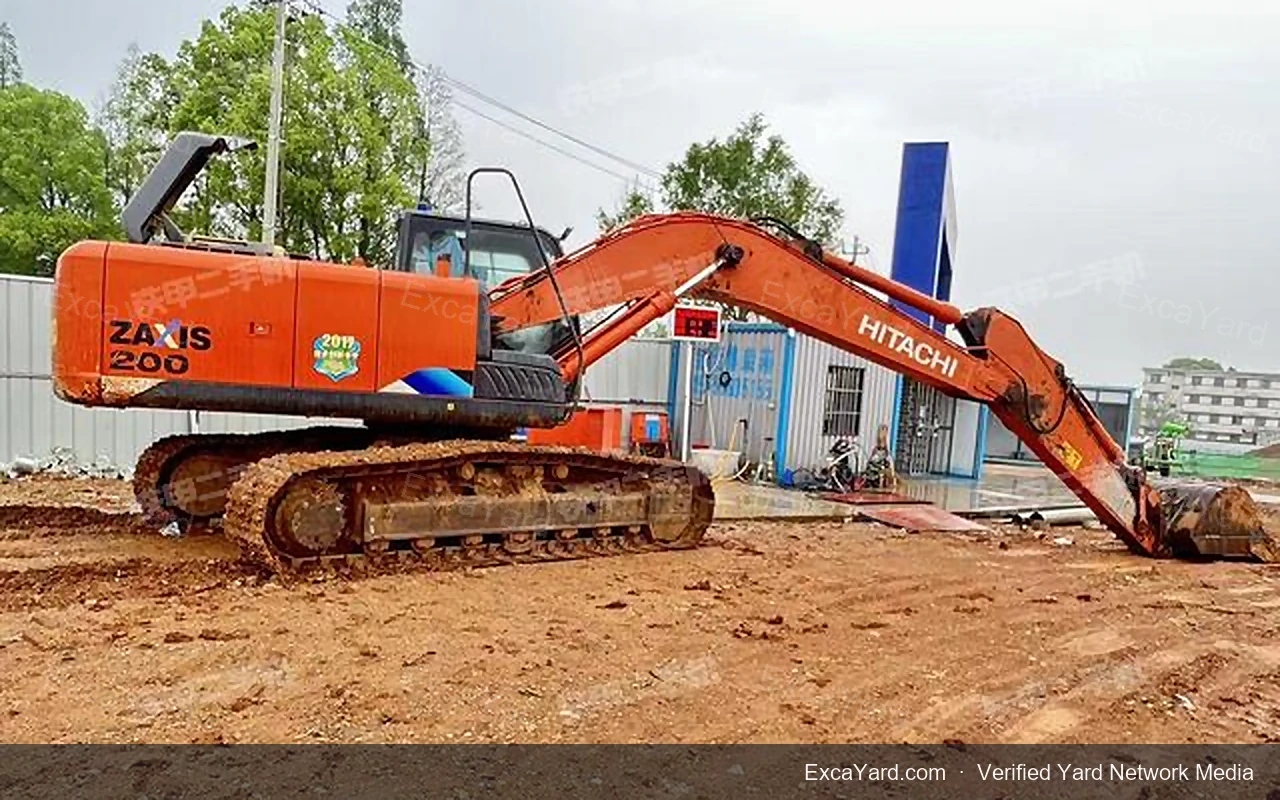
Used Hitachi ZX200-5A from China: Export Checklist for 20-Ton Excavator Buyers
Used Hitachi ZX200-5A from China for contractors and machinery importers: hydraulic pump checks, hour verification, undercarriage wear, spare parts and CIF quote keywords for 20-ton excavator buyers.

Used Hitachi ZX2005A Excavator: Hydraulic Inspection Before You Buy
Used Hitachi ZX2005A excavator, 2021, 7,000 h, 20.05 t, $22,500: a five-stage hydraulic inspection, hour checks and price notes before you commit.
Cat 320 vs Komatsu PC200: Honest Comparison for Used Buyers (2026)
Choosing between a used Cat 320 and a used Komatsu PC200? Real-world differences in fuel economy, parts availability, resale value, and operating cost for export buyers.