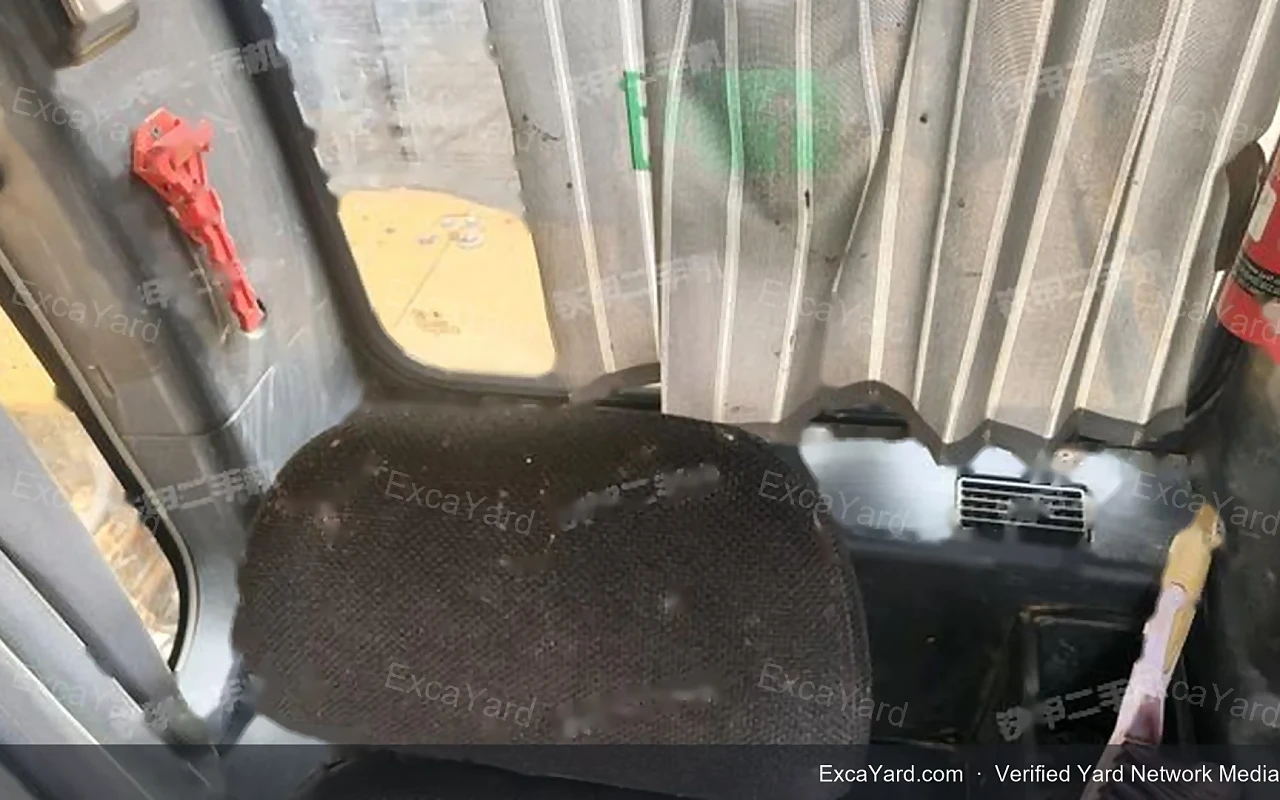
Used Sany SY205C excavator at $20,000: a 2020 20-tonne value check
A used Sany SY205C excavator with 8,500 hours, 20.5 tonnes and a $20,000 tag — what the hours, the Grade B report and the Sany parts picture really mean before a deposit.
A used Sany SY205C excavator listing rarely explains itself. A year, an hour reading and a price get posted, and the buyer is left to work out how hard the machine ran and what the grade is hiding. This unit carries more detail than most: 2020, 8,500 hours, 20.5 tonnes, a 1.03 m³ bucket, Grade B, $20,000, held at a partner yard in Wuhu, Anhui. Those facts decide most of the deal, so this guide takes them in the order that matters — price logic, hours, grade, parts, inspection, then freight.
The listing, line by line
| Field | Listing |
|---|---|
| Model year | 2020 |
| Hour meter | 8,500 h |
| Operating weight | 20.5 t |
| Bucket | 1.03 m³ |
| Grade | B |
| Price | $20,000 |
| Yard location | Wuhu, Anhui |
| SKU | EXY-SANYSY205C-021 |
Divide the ask by the weight and you get roughly $976 per tonne. In the same network, a 2022 SY200C at 20.0 tonnes and $25,000 works out at $1,250 per tonne, and a 2021 SY135C at 13.5 tonnes and $26,500 lands near $1,963 per tonne. Price per tonne is a crude measure — hours, grade and wear set the real number — but it places this machine honestly: it is the cheapest way into the 20-tonne class in this group, and it is priced as a working unit rather than a collector’s piece.
Note what the listing does not state. There is no previous-owner count, no service history and no attachment list, and none of those should be assumed. If the machine comes with a second bucket, a breaker line or a quick coupler, that changes the value and belongs in the quote in writing. Absence of a claim is information too: treat every unlisted item as not included until the partner yard confirms it in the offer.
What 8,500 hours over six years actually says
Eight thousand five hundred hours across six model years is about 1,417 hours a year, or roughly 118 hours a month. That profile points to steady single-shift commercial work rather than a machine that sat under a tarp, and rather than one that ran double shifts in a quarry. It does not tell you what the bucket was doing. A hammer on rock for part of that life wears a machine differently from trenching clay, and the hour meter cannot separate the two.
The listing is careful about the meter, and that care is worth noting. Hours are read from the machine’s hour meter, the seller states they have not been tampered with, and no accuracy guarantee is offered beyond visual inspection. That is the right level of claim. A seller who promises a perfect six-year history from a meter photograph is telling you what you want to hear. On a 20.5-tonne excavator, 8,500 hours is not high in absolute terms; the useful questions are which major components have already been touched, and whether wear items were replaced or simply run to the end.
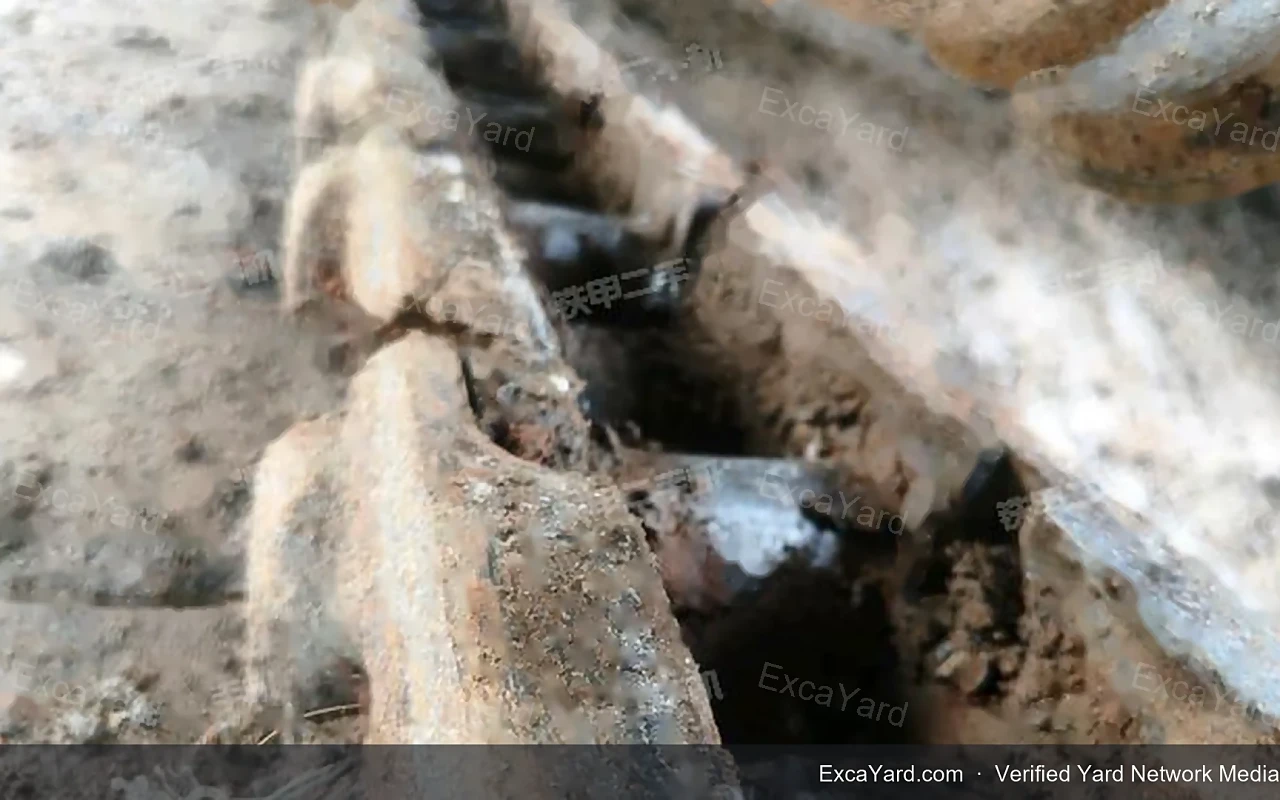
Reading Grade B on this used Sany SY205C excavator
ExcaYard grades run A, B and C, assigned after inspection. B is the middle band: a working machine with visible wear and named open items, not a rebuilt unit and not a project. The practical consequence is that the grade should arrive with a list, not a sentence. Ask for the itemised condition report and check that it treats each zone separately — undercarriage, hydraulic components, pins and bushings, bucket, cab and electrics, paint and structure.
Then price the list. “Some wear on the undercarriage” is not a finding; a measured remaining life is. “Minor seepage” is not a finding; the location and the rate are. A Grade B machine is often the best value in a yard precisely because the open items are disclosed and you are paid for accepting them. The common mistake is to accept the discount without writing down what each item will cost to fix, then discover the number after the machine lands.
Parts reality for a Chinese 20-tonne excavator
The listing states that Sany parts are widely available globally and that genuine parts can be supplied on request. That is true and incomplete at the same time. Widely available does not mean same-day, and dealer density is not equal in every port city. Before committing, answer three questions about your own market: where the nearest Sany parts channel is, whether hydraulic hoses can be fabricated locally to the right pressure rating, and whether undercarriage components for a 20.5-tonne machine are stocked regionally or only ordered in.
This is where brand comparisons actually bite. A used Caterpillar or Komatsu carries a premium for a reason that has little to do with paint: when something fails on a Friday, the part usually exists within driving distance. A Chinese brand trades some of that certainty for purchase price, and the trade only works if you plan for it. A spares bundle shipped with the machine — filters, seals, hoses, bucket teeth, pins — avoids the air-freight bill and the idle week that follows a predictable failure.
An inspection order that protects the deposit
Work in this sequence, because each step can end the conversation early and save the next one:
- Cold start on video, from first crank to idle. Hard starting, smoke colour and unusual noise are visible before money moves.
- Hydraulic function through a full warm cycle: boom, arm, bucket, swing and travel, each through its range. Slow or uneven movement points at pump or valve work.
- Undercarriage measurement, not opinion. Track, rollers, idler and sprocket wear need numbers.
- Swing backlash and travel alignment. A machine that tracks straight and stops without drift is telling you something.
- Pin and bushing play at boom foot, arm and bucket. Loose pins turn a cheap machine expensive.
- Leak check after load, not at rest. Seepage often appears only when the oil is hot.
- Electrics and cab: air conditioning, monitor, error codes, lights, safety lockout.
- Documents: serial plate, hour meter close-up, service records if any, and a photo set that matches the machine being sold.
ExcaYard does not own a yard. Units sit with partner yards in the network, so inspection is arranged with the yard and reported back with photos and video. If you want an independent third-party inspector on site, that is a condition to set before a deposit rather than after.
Where 20.5 tonnes stops being the answer
A 1.03 m³ bucket puts this machine in the general-purpose band: foundations, drainage, road packages, site preparation, utility trenches, and rental work where one machine has to do most things. It is also the class most easily moved between sites on a standard low-bed.
Two cases argue against it. If your work is confined — residential plots, narrow lanes, utility corridors where access is the constraint — a 13.5-tonne machine with a 0.68 m³ bucket will cover more of the job and cost less to move, even though this SY205C carries the lower sticker price. If your work is bulk loading into 30-tonne trucks, a 20.5-tonne machine becomes the bottleneck, and maintenance cannot fix that.
The number that decides the deal is landed cost
The $20,000 is not the price of the machine in your yard. Build the real number: freight method and route confirmed in writing, port handling at both ends, inland haulage to site, duty and taxes at destination, attachments needed on day one, the spares bundle, first service, and operator familiarisation. Ask for FOB and CIF side by side. The gap tells you what freight and insurance actually cost, and which party carries the risk at each stage.
A quote that arrives as one lump sum cannot be compared with another lump sum. A quote that itemises can. That is the difference between shopping and buying.
Where to take it next
The full spec sheet, photo set and current availability sit on the used Sany SY205C excavator page, and the wider range is covered under Sany. If you want the yard to run the inspection sequence above and send video, send your destination port and target budget through the contact form and the request goes to the partner yard holding the unit.
FAQ about this used Sany SY205C excavator
Is this used Sany SY205C excavator available right now? Availability is confirmed at inquiry. Listings reflect yard stock at publication, and 20-tonne units move quickly, so the partner yard is checked before any quote is issued.
Can the hours be independently verified? The meter reads 8,500 and the seller states it has not been altered. Verification beyond that requires inspection, and an independent inspector is welcome. No seller can prove six years of history from a meter photo alone.
Is Grade B a problem for export? No, provided the open items are disclosed and priced. Grade describes condition; it says nothing about legality, documentation or export eligibility.
Does the $20,000 include shipping? It does not. That figure is the machine price. Freight, insurance, port charges and destination taxes are quoted separately, either FOB or CIF.
What should I check first if I cannot inspect in person? The cold-start video and the hydraulic cycle video. Those two answer the most expensive questions, and a yard that cannot produce them is not ready to sell.
Which buyers usually pass on this unit? Quarry operators who need production loading, and buyers who want a machine with no open items. Both are better served by a different class or a different grade.
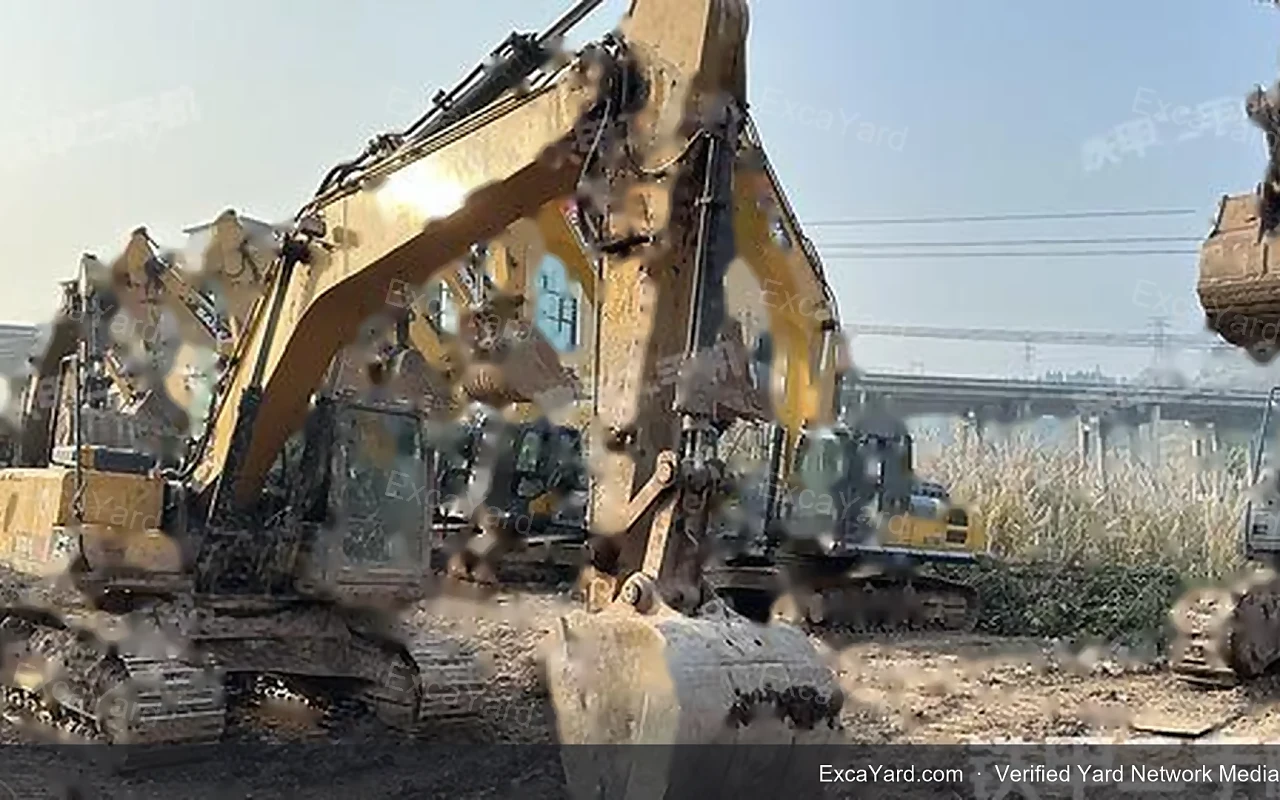
Used Sany SY200C excavator at $25,000: buying the 2022 unit for resale
A used Sany SY200C excavator, 2022, 7,800 hours, Grade A, $25,000 — how the newer 20-tonne unit compares on hours per year, grade evidence, and the resale questions that matter.
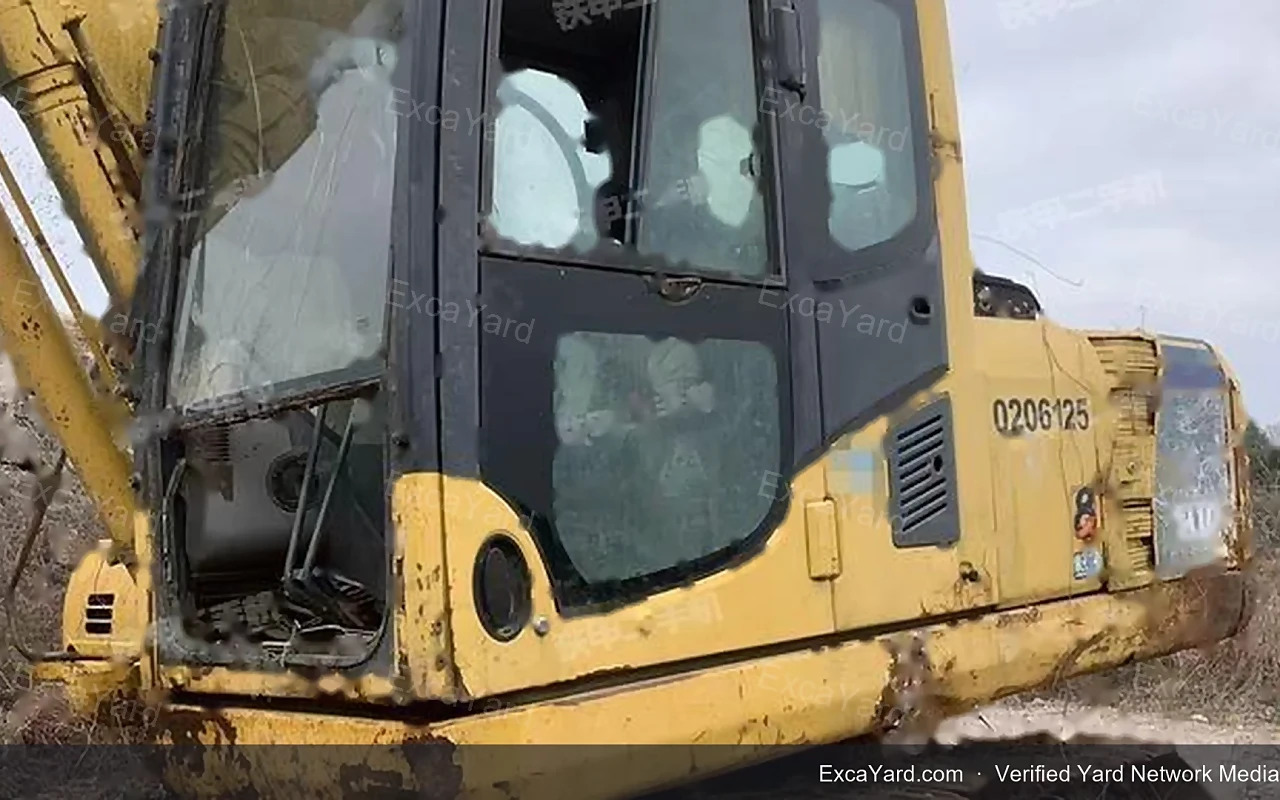
Cat 320 vs Komatsu PC200: Honest Comparison for Used Buyers (2026)
Choosing between a used Cat 320 and a used Komatsu PC200? Real-world differences in fuel economy, parts availability, resale value, and operating cost for export buyers.
20-Ton vs 30-Ton Used Excavator: Which Class Should You Buy?
20-ton (Cat 320, Komatsu PC200) vs 30-ton (Cat 330, Komatsu PC300) — payload, fuel cost, transport cost, ROI per job class. Which makes more money for export buyers?