How to Ship a 20-Ton Excavator: Container, Flat Rack or RoRo
How to ship a 20-ton excavator without guessing: container, flat rack and RoRo compared using a real CAT 320D listing, plus the five inputs that decide the method.
Most first-time importers ask for a freight price before they know how the machine will travel. That order is backwards, and it is why quotes arrive that cannot be compared. Knowing how to ship a 20-ton excavator starts with three questions that have nothing to do with price: how big is the machine once you have removed what can be removed, which port pair can handle it, and what equipment exists at the destination to take it off again.
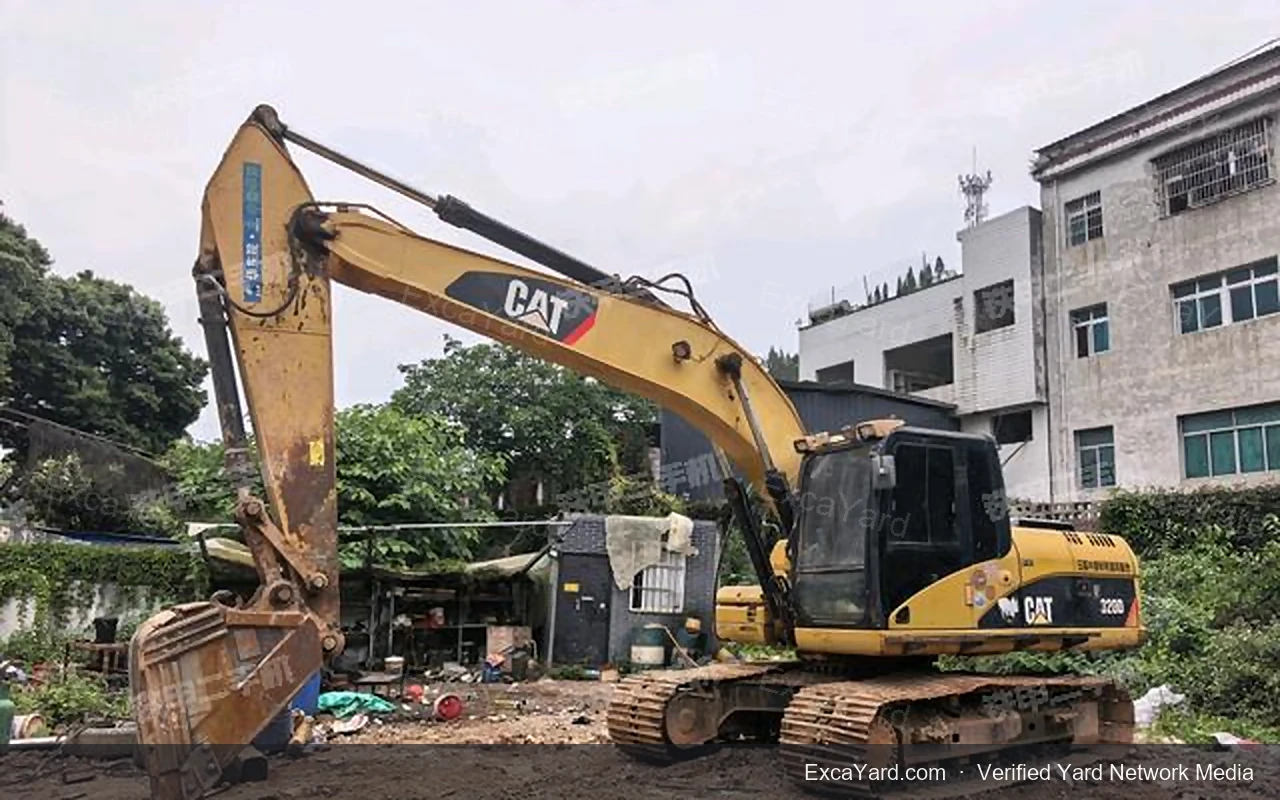
We will use one real listing to make this concrete: stock EXY-CATE320D-161, a 2013 Caterpillar 320D with 10,690 hours, Grade B, a 1.6 m³ bucket, listed at $15,000. No freight rates appear here. A number copied from a blog is worse than no number at all; what does not change is the decision logic.
The reference machine: what the CAT 320D listing actually gives you
| Field | Recorded value |
|---|---|
| Stock number | EXY-CATE320D-161 |
| Build year | 2013 |
| Meter hours | 10,690 |
| Grade | B |
| Bucket capacity | 1.6 m³ |
| Price | $15,000 |
| Listed operating weight | 32.0 t |
| Engine model | Not recorded |
The weight field is the first thing to resolve, and it is worth being blunt about why. The 320D is a 20-tonne class machine by designation, but this listing records 32.0 t. Either the field is wrong, or the machine is configured in a way that changes its mass. You cannot settle that from a web page, and you should not try. Get the serial plate photographed, and get a measured weight if the plate is missing or unreadable.
This is not pedantry. The plate decides which of the three methods is available, and what the destination can legally do on the last mile.
How to ship a 20-ton excavator: three methods, one decision
| Container | Flat rack | RoRo | |
|---|---|---|---|
| How it travels | Sealed box, machine inside | Open deck, machine lashed on top | Driven on and off the vessel |
| Dismantling | Often boom, arm, cab or blade | Less, sometimes none | Usually none |
| Weather protection | Full | None | None |
| Loading equipment | Crane or ramps at both ends | Crane at both ends | Machine drives itself |
| Schedule choice | Broad | Moderate | Limited port pairs |
| Main constraint | Internal dimensions | Out-of-gauge handling | Machine must run |
| Best for | Compact or dismantlable units | Wide or tall units without RoRo | Running units on RoRo routes |
Read the table as a set of costs rather than a ranking. Every method removes one problem and creates another. The work is deciding which problem you can solve at your destination.
Container: the option with a hard physical limit
A container is attractive because it is familiar, because the machine is protected from salt and weather, and because container services run to almost every port. It also has a limit that no negotiation can move: the machine has to fit through the door and sit inside the box.
That means the decision is made by measured width and height first, length second. Track shoe width, bucket width, cab height and exhaust height all count. Removing the boom and arm, folding them, or taking off a blade can change the answer, but dismantling has its own cost in labour, lifting equipment, and the reassembly and re-torquing that follows arrival. On a 20-tonne class machine, that work is not trivial and it should be quoted as part of the method, not treated as free.
There is a second half to container shipping that buyers forget. Stuffing at origin and unstuffing at destination both need equipment and space. If your yard has no crane and no ramp, a container is not cheaper, it is just unfinished. Ask who unloads it before you agree to it.
Flat rack: the middle path for machines that will not fit
A flat rack is an open deck with end walls. The machine sits on the deck, is lashed down, and is lifted on and off by crane. There is no roof to clear and no door to squeeze through, so width and height stop being the binding constraint in the same way.
The trade is handling. A flat rack requires crane capacity at both ends, and it may be booked as out-of-gauge cargo, which changes how the carrier treats it and how the terminal charges for it. Lashing and securing become a real engineering task rather than a checklist, and the machine is exposed to weather for the whole voyage, which matters for cab glass, electronics and any open hydraulic fittings.
Flat rack is often the right answer when a machine is too wide or too tall for a container but the destination has no usable RoRo service. It is rarely the right answer when the buyer has neither a crane nor a plan for one.
RoRo: drive-on, drive-off, no dismantling
RoRo is the method most operators prefer on paper, because the machine arrives as a machine. It is driven onto the vessel at origin and driven off at destination. No container fit problem, no boom removal, no crane lift at either end.
The conditions are strict. The machine has to start, steer, brake and hold itself on a ramp. Fuel levels are limited by the carrier for safety, and attachments usually have to be removed or stowed. The port pair has to include a RoRo berth at both ends, and the sailing schedule is fixed, which means your inspection and payment timeline has to fit the vessel rather than the other way around.
RoRo is also the method most exposed to booking cutoffs. If the machine develops a fault between inspection and loading, the booking is at risk. For a 2013 unit with 10,690 hours, that is a real consideration: a machine that starts cold and runs clean is a prerequisite, not a bonus.
What decides how to ship a 20-ton excavator
Five inputs decide the method, and they should be answered in this order. Skipping ahead to freight price is how buyers end up with a quote for a service their destination cannot accept.
1. Measured weight and dimensions. Not the listing field, not the brochure. A tape measure and a plate, taken after any dismantling you are willing to pay for. This is the input that eliminates methods.
2. Configuration. Boom and arm length, cab height, blade, quick coupler, track shoe width, attachments. Each one changes either the fit or the handling. Decide what comes off before you ask for a rate, because the rate depends on the answer.
3. Port pair. Which Chinese port the machine can reach economically, and which destination port has the berth, crane or terminal for the method you chose. RoRo routes are the sparsest, so check them first and work backwards.
4. Destination handling. Crane capacity, ramp availability, yard access, road permits, weight limits on the final road leg, and whether an escort is required for an oversized load. A method that works at the port and fails at your gate is not a method.
5. Import rules and inspection. Some destinations inspect containers, some inspect at RoRo discharge, some require pre-shipment inspection before loading. Demurrage and storage start when the clock starts, not when you are ready. Confirm the sequence before the machine moves.
Budget and risk tolerance come after these five, not before them. They decide which acceptable method you pick, not whether a method is acceptable at all.
20-ton transport: cost lines to compare, not rates
Any two quotes are only comparable if they cover the same scope. Ask for a breakdown that names each line and its basis, because some are charged per container, some per unit, and some by weight or volume.
- Inland haulage from the yard to the port, including any low-bed or permit cost.
- Export clearance and documentation.
- Origin terminal handling and, for flat rack, out-of-gauge surcharges.
- Lashing, securing and any cribbing or dunnage.
- Ocean freight, quoted for the specific method and port pair.
- Marine insurance, which should be quoted on the machine value plus freight.
- Destination terminal handling and agent fees.
- Import duty and taxes, which are your jurisdiction’s business, not the seller’s.
- Inland delivery from the discharge port to your site, including unloading.
- Demurrage, storage and standby, which are the lines that appear when something slips.
A container quote and a RoRo quote rarely cover the same list. One may include lashing and the other may not. One may deliver to port and the other to door. Comparing the bottom line without the scope is how a cheap quote becomes an expensive shipment.
A decision path for this CAT 320D
Work through the machine rather than the market.
First, photograph the serial plate and confirm the operating weight. Everything downstream depends on that number, and a 32.0 t record on a 20-tonne class model is exactly the kind of discrepancy that has to be closed before booking.
Second, measure the machine as it would ship: with the bucket fitted, then with it removed, then with the boom and arm folded or removed if you are willing to pay for that work. Record width, height and length for each configuration.
Third, ask which destination ports handle RoRo and how often. If a RoRo service exists and the machine runs, that is usually the simplest path and the least dismantling. If it does not, move to flat rack if the dimensions require it, or container if the machine fits after dismantling.
Fourth, get two quotes for the same method and the same scope, not two quotes for different methods. Then compare a container quote against a flat rack quote only after adding the dismantling, lifting and reassembly costs that each one implies.
Fifth, book the inspection and the shipping method together. A machine that passes inspection but misses the vessel is a storage bill. A vessel that sails before inspection clears is a dispute.
FAQ: how to ship a 20-ton excavator
Can a 20-ton excavator fit in a 40-foot container?
Sometimes, and only after measuring. Width and height are usually the binding constraints, not length, and removing the boom, arm or blade can change the answer. Do not accept a forwarder’s assurance that it will fit without dimensions taken from the actual machine in its actual shipping configuration.
Is RoRo cheaper than a container?
Not inherently. RoRo avoids dismantling and crane lifts, which can save money, but it depends on the route, the schedule and the carrier’s rate for that unit. The only meaningful comparison is two quotes for the same scope on the same port pair.
Does the machine need to run for RoRo?
Yes. It is driven on and off, so the engine, steering, brakes and hydraulics have to work at loading and discharge. That makes a cold-start video and a pre-booking mechanical check essential rather than optional. For a container or flat rack shipment the machine can be loaded by crane, but it still has to be secured safely.
How long does shipping take?
That depends on the sailing schedule for the chosen method and port pair, so it is quoted with the booking rather than guessed in advance. Ask for the vessel name, the cutoff dates and the estimated arrival, then work your inland plan backwards from the arrival date.
Next step
The CAT 320D listing carries the recorded fields and photographs you need to start measuring. If you already know the destination, read the market guides for the port and import notes that apply there. When you are ready to price a method rather than a guess, ask us how to ship a 20-ton excavator to your port and we will quote container, flat rack and RoRo against the same scope so the comparison is real.
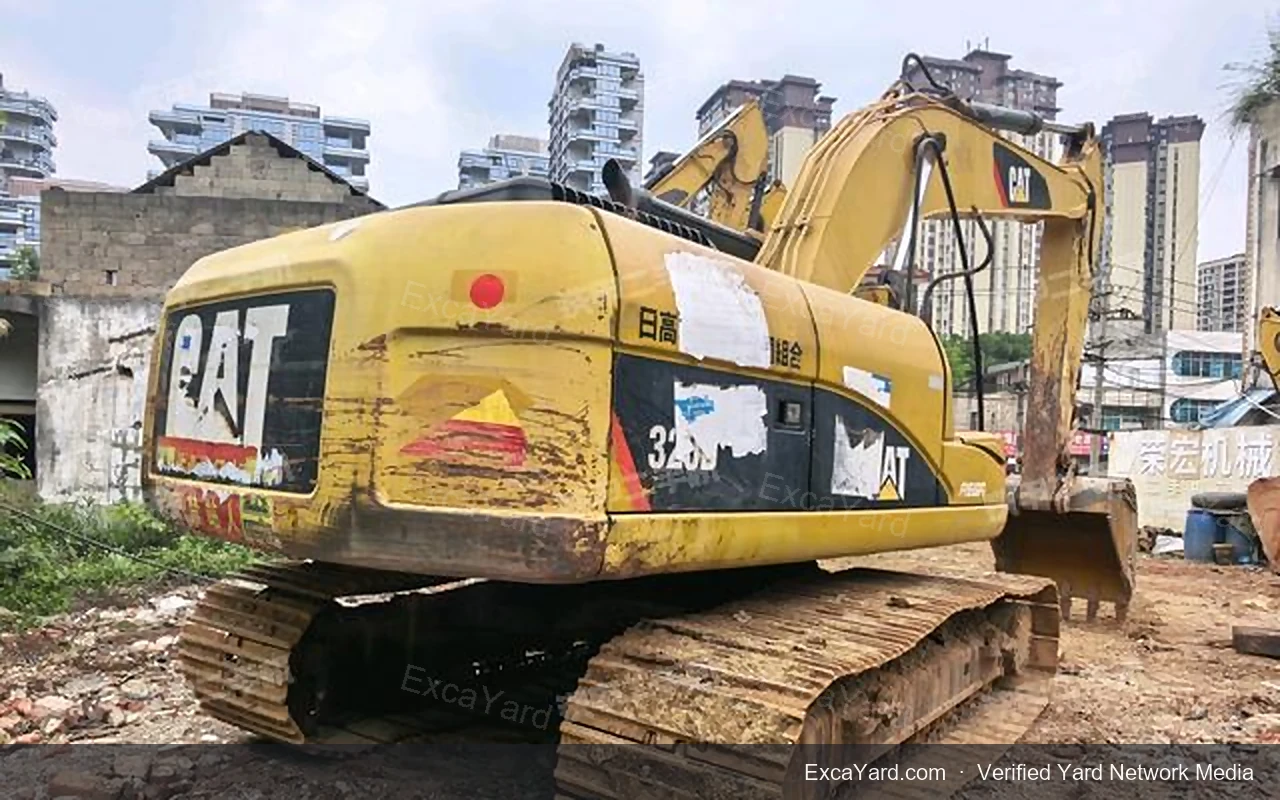
Used Caterpillar 320D Excavator at $15,000: Unit Economics and Inspection
Used Caterpillar 320D excavator, 2013, 10,690 hours, Grade B, $15,000. Run the unit economics first, then inspect the five systems that decide whether the machine pays for itself.
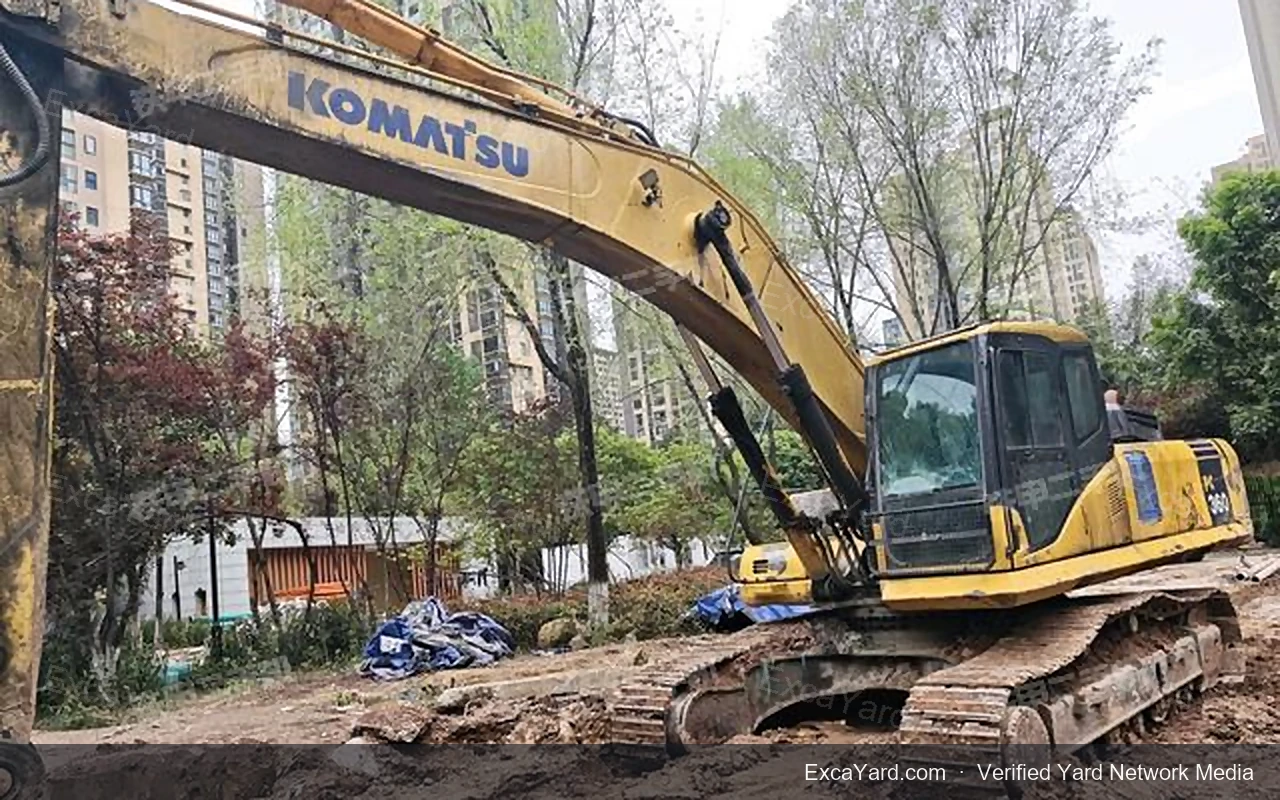
CAT 320D vs Komatsu PC2008M0: A $12,500 Gap on 20-Ton Machines
CAT 320D vs Komatsu PC2008M0, side by side: a 2013 unit with 10,690 hours at $15,000 against a 2020 unit with 3,600 hours at $27,500. Condition, parts and buyer fit.
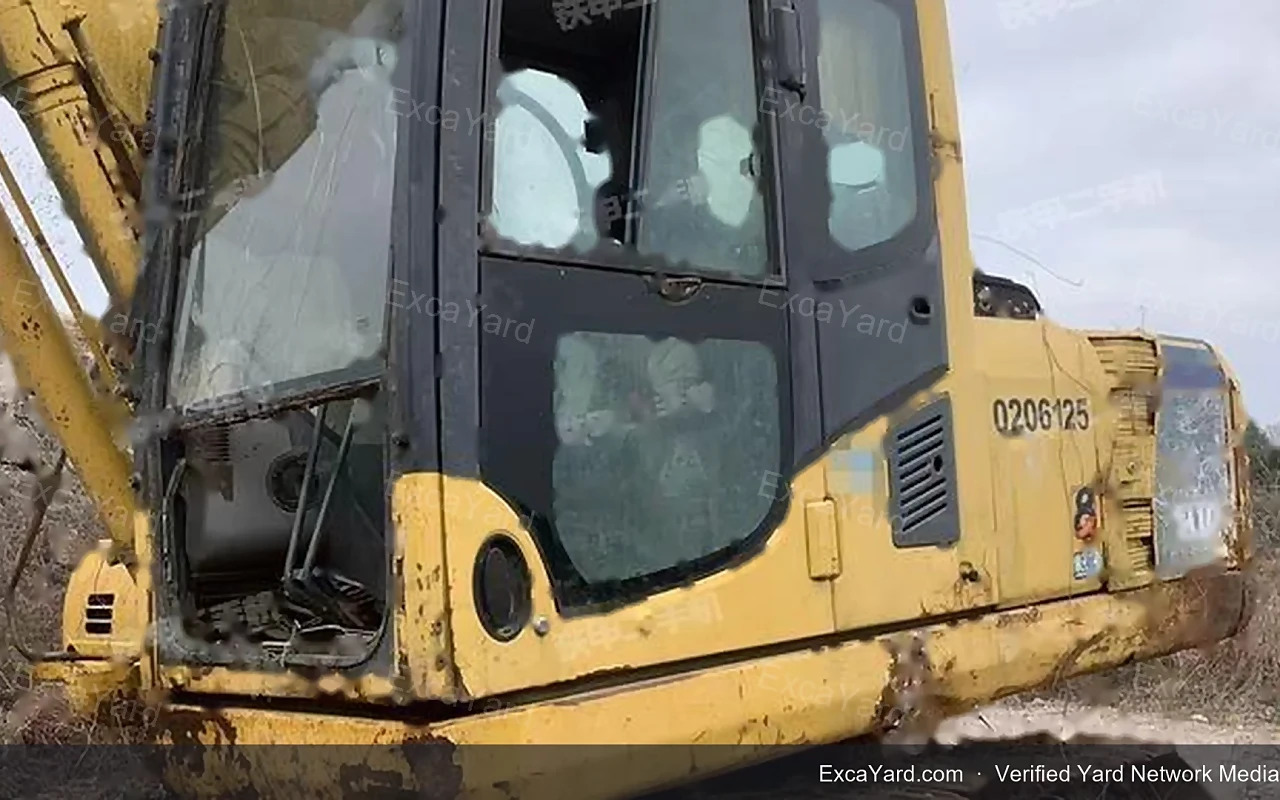
Cat 320 vs Komatsu PC200: Honest Comparison for Used Buyers (2026)
Choosing between a used Cat 320 and a used Komatsu PC200? Real-world differences in fuel economy, parts availability, resale value, and operating cost for export buyers.