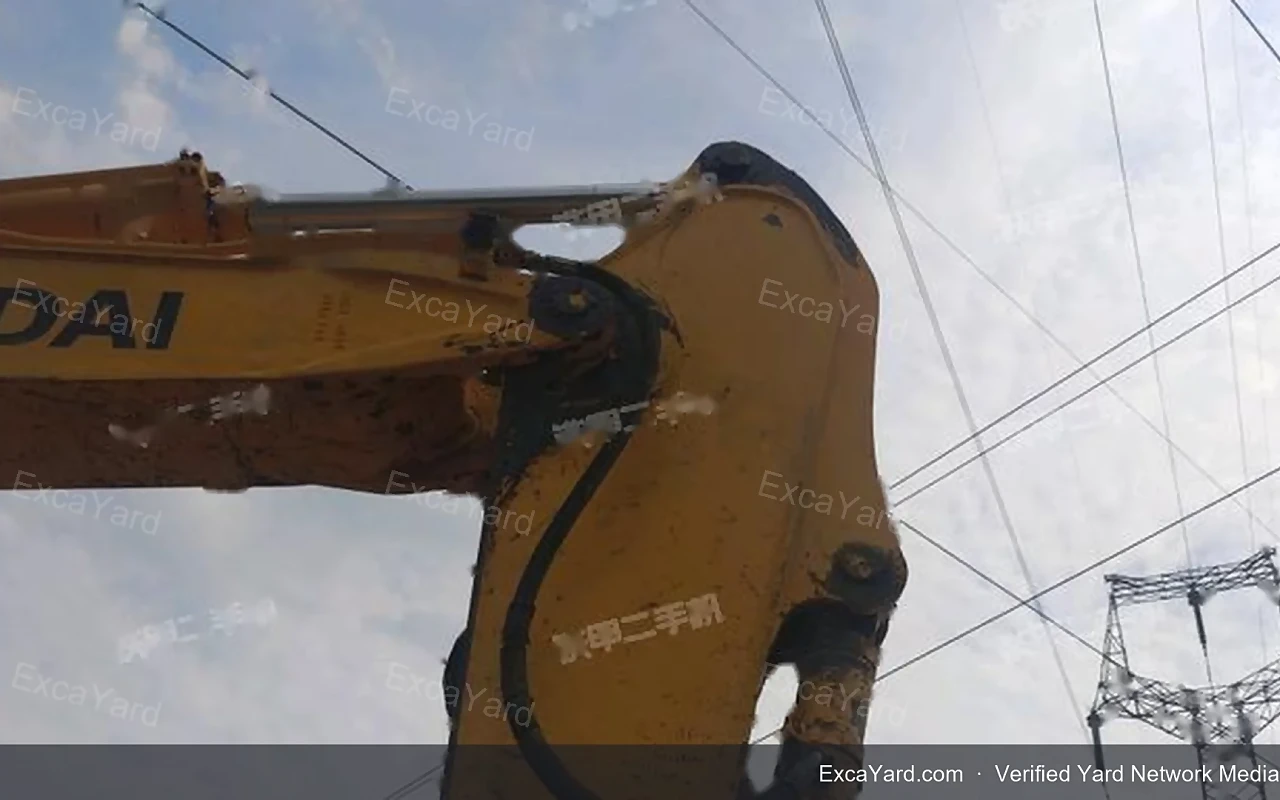
Used Hyundai R150LC9 Excavator: What $12,000 Buys in the 15-Ton Class
A 2014 used Hyundai R150LC9 excavator with 8,400 hours at $12,000: repair risk, R150LC9 inspection points, parts supply and shipping notes.
The used Hyundai R150LC9 excavator in this listing is a 2014 machine: 15.0 tons, 8,400 hours, Grade B, $12,000, held at a partner yard in Mianyang. On paper it is the cheapest way into a 15-ton Korean-brand excavator. In practice, the price is only the entry ticket. A twelve-year-old machine at this money leaves very little room for surprises, so the useful question is not whether it is cheap. The useful question is what it will cost to make it ready for your job and your market. This guide works through the listing data, the inspection sequence and the repair arithmetic before you pay a deposit.
Used Hyundai R150LC9 excavator: what the listing actually states
ExcaYard works through a verified yard network; it does not own the yard in Mianyang. That distinction matters because your contract is with the seller, and the inspection file is the evidence you rely on. The full used Hyundai R150LC9 excavator record gives the following:
| Item | Listing data |
|---|---|
| Year | 2014 |
| Operating weight | 15.0 t |
| Bucket | 0.75 m³ standard |
| Hours | 8,400 |
| Grade | B |
| Price | $12,000 |
| Location | Mianyang, China |
| Shipping basis | FOB Shanghai |
| Engine | OEM diesel, model not stated |
Grade B is defined in the listing as visible wear and minor cosmetic damage with the machine remaining mechanically sound. That is a broad category. It covers a tidy contractor unit with faded paint and it also covers a machine that has been worked hard and cleaned up for photographs. The $12,000 price works out to $800 per ton and about $1.43 per listed operating hour. Those two numbers are a useful starting point, but they are not a condition report.
If you are searching for a used excavator R150LC9 for sale at the bottom of the 15-ton market, this is the kind of unit you will find. The rest of this article is about separating a workable bargain from an expensive project.
What 8,400 hours means on a 2014 machine
Divide 8,400 hours across twelve calendar years and you get roughly 700 hours per year. That is low for a production machine. It suggests either seasonal work, long idle periods, or a meter that has not counted every hour of its life. None of those possibilities can be resolved from a photograph.
Calendar age matters independently of hours. Hoses, seals, cab mounts, wiring insulation and paint age whether the machine runs or sits. A low-hour old machine can therefore need more rubber and seal work than a higher-hour younger one. The listing already discloses two age-related items: minor oil seepage around the boom cylinder seals, and a recommendation to replace the hydraulic hoses within six months as preventive maintenance. Those are not hidden defects. They are budget lines, and a serious buyer should price them before negotiating.
The positive signals in the listing are specific. The engine starts and runs smoothly without abnormal noise or smoke. The hydraulic functions are responsive with no drift or leaks. The air conditioner is functional. The undercarriage is reported at 70 percent remaining life on track links and rollers. Each of those claims can be tested, and each should be tested on video before money moves.
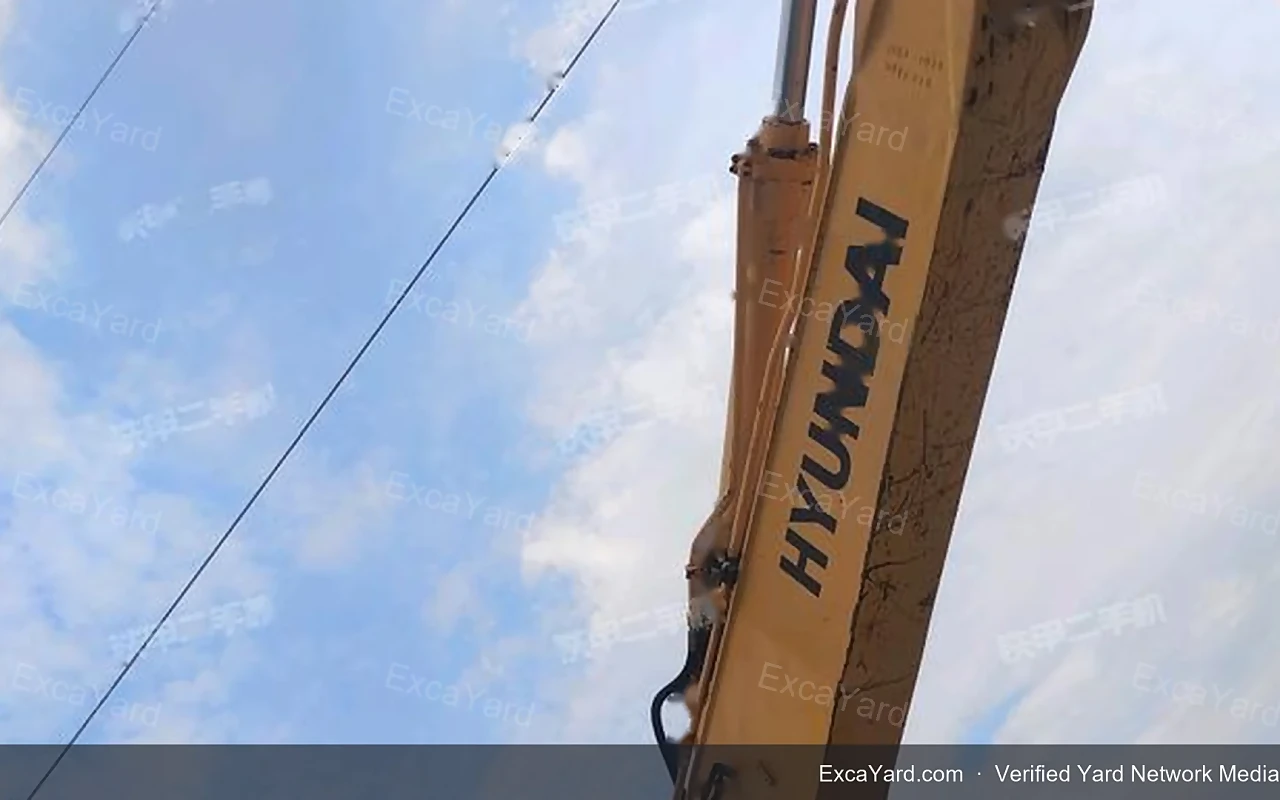
Used Hyundai R150LC9 excavator inspection: where the risk sits
An R150LC9 inspection should follow the money, not the paint. Start with the items that are expensive or slow to fix in your destination market, then work backward to cosmetics.
- Cold start. Ask for a video taken before the engine is warmed, with the hour meter visible and the key turned on camera. Listen for cranking speed, smoke color and any knock. A warm engine hides more than it reveals.
- Hydraulic pump behavior. The video should show boom raise, arm in and out, bucket curl, swing and travel, then a combined cycle. Continuous footage is more useful than short clips because you can hear the engine load and see hesitation.
- Cylinder seepage. The listing admits minor seepage at the boom cylinder seals. Ask for close-ups of the rod and the wiper area after the machine has worked. Seepage that leaves a film is a reseal job; dripping oil is a different conversation.
- Undercarriage. Photograph and measure the track chains, sprocket teeth, idlers, bottom rollers, carrier rollers and shoe bolts. The 70 percent figure is a claim until you see the wear pattern on both sides.
- Structure. Check the boom and arm for cracks, previous welding and repaired pin bosses. Look at the swing bearing area for grease loss and movement.
- Cab and electrics. Confirm the air conditioner, gauges, lights and safety lockout. Electrical faults on an older machine can take days to trace in a market without a Hyundai laptop.
- Hose dates and clamps. If the hoses are original, treat the seller’s six-month recommendation as a purchase cost, not a suggestion.
A third-party inspector at the yard is welcome, and an unedited walkaround is the minimum substitute if you cannot travel. The point is not to prove the machine is perfect. The point is to know which imperfections you are buying.
The R150LC9 price: what the number leaves for repairs
The R150LC9 price of $12,000 is the FOB starting point. Shipping, insurance, port charges and inland transport sit on top, and the first service cycle sits on top of that. A practical rule for a twelve-year-old Grade B unit is to hold back about 15 percent of the purchase price for the first round of consumables and repairs. On this machine that is $1,800, which takes the effective machine cost to $13,800, or $920 per ton.
That reserve is not a prediction of failure. It is a way to compare offers honestly. A $12,000 machine that needs hoses and a cylinder reseal is not cheaper than a $14,000 machine that has fresh hoses and documented seals if both do the same work. The mistake is to spend the entire budget on the purchase and then discover the machine cannot start its first job.
Ask the seller for a written list of what has been replaced in the last two years. If the answer is filters and oil only, plan accordingly. If there are recent hose, seal or undercarriage records, the reserve can be smaller.
Parts supply for an older Hyundai in export markets
Hyundai’s parts position is one of the reasons this unit is worth considering at all. The listing states that common wear parts such as filters, seals and hoses are readily available in most export markets, and that parts can also be sourced from China if needed. The Hyundai excavator range has a broad dealer footprint across Africa, Southeast Asia and the Middle East, which is exactly where many 15-ton machines end up.
The risk is not filters. The risk is major components: a hydraulic pump, a swing motor or an engine part that is specific to an older model. Those can carry lead times, and the lead time is longer if the machine is the only one of its type in the region. Before buying, confirm which local dealer or independent workshop supports Hyundai in your country, and ask what they stock for the R150LC9. If the answer is nothing, order the high-wear consumables with the machine. The cheapest freight is the freight you are already paying for the excavator.
Moving a 15-ton machine: flat rack, RoRo and transit
The unit is quoted FOB Shanghai. The listing says it can ship on a 40-foot flat rack or by RoRo, with estimated transit of 25 to 35 days to West Africa and 10 to 15 days to Southeast Asia. Shipping cost is not included in the $12,000 and has to be quoted against your destination port.
For a first-time importer, the choice between flat rack and RoRo usually comes down to port equipment and cost. Flat rack requires crane lifting at both ends and a yard that can handle the frame. RoRo requires the machine to be driven onto the vessel, which means it must start, steer and brake reliably. A machine with a weak final drive or a starting fault is a poor RoRo candidate. Whichever route you choose, budget for a low-bed trailer from the destination port to your yard and confirm the route can carry a 15-ton machine.
Who should buy this unit, and who should not
This machine suits a buyer who wants a 15-ton excavator for general construction, road work or material handling and who is prepared to do a proper inspection. It also suits a buyer with a local mechanic and a parts channel, because the unit is old enough that maintenance competence matters as much as the brand. The disclosed seepage and hose recommendation are manageable if they are priced in.
It does not suit a buyer who needs a rental-ready machine next week with no workshop time. It does not suit a buyer who treats Grade B as a cosmetic label and expects Grade A mechanics. And it does not suit a buyer who cannot verify the hours or inspect the structure before shipment. At this price, discipline is the only thing standing between a good deal and a repair bill.
FAQ: used Hyundai R150LC9 excavator questions
How are the hours on this used Hyundai R150LC9 excavator verified? The reading is taken from the machine meter and rechecked with the seller at inquiry. Request a photo of the meter with the key on and a cold-start video so the reading, the dash and the engine behavior appear in one continuous record.
What does the R150LC9 price include? The $12,000 is the machine price on an FOB Shanghai basis. Shipping, insurance and destination charges are separate. Payment terms are a 30 percent deposit by T/T or L/C, with the balance before shipment.
Is an R150LC9 inspection possible before I pay? Yes. Ask for the inspection file, undercarriage measurements, cylinder close-ups and a full operation video. A third-party inspector can attend the partner yard. Send your destination port and job type through the contact page and the team will confirm current availability and the evidence package.
What about parts availability? Filters, seals and hoses are the routine items and are widely available through Hyundai’s network. Major components should be checked against local supply before you commit, especially if the machine will work far from a dealer.
The used Hyundai R150LC9 excavator is a legitimate low-cost entry into the 15-ton class, but only for a buyer who inspects first and budgets the first service cycle. If the numbers still work after that, it can earn.
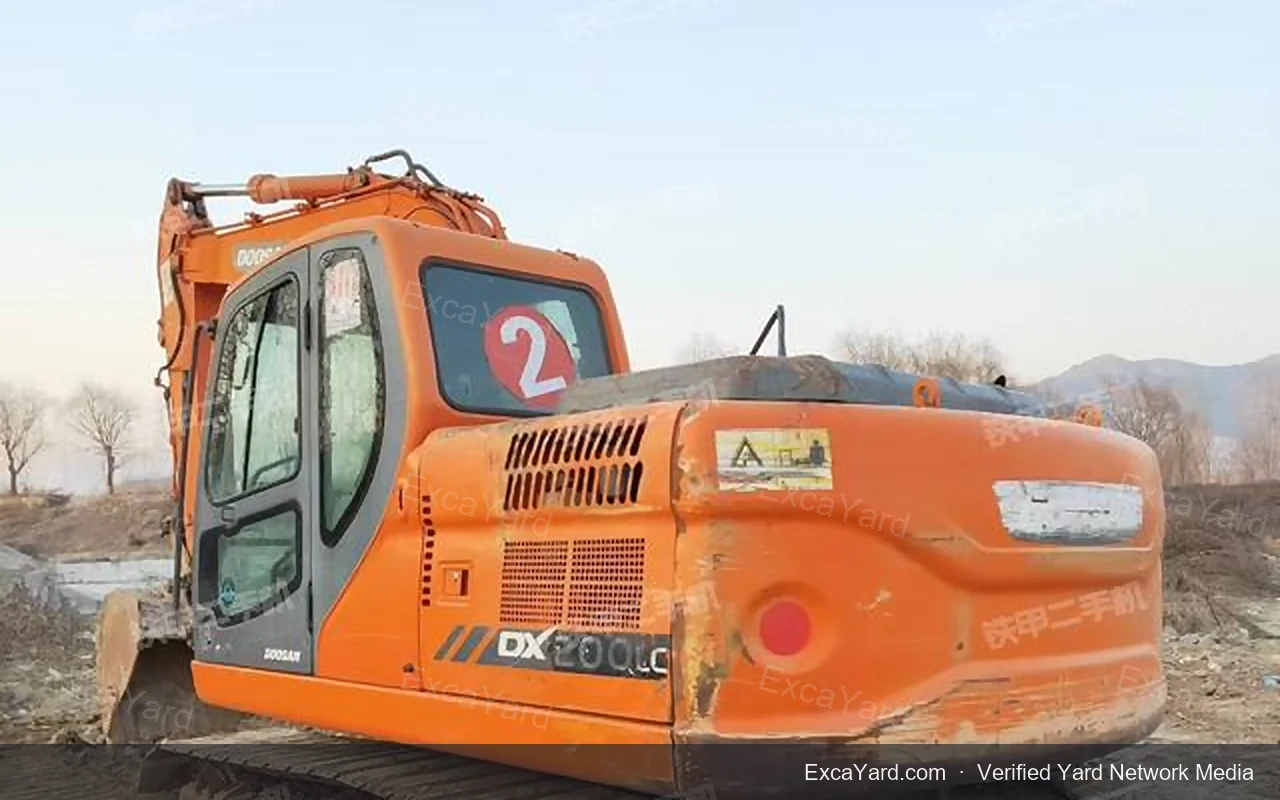
Used Doosan DX150LC Excavator: The $12,000 15-Ton Price Band
A 2015 used Doosan DX150LC excavator at $12,000 compared with every other $12,000 unit in the yard list: DX150LC price, inspection, hours and shipping notes.
Used Doosan DH225LC7 Excavator: 4,200 Hours on a 2010 Build
Used Doosan DH225LC7 excavator at $13,500: 2010, 4,200 hours, 22.5 t, Grade B. How to judge an old low-hour unit before inspection, deposit and shipping.
Cat 320 vs Komatsu PC200: Honest Comparison for Used Buyers (2026)
Choosing between a used Cat 320 and a used Komatsu PC200? Real-world differences in fuel economy, parts availability, resale value, and operating cost for export buyers.