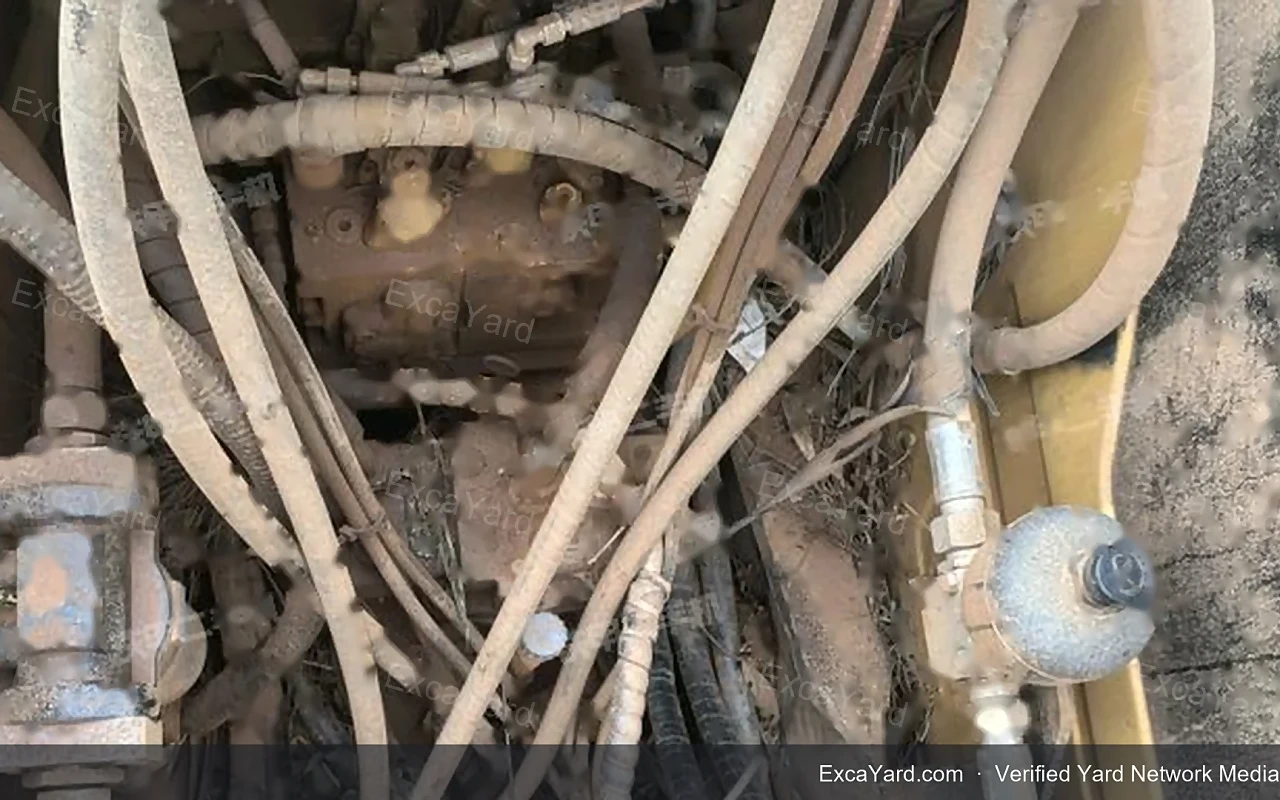
Used Sany Excavator from China to Tanzania: 2026 Export Guide
Honest 2026 export guide to buying a used Sany excavator from China for Tanzania — which Sany models to target (SY215C / SY135C / SY235C), the engine-variant trap, USD pricing, Dar es Salaam import via TBS PVoC, TRA duty and VAT, and why the value brand fits a BRI-era Tanzanian contractor.
A used Sany excavator is a natural fit for the Tanzanian contractor working in a market already shaped by Chinese-built infrastructure — it carries the lowest FOB price of any major brand out of the Shanghai, Ningbo, and Qingdao yards, runs the commodity Kawasaki hydraulic pump that the Dar es Salaam and Arusha workshops already service across the region's mixed fleets, and comes from the brand that is now the world's largest excavator manufacturer by volume. Tanzania's earthmoving demand runs on Belt-and-Road-era projects — the Standard Gauge Railway, port and road upgrades, mining around the Lake Zone, and construction across Dar es Salaam and Dodoma — and Chinese machinery is already familiar on those sites, which means Sany's brand, parts, and operator knowledge are less foreign here than in many markets. For a Tanzanian buyer whose constraint is capital, the Sany SY215C is the value play: it puts a full-size excavator on a Dar, Mwanza, or Dodoma site for materially less than the Japanese-brand equivalent, provided the machine is inspected honestly, the engine variant is identified before the deposit, and the TBS PVoC paperwork is arranged correctly. This guide is the honest export-buyer brief on sourcing a used Sany excavator from China yards for Tanzania — which models to target, the engine-variant trap, the USD price bands, the Dar es Salaam import process via TBS PVoC, and the inspection points that protect the deal.
Which Sany models to target from China
The Chinese used-machine market carries a deep pool of Sany excavators — Sany is a domestic Chinese brand, so the home-market secondhand supply is larger than for any imported marque. Only a few classes are the right export buy for Tanzania in 2026:
- Sany SY215C (21.5-tonne, the volume choice): The SY215C is the single most exported Sany excavator and the right default for a Tanzanian buyer wanting a full-size 20-tonne machine. It uses the Kawasaki K3V112DT main hydraulic pump — the same industry-standard pump family as the Komatsu PC200-8 — and has the deepest parts inventory of any Sany class in the Chinese aftermarket. This is the model this guide centres on. Critical: the SY215C shipped with more than one engine — see the engine-variant note below.
- Sany SY135C (13.5-tonne, midi class): For urban site preparation in Dar es Salaam, drainage and utility trenching, and light civils where transport and fuel cost matter, the SY135C midi class is the lower-cost, lower-running-cost buy. Cheaper to ship and cheaper to feed.
- Sany SY235C (23.5-tonne, more digging force): For a Tanzanian contractor on road works, heavier civils, or Lake Zone mining support, the SY235C gives more breakout force and weight than the SY215C at a modest price step.
- Sany SY365C (36.5-tonne, quarry and bulk earthworks): A specialist buy for aggregate quarries, mining, dam works, and large road and rail contracts. Higher FOB, freight, and fuel burn — only worth it for genuine 36-tonne-class work.
For most Tanzanian buyers in 2026 the recommendation is the Sany SY215C at the right hours and the correct verified engine — the rest of this guide uses the SY215C as the reference machine.
The Sany engine-variant trap — check this before anything else
A Sany purchase differs from a Komatsu or Caterpillar purchase in one decisive respect: the SY215C was built with more than one engine over its production life, and identifying which one is in the machine you are buying is the single most important inspection step. Depending on production year and market, an SY215C may carry a Mitsubishi 6D34, an Isuzu 6HK1, or a Sany SCDE7-series (Sany C-series) engine. This matters for a Tanzanian buyer because parts availability and rebuild cost differ sharply: the Isuzu 6HK1 has the widest independent parts and rebuild support across the Dar es Salaam and Arusha workshops, the Mitsubishi 6D34 is well understood but older, and the Sany SCDE7 requires Sany-channel or China-sourced parts. Before you wire any deposit, confirm the exact engine model from the engine serial plate, cross-checked against the machine serial and the commercial invoice — never accept a generic "Sany SY215" listing without the engine identified.
Why Tanzanian buyers choose Sany over Caterpillar or Komatsu
Five concrete reasons a Tanzanian contractor picks a used Sany over the equivalent Cat or Komatsu:
- Lowest FOB and landed cost of any brand in the series: A used Sany SY215C lands at Dar es Salaam several thousand US dollars below the equivalent Komatsu PC200-8 and well below a Cat 320D — the deciding factor for a capital-constrained contractor building a fleet on BRI-era subcontract work.
- Kawasaki hydraulic pump ecosystem — Dar workshop friendly: The SY215C uses the Kawasaki K3V112DT main pump, the standard-of-industry component with the widest commodity rebuild network. Kawasaki pump rebuilds are routine through Dar es Salaam and Arusha hydraulic shops — the same workshops that service the region's Komatsu, Doosan, and XCMG fleets.
- Familiarity from BRI projects: Chinese machinery, including Sany, is already widely deployed on Tanzania's Chinese-built infrastructure, so operators, mechanics, and parts channels are less foreign to the brand than in many markets. This lowers the practical ownership friction that can otherwise offset a Chinese-brand price advantage.
- Newest year-for-money of any brand: Because Sany's export volume ramped later than the Japanese brands, a used Sany at a given price is typically a newer machine with fewer hours than the equivalent-priced Komatsu or Cat. A Tanzanian buyer on a fixed budget can often buy a 2016–2018 Sany where the same money buys only a 2011–2013 Cat.
- Cheap, China-sourced consumables: Filters, wear parts, undercarriage, and cab parts for a Sany are inexpensive and abundant out of China, and a Tanzanian buyer can consolidate a spares package in the same shipment.
2026 used market prices from China yards
Honest USD pricing for export-ready Sany SY215C-class units sourced from Shanghai, Ningbo, and Qingdao yards in 2026:
- 2013–2015, 8,000–11,000 h, fair condition: USD 22,000–30,000 FOB Shanghai. Typical: earlier SY215C, 30–45% undercarriage, Kawasaki pump a rebuild candidate, cab fair, engine variant must be verified. A budget-first, project-scoped buy.
- 2015–2017, 6,000–8,000 h, good condition: USD 30,000–40,000 FOB Shanghai. Typical: mid-production SY215C, 50–65% undercarriage, original controllers, no major boom welds, engine identified and sound. The core Tanzanian value band.
- 2017–2019, 4,000–6,000 h, very good condition: USD 40,000–52,000 FOB Shanghai. Typical: late SY215C, 65–80% undercarriage, near-original cab, recent service, clean engine. The Sany sweet spot — a newer machine than the equivalent-priced Japanese unit.
- Low-hour late SY215C: USD 52,000–64,000 FOB Shanghai. Premium end; still typically below a comparable-year Komatsu, for a buyer who wants near-current Sany specification at a value price.
Add approximately USD 3,000–4,200 for ocean freight Shanghai to Dar es Salaam, and approximately USD 2,500–4,000 for TBS PVoC inspection, documentation, and Dar port handling. On top of the landed CIF, budget Tanzania's import taxes (below). Total landed and cleared cost at Dar es Salaam for a 2016 Sany SY215C at 6,500 hours therefore typically sits in the USD 42,000–56,000 band, all-in, in 2026 depending on the final duty and VAT assessment — still below the equivalent Komatsu on the same route.
Inspection points before you wire the deposit
The ten highest-impact inspection points for a Sany SY215C-class machine sourced in China for Tanzania:
1. Engine variant identification (do this first): Read the engine serial plate and confirm whether the machine carries a Mitsubishi 6D34, Isuzu 6HK1, or Sany SCDE7 engine. Cross-check against the machine serial and commercial invoice. This determines your parts and rebuild economics in Tanzania more than any other single factor.
2. Main hydraulic pump pressure test: Kawasaki K3V112DT main pump relief pressure should hold at Sany spec under full load. Below spec indicates a rebuild — Kawasaki pumps rebuild through Dar es Salaam and Arusha hydraulic shops at commodity pricing. Test before you buy.
3. Engine blowby and oil-pressure test at temperature: Blowby should be modest at full operating temperature; excessive blowby means ring wear and a top-end rebuild approaching, budgeted at USD 4,500–8,000 depending on the engine variant. Verify the engine matches the machine serial.
4. Boom and arm weld inspection: Magnetic-particle test on the boom box-section critical welds and the bucket cylinder bracket. Boom-to-arm pin bore elongation above 1.5 mm is a buyer warning.
5. Undercarriage wear measurement: Track shoes, link pitch, sprocket teeth, and bushing diameter. Sany undercarriage parts are inexpensive out of China; below 35% remaining is a plannable future cost that must be priced into the deal.
6. Controller and electrical check: Verify the Sany display and controllers power up cleanly, no persistent fault codes, and the wiring loom is unmodified.
7. Cab, AC, and glass: Verify door seals, dash and monitor function, AC compressor cycling, blower, and seat. AC matters on a Dar es Salaam or Lake Zone site; a dead AC is a USD 1,200–2,500 line item.
8. Final drive and travel motor (oil sample both sides): Metallic content above 200 ppm is imminent failure; travel-motor wear shows as drift under straight-line travel. Confirm both sides.
9. Serial and plate verification against export documents: Confirm the machine serial, engine serial, and chassis match the commercial invoice, the TBS PVoC paperwork, and the bill of lading exactly. A mismatch will stall the inspection and the Dar clearance.
10. Service history and hours honesty: Sany machines do not carry a universal factory telematics equivalent to KOMTRAX, so hours honesty rests on the ECM reading, the service record, and physical wear cross-checks. Where the hours, undercarriage, and pin wear disagree, price the machine as if the worst is true.
Dar es Salaam import process: TBS PVoC, TRA duty, and clearance
Tanzania requires a Pre-Shipment Verification of Conformity under the Tanzania Bureau of Standards (TBS) PVoC programme, carried out in China before shipment. The inspection is performed by a TBS-appointed agent — commonly Bureau Veritas, Intertek, or SGS — against the applicable standard, and issues a Certificate of Conformity (CoC) required to clear the machine at Dar es Salaam.
Process for a Sany SY215C in 2026:
1. China yard prepares the machine and documentation: serial plate, engine serial, chassis, and photographs matched to the commercial invoice.
2. The TBS-appointed inspection agent (Bureau Veritas / Intertek / SGS) inspects the machine in China against the applicable standard and issues the TBS PVoC Certificate of Conformity. Book this early — scheduling the inspection is the most common cause of shipment delay.
3. Machine ships to Dar es Salaam with the commercial invoice, packing list, bill of lading, certificate of origin, and the TBS CoC.
4. On arrival at Dar es Salaam, the Tanzanian importer or clearing agent files the entry with the Tanzania Revenue Authority (TRA), pays the applicable taxes, and the machine is released.
Tanzania import taxes on a used excavator (HS 8429.52) are assessed on the CIF value. As a member of the East African Community, Tanzania applies the EAC Common External Tariff — capital and construction machinery can attract a lower duty band than consumer goods, with 18% VAT applied, and certain capital goods may qualify for duty relief depending on use and classification. These rates and reliefs can change and depend on the specifics, so confirm the current TRA assessment for your exact HS code and machine with your Dar clearing agent before shipping — do not assume a relief applies until it is confirmed in writing.
Other Tanzania import notes:
- Clearing agent: Use a licensed Dar es Salaam clearing agent experienced with construction machinery and TBS PVoC. The agent manages the TRA entry, port release, and any transit steps.
- Inland transport and transit trade: Budget low-loader transport Dar es Salaam to Dodoma, Mwanza, Arusha, or the mine sites. Dar also serves as a transit port for landlocked neighbours; if the machine is destined onward, confirm the transit-bond arrangements with your agent.
- Spares consolidation: Because Sany consumables are cheap out of China, consolidate a filter, wear-part, and undercarriage spares package in the same shipment.
Shipping options and transit times
Two practical options for Shanghai → Dar es Salaam shipping a Sany SY215C-class machine in 2026:
- RoRo (Roll-on / Roll-off): Approximately USD 3,000–4,200 per machine, transit 28–36 days Shanghai to Dar es Salaam. RoRo is the common choice for a self-propelled excavator and avoids container packing cost.
- Flat-rack container: Approximately USD 2,800–3,900 per machine, transit 32–42 days including consolidation. The SY215C ships on a 40ft flat-rack with boom and arm folded; suits a buyer consolidating Sany spares or attachments.
Build your timeline around a deposit-to-Dar window of 42–58 days in 2026, then add TBS inspection scheduling before shipment and TRA clearance at the destination.
FAQ
Which used Sany excavator should I import to Tanzania in 2026?
For most Tanzanian buyers the Sany SY215C (21.5-tonne) is the right choice — it is the most exported Sany, uses the commodity Kawasaki K3V112DT pump, and offers the lowest landed cost of any 20-tonne brand into Dar es Salaam. The SY135C midi suits tight urban and utility work, the SY235C gives more digging force for road and mining-support duty, and the SY365C is a specialist quarry and mining machine. Target a 2016–2018 SY215C at 4,500–7,000 hours with the engine variant verified.
What is the engine-variant issue with a used Sany excavator?
The Sany SY215C was built with more than one engine — commonly a Mitsubishi 6D34, an Isuzu 6HK1, or a Sany SCDE7-series engine. Parts availability and rebuild cost differ, with the Isuzu 6HK1 generally best supported by independent workshops in Dar es Salaam and Arusha. Always confirm the exact engine from the engine serial plate before buying, because it defines your ownership economics more than the year or hours.
How much are TBS PVoC, duty, and VAT on a Sany excavator into Tanzania?
The machine needs a TBS PVoC Certificate of Conformity issued in China by an appointed agent (Bureau Veritas, Intertek, or SGS) before shipment. Tanzanian import taxes on a used excavator under HS 8429.52 are assessed on CIF under the EAC Common External Tariff, with 18% VAT applied and duty depending on the classification and any capital-goods relief. Rates and reliefs can change, so confirm the current TRA figures for your exact machine with your Dar clearing agent before shipping.
Does Sany's presence on Tanzania's Chinese-built projects help me as a used buyer?
In practice, yes. Chinese machinery, including Sany, is widely deployed on Tanzania's Belt-and-Road infrastructure, so operators, mechanics, and parts channels are more familiar with the brand than in markets with no such exposure. That familiarity lowers the day-to-day ownership friction that can otherwise offset a Chinese-brand price advantage — though you should still verify local parts support for your specific engine variant.
How long does a used Sany take to reach a Dar es Salaam site from China?
Plan a deposit-to-Dar window of roughly 42–58 days by RoRo in 2026, then add TBS PVoC inspection scheduling before shipment and TRA clearance plus low-loader transport at the destination. Booking the TBS inspection early is the single best way to protect the timeline.
Talk to ExcaYard
If a used Sany excavator is on your shortlist for a 2026 Tanzanian project, ExcaYard runs verified yard inventory across Shanghai, Ningbo, and Qingdao with daily updated stock photos and — critically for a Sany — the engine serial and variant confirmed on every listing so you know whether you are buying a 6D34, 6HK1, or SCDE7 machine before you commit. We prepare the export documentation stack — commercial invoice, packing list, certificate of origin — and coordinate the TBS PVoC inspection in China so your machine clears Dar es Salaam cleanly. Send us your spec brief (model — SY215C / SY135C / SY235C / SY365C, year, hours, engine preference, undercarriage state, hydraulic condition, budget, destination — Dar es Salaam / Dodoma / Mwanza / Arusha, or onward transit) on WhatsApp at +86 193 9277 7259 and we will match against current stock within one working day. Dar es Salaam landing typically 42–58 days from deposit. T/T, SWIFT, Wise, and L/C payments accepted.

Cat vs Volvo Used Excavator: Honest Comparison for Export Buyers (2026)
Caterpillar vs Volvo used excavators — fuel economy, parts availability, resale value, and operating cost compared. Which to buy for African or Southeast Asian markets?
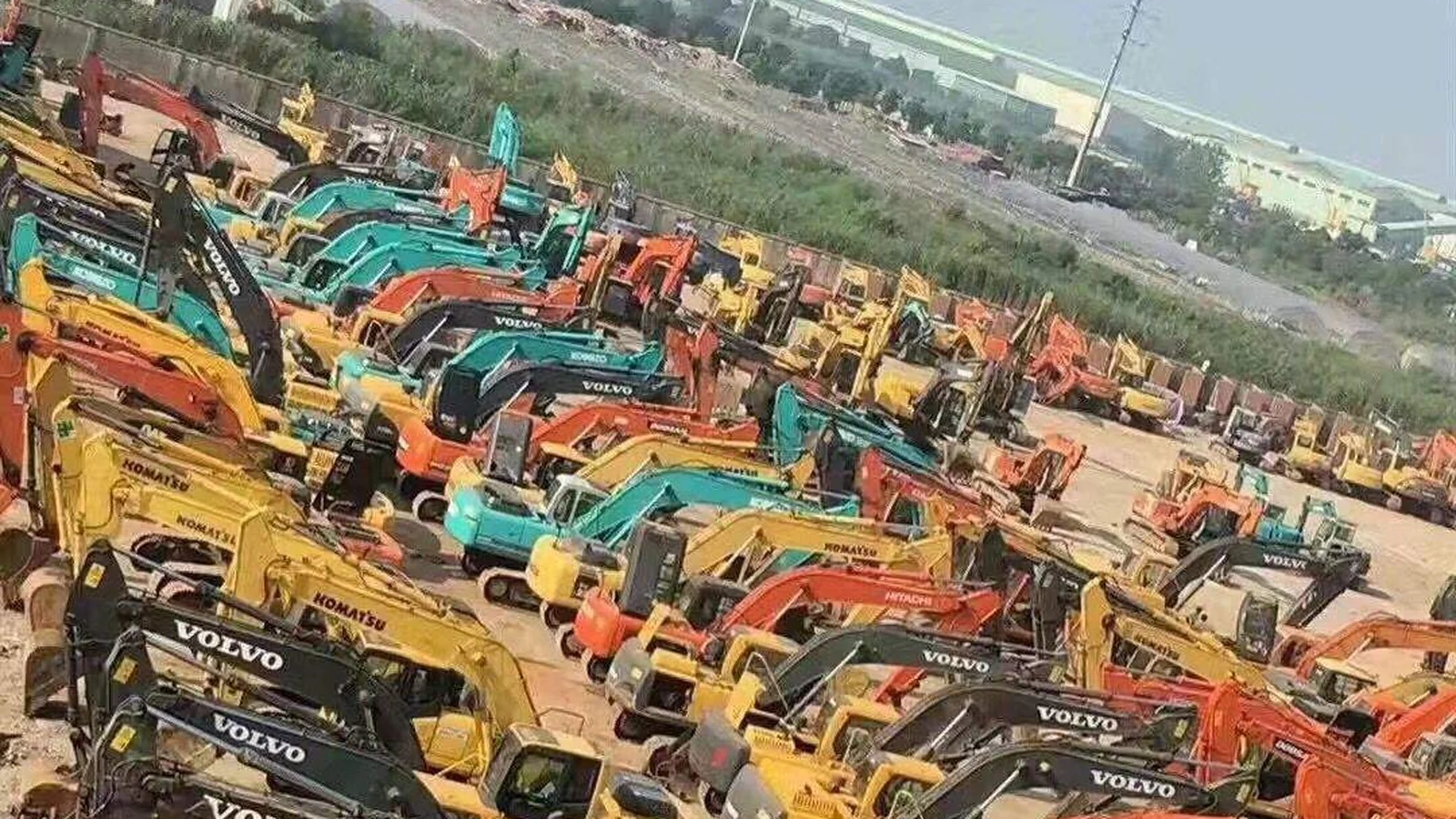
20-Ton vs 30-Ton Used Excavator: Which Class Should You Buy?
20-ton (Cat 320, Komatsu PC200) vs 30-ton (Cat 330, Komatsu PC300) — payload, fuel cost, transport cost, ROI per job class. Which makes more money for export buyers?
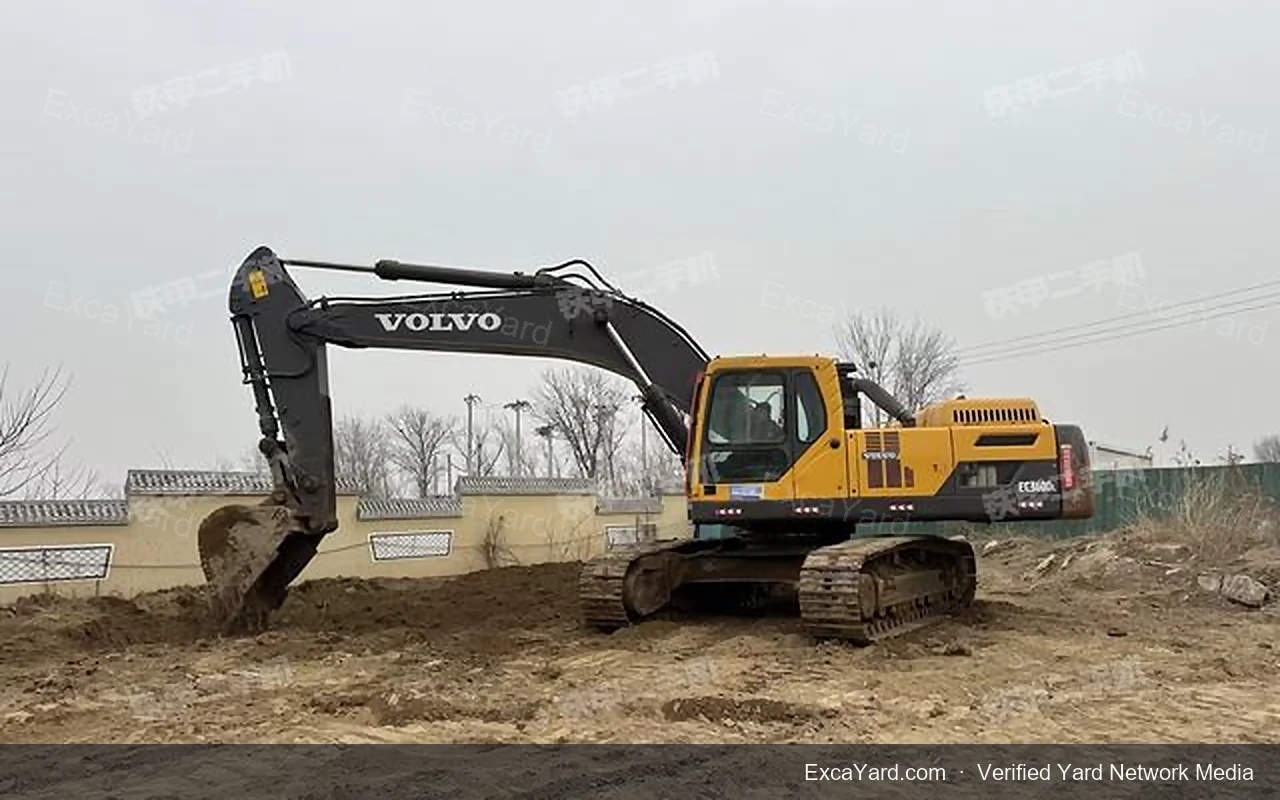
Sany vs XCMG Used Excavators: Chinese-Brand Comparison Guide
Sany vs XCMG used excavator comparison — quality, parts availability, dealer network, resale value. Honest take on the two largest Chinese OEMs for export buyers.