
Used Komatsu PC2008M0 Import Kenya: Mombasa Landed Cost at $27,500
Used Komatsu PC2008M0 import Kenya costed at Mombasa: 0% duty but 16% VAT, 3.5% IDF and 2% RDL, plus clearly labelled 40ft freight assumptions.
A used Komatsu PC2008M0 import Kenya looks cheap on paper because the duty line is zero. It is not cheap. Zero duty is real, but VAT at 16%, IDF at 3.5% and RDL at 2% all sit on a CIF value, and CIF includes freight you have not booked yet. On the rates supplied and labelled freight assumptions, this $27,500 machine lands near $40,600 at Mombasa — about 48% above the FOB sticker. That is the landed cost Mombasa buyers should carry into a budget, not the headline.
The record is EXY-KOMAPC2008M0-153: 2020, 3,600 hours, Grade A, 1.0 m³ bucket, 20.08 t operating weight, listed at $27,500. Unlike the weight field on many 20-tonne listings, this one is internally consistent with the class, which removes one common source of freight error before the arithmetic begins.
Zero Duty Does Not Mean Cheap: The Mombasa Arithmetic
Start with the counterintuitive part. A zero percent duty rate sounds like a tax holiday, and on its own line it is — the duty column will read $0. The import duty excavator Kenya buyers are quoted here is zero, and that is exactly why the rest of the stack deserves a second look. Duty is only one of four charge lines here, and the next two are charged on CIF before VAT is calculated. A buyer who budgets for “no duty” and stops there understates the bill by roughly $13,100 — more than twice the VAT line alone.
The shape of the problem is different from a high-duty market. Here the pain is concentrated in the value-added step and in the two CIF-based levies, so the levers that matter are the assessed CIF value and the freight component inside it. Get those right and the stack behaves predictably. Get them wrong and every percentage line moves in the same direction.
Used Komatsu PC2008M0 Import Kenya: The Full Stack
The table below is the whole model in one view. The $27,500 price is recorded. The 0% duty, 16% VAT, 3.5% IDF and 2% RDL are the rates you supplied. Freight, insurance and clearing are assumptions, included so the percentages have a base, and each one must be replaced with a named quote.
| Line | Basis | Amount (USD) |
|---|---|---|
| FOB unit price | Recorded listing value | 27,500 |
| Ocean freight to Mombasa | Assumption, 40ft reference | 3,600 |
| Marine insurance | Assumption, roughly 1% of FOB | 275 |
| CIF value | FOB + freight + insurance | 31,375 |
| Import duty | 0% of CIF | 0 |
| IDF | 3.5% of CIF | 1,098 |
| RDL | 2% of CIF | 628 |
| VAT | 16% of (CIF + duty + IDF + RDL) | 5,296 |
| Clearing and port handling | Assumption, broker quote pending | 2,200 |
| Landed total | Assumption-based estimate | 40,597 |
Two notes on method. First, the VAT base here is CIF plus duty plus IDF plus RDL; confirm that base with your broker, because the order of the calculation is where quotes most often diverge. Second, no levy beyond the four rates you gave is included. If the assessment sheet shows more, the total moves up.
IDF and RDL Are Small Percentages With a Long Reach
IDF at 3.5% costs $1,098 and RDL at 2% costs $628. Together they are $1,726, or 6.3% of the FOB price, and neither is called “tax” in ordinary conversation. That naming is why they get missed in budgets that only track duty and VAT.
Both are charged on CIF, so both inherit the freight assumption. If the real 40ft rate comes in at $4,400 instead of $3,600, CIF rises by $800, IDF rises by $28, RDL by $16, and VAT rises by about $135. The direct levy increase is small; the VAT knock-on is the larger share. This is the mechanism to keep in mind when a forwarder’s number changes late.
VAT at 16% Is Where the Bill Actually Lands
At $5,296, VAT is 19.3% of the FOB price and 13% of the landed total. It is the largest non-FOB line by a wide margin, and it is the reason a zero-duty machine still carries a 48% add-on. The rate is high, but the more important fact is that it is applied to a base that includes freight, IDF and RDL.
That gives you a clean audit test. Divide the quoted VAT by 0.16; the result should equal CIF plus duty plus IDF plus RDL. If it does not, either the base is different from the one quoted or one of the lines is wrong. Run that check before you approve a payment, because it takes a minute and catches the most common stacking error.
What the Used Komatsu PC2008M0 Import Kenya Bill Looks Like in Practice
In practice the invoice does not arrive as one number. It arrives as a deposit, a freight invoice, a clearing demand and a tax payment, often weeks apart and often in different currencies. The landed total is an accounting reconstruction, not a single document you will ever sign.
That is why the sequence matters as much as the total. The FOB payment is fixed at contract. Freight is fixed when you book. The tax lines are fixed when the assessment is done, and the clearing line is fixed when the file closes. If you track the landed cost against those four checkpoints rather than against the final total, a drift becomes visible while you can still do something about it.
Freight Is an Assumption, and CIF Is the Lever
The $3,600 figure is a 40ft container reference for planning. It is not a flat-rack rate and it is not a RoRo rate, and the correct method depends on dimensions confirmed on the plate. A 20.08 t machine at 1.0 m³ bucket is a different freight problem from a wider or heavier unit, so treat this number as a placeholder with a job to do: it gives the percentage lines something to multiply.
Insurance deserves the same treatment. The $275 line is an assumption priced near 1% of FOB, not a binding rate, and it exists so the CIF total is complete rather than implied. If your forwarder sells cover as part of a CIF arrangement, check whether the premium is already inside the freight figure; paying for it twice is a quiet way to lose a few hundred dollars on a machine that otherwise looks correctly costed. Either way, the insurance line should move with CIF, not sit fixed while freight changes.
When the real quote arrives, update CIF first and let everything downstream recalculate. Do not patch the total by hand. The Kenya market notes cover the port side, and the used Komatsu PC2008M0 import Kenya unit file holds the machine record this model is built on.
A 2020 Machine With 3,600 Hours Changes the Risk, Not the Tax
Three thousand six hundred hours over six years is about 600 hours a year, which is light use for a 20-tonne excavator. Grade A matches that pattern. The capital tied up per meter hour is $7.64, which is what buying remaining life looks like next to buying a low entry price.

None of this reduces the tax. The levies are percentages of CIF, and CIF follows price, not condition. What the low hours change is the repair reserve you should carry after landing, and the resale case if the machine ever leaves your fleet. The engine model is not recorded on this listing, so ask for the plate and the engine tag before you treat the Grade A rating as complete. That is also the standard to hold any used excavator Kenya sellers are offering to, not just this one.
ExcaYard is a verified yard network, not the owner of this unit. The record is what the yard supplied, and the network’s purpose is to let you check that record against the physical machine before payment.
Verification Before Payment
- Plate photograph confirming model, serial number and 20.08 t operating weight.
- ECU or service-log evidence for the 3,600 hours, not just a meter photo.
- A freight quote naming the method and sailing window to replace the $3,600 assumption.
- The assessment sheet showing CIF, IDF, RDL and VAT separately, with the VAT base visible.
- A clearing quote that states its scope, so the $2,200 assumption can be retired.
Send those five items together rather than one at a time. Contact the team with the machine record and the quotes in the same thread, and the landed number becomes something you can defend instead of something you estimated.
FAQ
Does zero duty make a used Komatsu PC2008M0 import Kenya cheap?
No. Duty is zero, but VAT at 16%, IDF at 3.5% and RDL at 2% still apply, and the model lands near $40,600 against a $27,500 FOB price. The add-on is about 48%, most of it VAT.
How is VAT calculated on this import?
At 16% of CIF plus duty plus IDF plus RDL, which gives $5,296 in this model. Because duty is zero here, the practical base is CIF plus the two levies. Confirm the base with your broker before approving payment.
Are the 3,600 hours on this machine verified?
The record states that hours are confirmed by ECU readout and service log, with no tampering reported. Ask for both documents rather than a dashboard photo, and read them against the Grade A rating and the undercarriage condition.
What does the 40ft reference cover?
It covers the ocean freight assumption only, at $3,600. It is not a flat-rack or RoRo quote, and it excludes insurance, clearing, duty, IDF, RDL and VAT, all of which are modelled separately above.
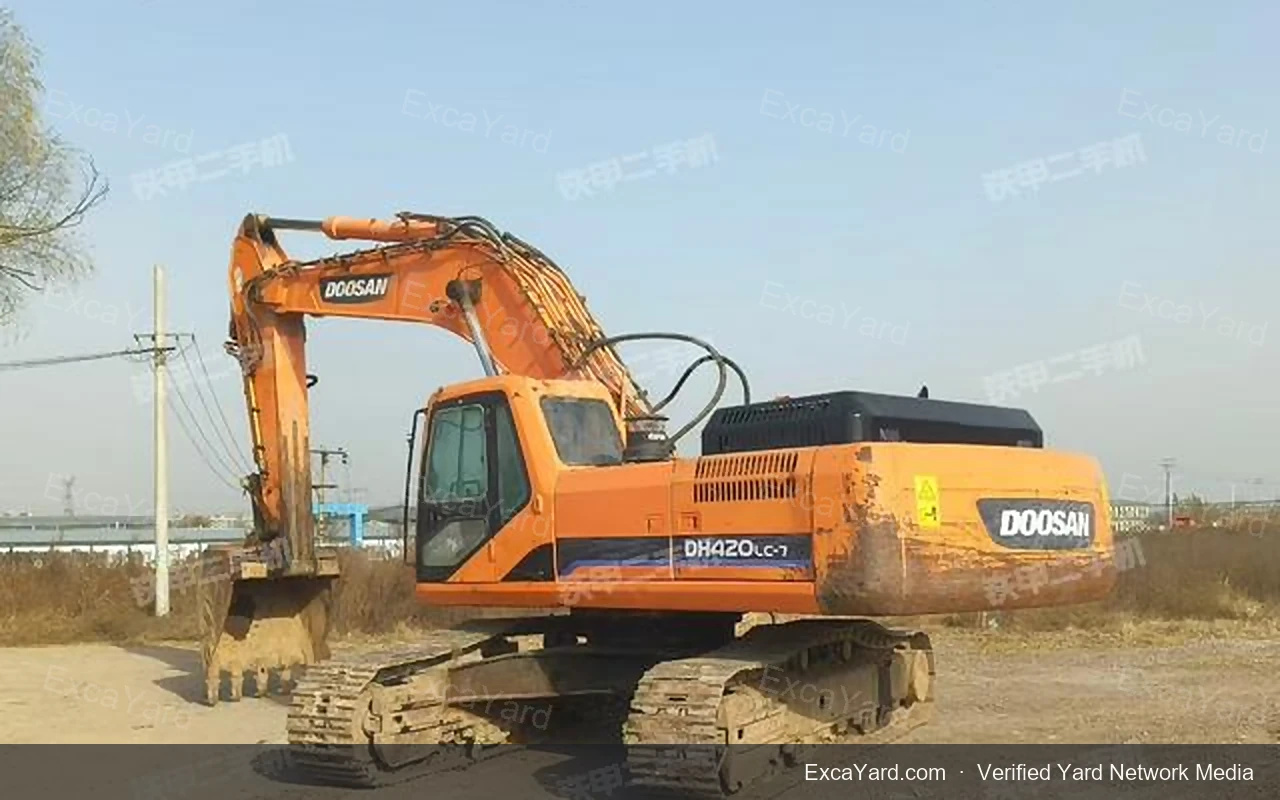
How to Import a Used Excavator to Kenya: 2026 Complete Guide
Step-by-step Kenya import guide for used excavators from China — Mombasa port, KEBS PVoC, duty/VAT, age limits, total landed cost. Real shipment numbers.
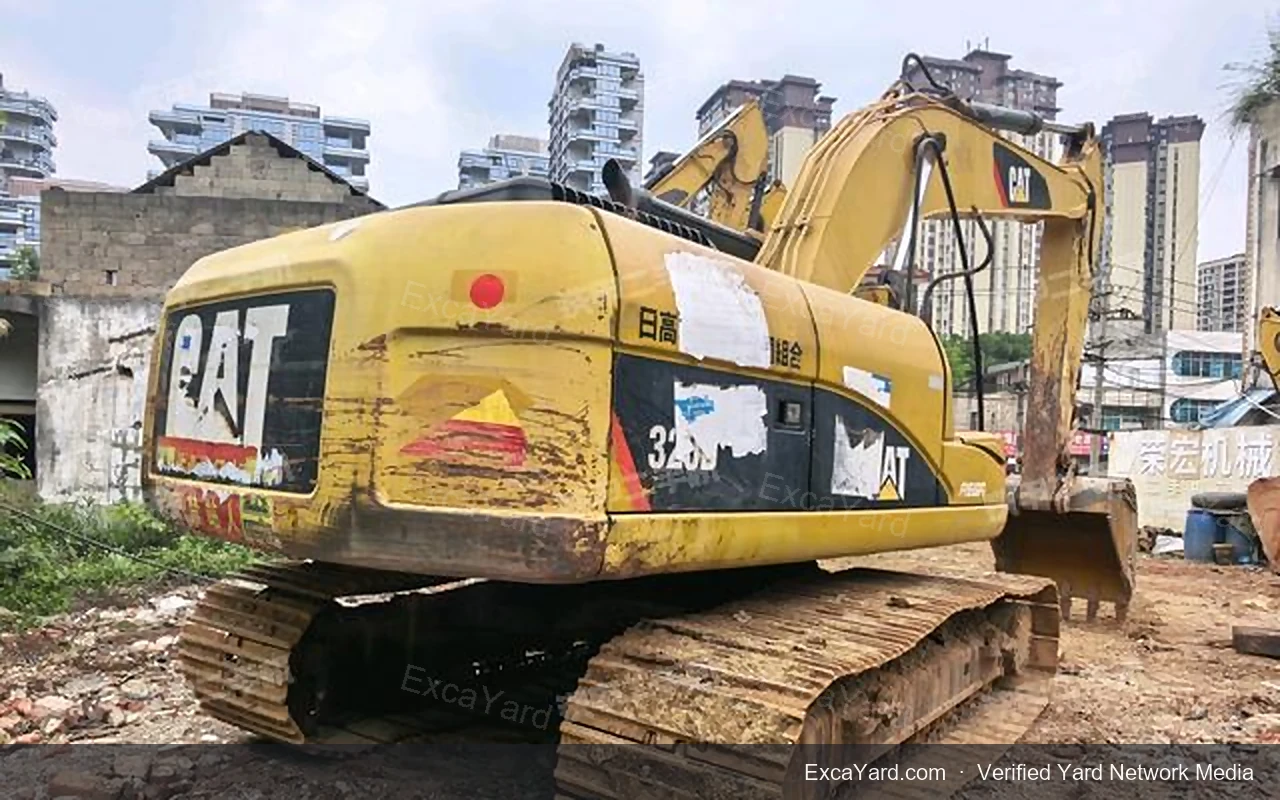
Used Caterpillar 320D Import Nigeria: Lagos Landed Cost at $15,000
Used Caterpillar 320D import Nigeria, costed end to end: $15,000 FOB, 5% duty and 7.5% VAT on a 40ft reference, with every freight and clearing line labelled as an assumption.
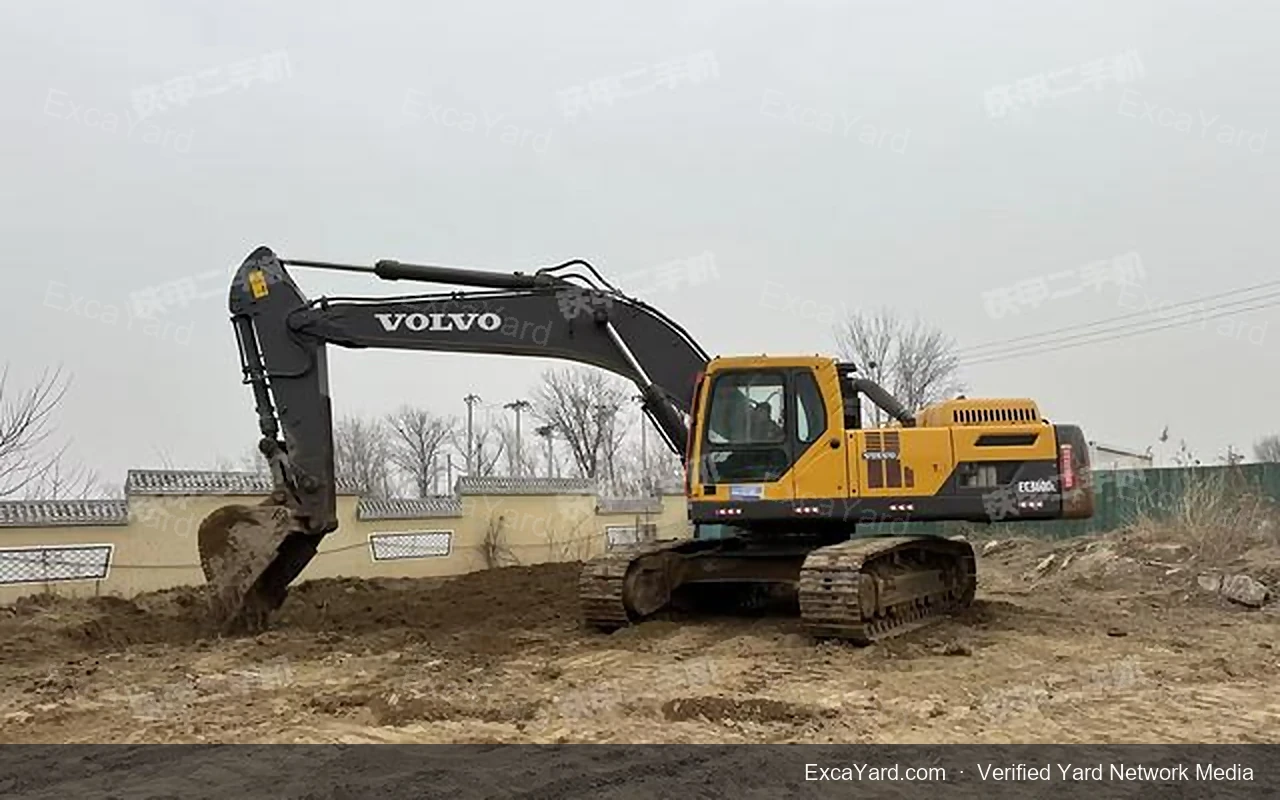
How to Import a Used Excavator to the Philippines: 2026 Complete Guide
Step-by-step guide to importing a used excavator from China to the Philippines — port choice (Manila / Cebu / Davao), BoC clearance, customs duty, payment terms, and total landed cost worked example.