
Used Caterpillar 320D Import Nigeria: Lagos Landed Cost at $15,000
Used Caterpillar 320D import Nigeria, costed end to end: $15,000 FOB, 5% duty and 7.5% VAT on a 40ft reference, with every freight and clearing line labelled as an assumption.
A used Caterpillar 320D import Nigeria is quoted at $15,000 FOB, and the honest Lagos answer is that you will not pay $15,000 for it. On the rates you gave me — 5% duty and 7.5% VAT — plus clearly flagged freight, insurance and clearing assumptions, the machine lands near $22,500. That gap of roughly 50% on top of the sticker is the entire subject of this post, and it is the number to carry into a negotiation rather than the FOB price alone.
The unit behind the arithmetic is EXY-CATE320D-161: a 2013 Caterpillar 320D, 10,690 hours on the meter, Grade B, 1.6 m³ bucket, listed at $15,000. One field needs a flag before anything else. Weight is recorded as 32.0 t even though the 320D is a 20-tonne-class machine, and both statements cannot be true. Photograph the serial plate before you price freight, lifting or road movement, because the forwarder and the broker will work from the plate rather than from the listing.
The Lagos Landed Cost Stack for This 320D
Here is the full stack in one place. Only three inputs are given facts: the $15,000 price, the 5% duty and the 7.5% VAT. Freight, insurance and clearing are assumptions included so the arithmetic has something to stand on, and every one of them must be replaced with a real quote before you sign.
| Line | Basis | Amount (USD) |
|---|---|---|
| FOB unit price | Recorded listing value | 15,000 |
| Ocean freight to Lagos | Assumption, 40ft reference | 3,200 |
| Marine insurance | Assumption, roughly 0.8% of FOB | 150 |
| CIF value | FOB + freight + insurance | 18,350 |
| Import duty | 5% of CIF | 918 |
| VAT | 7.5% of (CIF + duty) | 1,445 |
| Clearing and port handling | Assumption, broker quote pending | 1,800 |
| Landed total | Assumption-based estimate | 22,513 |
Read the bottom line as a planning band, not a quotation. The $22,513 figure moves the moment freight moves, and freight is the largest assumption in the table. It also excludes any levy beyond the 5% duty and 7.5% VAT you supplied. If your broker’s assessment sheet lists additional charges, the total rises, and you should ask for that sheet in writing rather than accept a verbal figure.
What a Used Caterpillar 320D Import Nigeria Actually Costs
The $15,000 FOB price is 66.6% of the landed total. Put differently, for every dollar of machine you are wiring, another fifty cents is going to move it, tax it and clear it. That is the landed cost Lagos buyers should budget for, and it is a more useful anchor than the sticker. That ratio is the single most useful thing to know before you compare this unit with anything else on the market, because a cheaper machine in China does not stay cheaper if its freight profile is worse.
Work down the table and the logic is straightforward. Freight is charged on volume and weight, so the unconfirmed 32.0 t record matters twice: once for the ocean quote and once for whatever equipment lifts it in Lagos. Insurance follows the CIF value, which is why it grows when freight grows. Duty and VAT are percentages, so they inherit every error above them in the stack.
The used Caterpillar 320D import Nigeria unit file is where the machine record lives. The stack above is what that record turns into once it crosses a border.
Duty at 5% Is Not the Number That Hurts
Five percent of CIF is $918, which is 6.1% of the FOB price, and that is the import duty excavator Nigeria buyers are quoted. On its own it is a manageable line, and it is the line most buyers fixate on because it is the one called “duty”. It is also the smallest of the three tax and clearing charges in this model.
The reason is the assessment basis: duty is levied on CIF, not on the price you negotiated. If the assessment value is raised, duty rises with it. If freight is quoted higher than the $3,200 assumption, duty rises again. Nothing about the machine changed, but the tax bill did. That is why the CIF line deserves more attention than the duty rate when you are reviewing a broker’s paperwork.
VAT at 7.5% Compounds on the Whole Stack
VAT is the second-largest line at $1,445, or 9.6% of FOB. It is charged on CIF plus duty, so it sits on top of the freight and on top of the duty rather than beside them. This is where a small upward revision in freight becomes a larger revision in the total.
Two practical consequences follow. First, any quote that presents VAT as “7.5% of the machine price” is understating the bill; 7.5% of $15,000 is $1,125, which is $320 short of the model here. Second, the VAT line scales linearly with the assessed CIF value, so it is the fastest way to sanity-check an assessment: divide the VAT figure by 0.075 and subtract the duty, and you should land back on the CIF value the broker used.
The 40-Foot Reference Is a Planning Box, Not a Promise
The $3,200 freight figure is a 40ft container reference. It is not a flat-rack quote and it is not a RoRo quote, and it should not be treated as either. Those are different products with different rates, different lifting requirements and different port handling, and the correct one depends on the dimensions and weight that the serial plate confirms.
That distinction matters because buyers often anchor on a container rate they saw quoted for a different machine and then discover the actual sailing option costs more. Use the 40ft number to build the model. Replace it with a named quote, valid for a stated sailing window, before you release a deposit. The Nigeria market notes are the place to start on the port side.

Why the Used Caterpillar 320D Import Nigeria Math Changes at the Port
Clearing is the softest line in the table at $1,800, and it is soft for a reason: it is a bundle of handling, agency and documentation work whose price depends on who does it and how quickly the file moves. A clearance quote is only meaningful when it names what it covers.
The bigger port risk is time. Every extra day a machine sits is a cost that never appears in a landed-cost table, and it lands on the buyer rather than the seller. Files with a plate that does not match the documents, or a value the broker cannot support, are the ones that sit. The discipline that prevents it is boring: confirm the plate, confirm the assessment basis, confirm the clearing scope, and keep all three in one folder before the vessel sails.
Reading the Unit Record Before You Wire Anything
At 10,690 hours over 13 years, this 320D averaged about 822 hours a year. That is steady contractor use rather than quarry double-shifting, and it is a plausible pattern for a machine that worked seasons and rested in the wet months. Divide the price by the meter and you get $1.40 of capital per hour already on the clock — the cleanest way to compare this unit with a younger, dearer one.
Grade B is the field that should shape your budget. It tells you the machine is serviceable but not pristine, so undercarriage, pins and hoses are where the first money goes after landing. The engine model is not recorded on this listing, which is unusual for a 320D and worth resolving with a photograph of the plate and the engine tag. None of that changes the tax stack. All of it changes what the machine costs you in the first six months.
ExcaYard operates as a verified yard network rather than as the owner of this unit. The record above is what the yard supplied, and the point of the network is that the record can be checked against the physical machine before money moves.
What to Ask Before You Commit
- Plate photograph showing model, serial and operating weight — this settles the 32.0 t question.
- A freight quote that names the shipping method and the sailing window, not a container rate in isolation.
- The broker’s assessment sheet showing CIF, duty and VAT as separate lines.
- A clearing quote that lists what is included, so the $1,800 assumption can be replaced.
- Undercarriage measurements and a hydraulic inspection report, priced against the Grade B rating.
If the answers do not line up, the machine is not the problem — the file is. Send the team the record and ask for the plate and the quote together, because a landed cost built on one without the other is a guess wearing a table.
FAQ
Is a used Caterpillar 320D import Nigeria cheaper than buying locally?
I cannot price the local Lagos market from this record, so I will not pretend to. What the record does support is a landed band of roughly $22,500 on the stated rates and assumptions. Compare that band with any used excavator Nigeria sellers are advertising, and compare the condition evidence behind both, rather than comparing a local asking price with a $15,000 FOB sticker.
How much is import duty on this excavator?
Five percent of the CIF value, which is $918 in this model. That is 6.1% of the FOB price, not 5% of it, because duty is assessed on CIF rather than on the negotiated machine price.
Is VAT charged on the duty as well?
Yes. The 7.5% VAT is applied to CIF plus duty, giving $1,445 here. Applied to the FOB price alone it would be $1,125, so the difference is $320 — a useful check on any quote you receive.
Are the hours on this machine verified?
The meter reads 10,690 hours and the record states that hours are confirmed through inspection and checked against overall wear. The listing does not claim the meter has never been interfered with. Ask for the inspection notes and read the undercarriage and hydraulic findings before treating the number as settled.
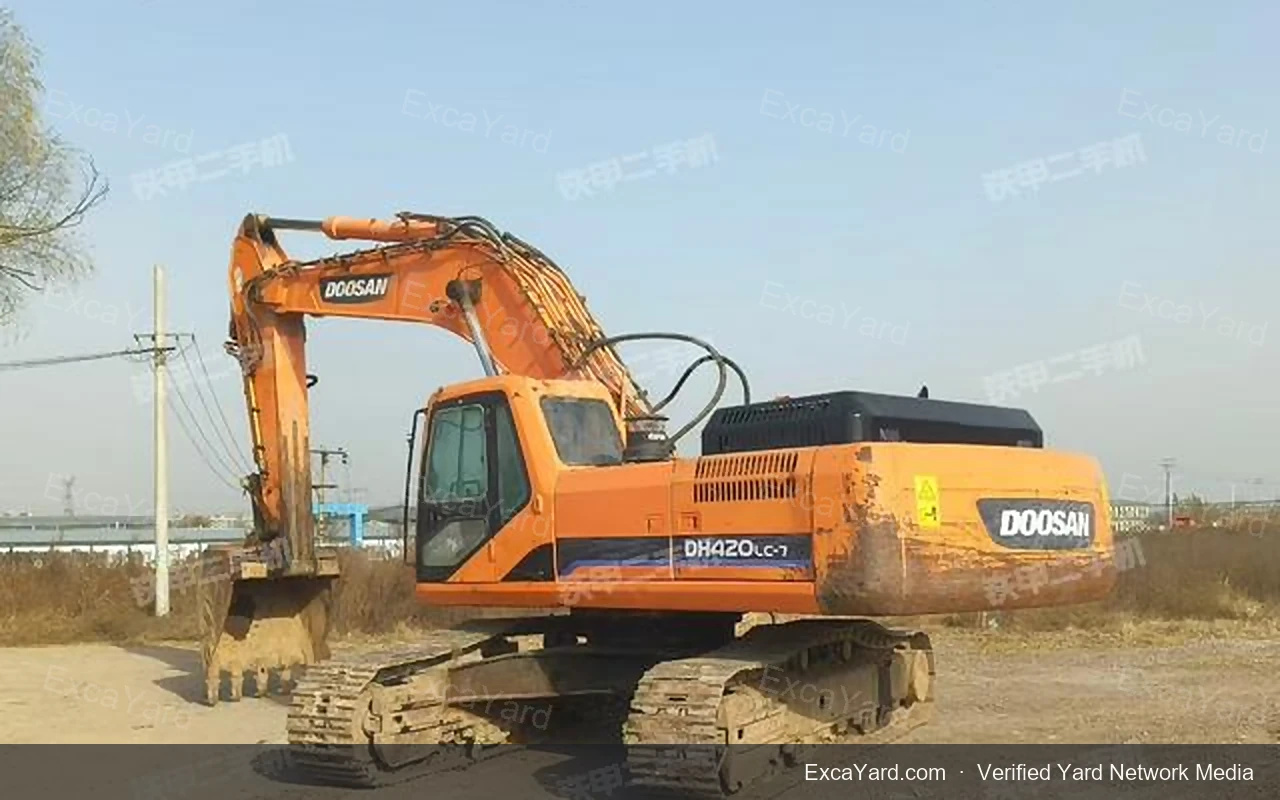
How to Import a Used Excavator to Nigeria: 2026 Complete Guide
Step-by-step guide to importing a used excavator from China to Nigeria — SONCAP, Form M, customs duties, port choice, total landed cost. Real numbers from real shipments.

Used Komatsu PC2008M0 Import Kenya: Mombasa Landed Cost at $27,500
Used Komatsu PC2008M0 import Kenya costed at Mombasa: 0% duty but 16% VAT, 3.5% IDF and 2% RDL, plus clearly labelled 40ft freight assumptions.
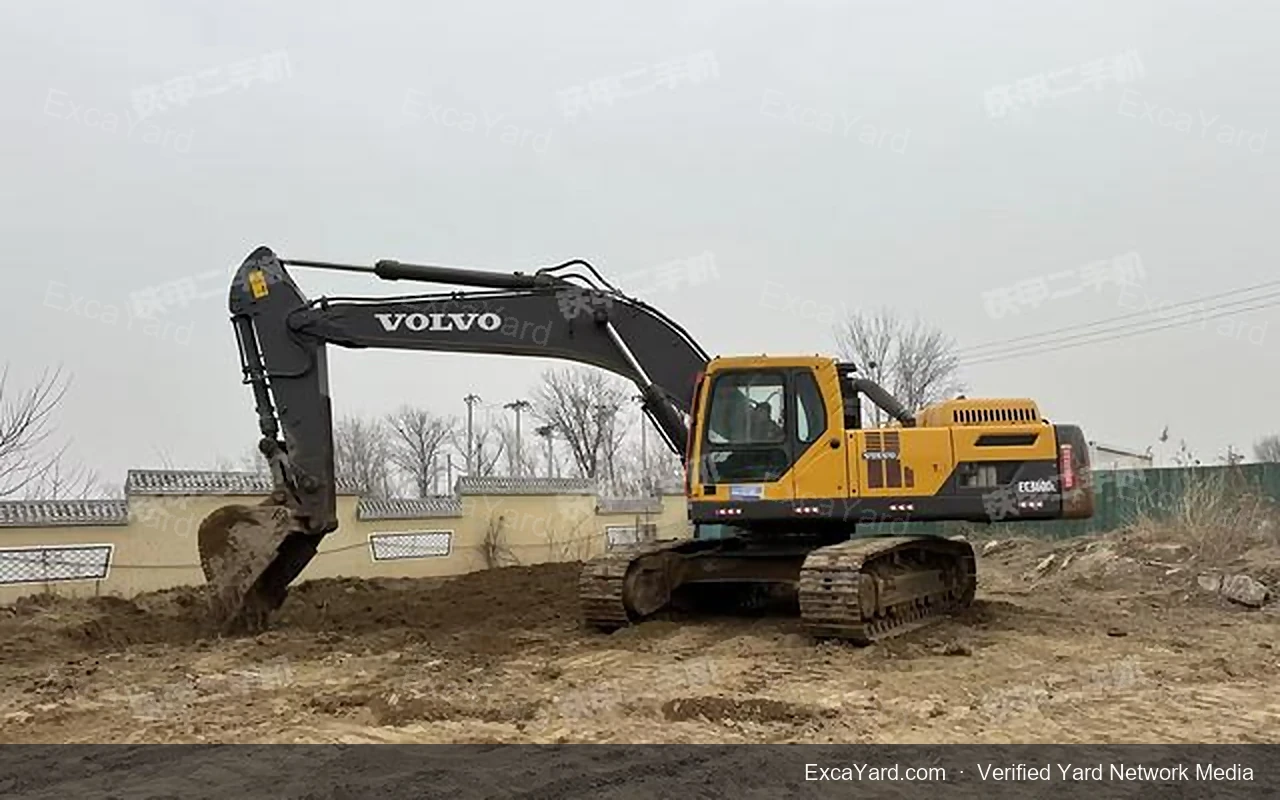
How to Import a Used Excavator to the Philippines: 2026 Complete Guide
Step-by-step guide to importing a used excavator from China to the Philippines — port choice (Manila / Cebu / Davao), BoC clearance, customs duty, payment terms, and total landed cost worked example.