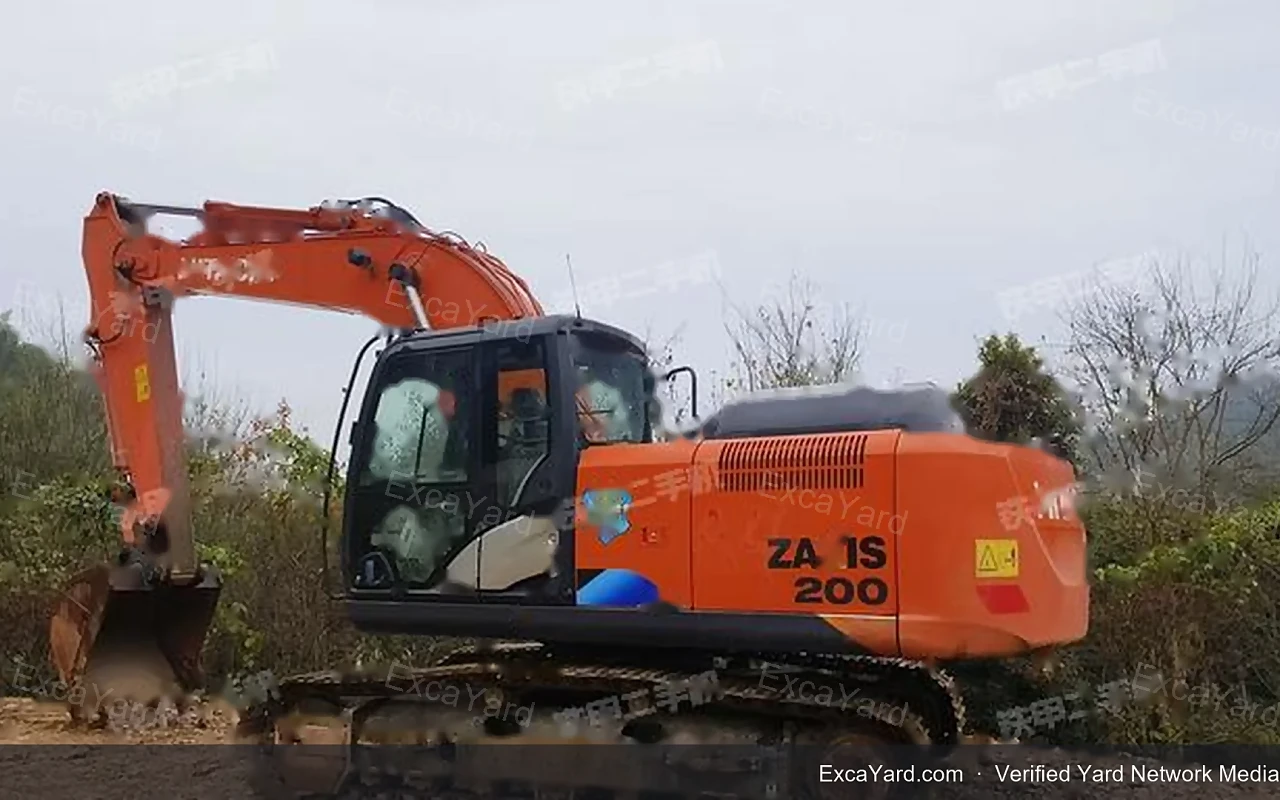
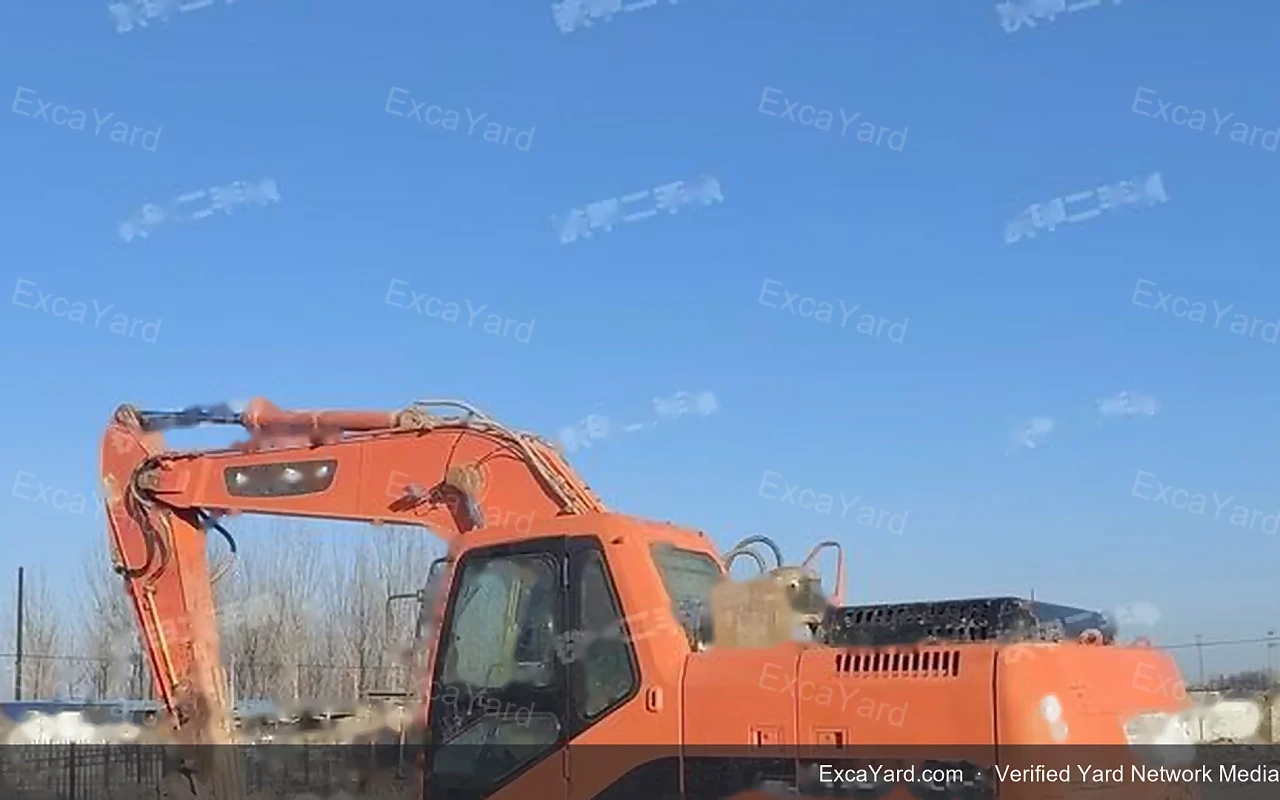
Used Hitachi ZX200-5A from China for Export to Nigeria (2026 Spec, Price, Shipping)
Honest 2026 buyer guide for used Hitachi ZX200-5A excavators exported from China to Nigeria — Isuzu AA-6BG1 engine reality, TRIAS hydraulics, USD pricing, Tin Can Island and Apapa import, SONCAP, Form M, payment.
The Hitachi ZX200-5A is the Nigerian operator's quiet preference in the 20-tonne hydraulic excavator class — the machine that experienced operators on Lagos road projects, Niger Delta dredging support, and Northern Nigeria irrigation works ask for by name when they have a choice. In 2026 it remains the second-most volume-imported 20-tonne excavator into Nigeria after the Cat 320D, despite Hitachi's thinner Nigerian dealer footprint, because the TRIAS hydraulic system delivers the smoothest cycle feel in the class and the Isuzu AA-6BG1 engine is inexpensive to maintain in any Lagos diesel workshop. This 2026 guide is the honest export-buyer brief on sourcing a used ZX200-5A from China yards for Nigeria: the AA-6BG1 truth, USD price bands, the Tin Can Island and Apapa SONCAP-NCS clearance process, and the inspection points that protect a buyer from the most expensive surprises.
The ZX200-5A in one paragraph
The ZX200-5A is the dash-5A variant of Hitachi Construction Machinery's Zaxis 200 series — in volume export production approximately 2008 to 2013, with the dash-5B (improved TRIAS-II hydraulics, updated cab) running to 2018. Power is the Isuzu AA-6BG1TRP diesel — six cylinders, 6.5 L displacement, turbocharged, 122 kW (164 hp) at 2,000 rpm. The engine is mechanically conventional Tier 3 spec — Bosch in-line injection pump on the early units, electronic injection on later -5A and the -5B, no DEF / AdBlue requirement. Bucket capacity 0.8–1.0 m³, operating weight 19,800–20,400 kg, standard arm 2.91 m. The defining feature is the TRIAS (Total Reactive Intelligent Active System) hydraulic system — Hitachi's three-pump architecture that allocates flow dynamically to boom, arm, and swing circuits, giving the smoothest cycle feel in the 20-tonne class and delivering 8–12% better fuel efficiency than the equivalent Cat 320D on equal-duty work cycles.
Why Nigeria buyers pick this machine
Five concrete reasons the ZX200-5A holds its place in Nigerian construction equipment imports in 2026:
- TRIAS hydraulics fuel economy and operator preference: The TRIAS three-pump system delivers measurably lower fuel burn — 14–17 L/h on equal-duty trenching and loading work versus 16–19 L/h for the Cat 320D. Over a 6,000-hour operating year, the fuel saving compounds to USD 4,800–7,200 at Nigerian AGO prices in 2026. Operators consistently rate the ZX200-5A as the smoothest 20-tonne machine in the class — useful for fine-grading, pipeline work, and skilled bucket placement in tight urban Lagos sites.
- Isuzu AA-6BG1 engine field-serviceability: The Isuzu AA-6BG1 is a workhorse engine — the same family powers Isuzu trucks, marine plant, and generator sets across Nigeria. Any competent diesel mechanic in Apapa Industrial, Trans Amadi (Port Harcourt), Kano Bompai, or Onitsha Bridge Head can rebuild it. Injectors, turbocharger, fuel pump, head gasket are commodity Bosch / Isuzu aftermarket items at the Lagos diesel parts trade. This is the Hitachi-versus-Cat differentiator for tier-2 contractors who do not want to depend on a brand dealer for engine work.
- Acceptable for tender qualification: Most NNPC, NDDC, NIWA, and federal road tenders specify "20-tonne class hydraulic excavator, Cat / Komatsu / Hitachi / Volvo equivalent" — the ZX200-5A qualifies in nearly every Nigerian tender category. State PWDs in Lagos, Rivers, Delta, Kano, Kaduna routinely accept Hitachi-equipped contractors.
- Strong second-tier resale market: While ZX200-5A resale does not match the Cat 320D's premium retention, it sells well into Nigerian secondary buyers — small contractors, sand miners on the Lagos and Ogun lagoon system, Niger Delta service operators — at 46–54% of acquisition cost at the 7,000-hour mark. The buyer pool is large because operators trust the brand even when fleet owners do not.
- No DEF / Tier 4 complications: The ZX200-5A export-spec runs at Tier 3 emissions without any selective catalytic reduction or DEF requirement. Suits Nigerian AGO diesel quality (1,500–3,000 ppm sulphur inland) without injector contamination concerns. Tier 4 ZX200-6 machines suffer in the same fuel environment.
2026 used market prices from China yards
Honest USD pricing for export-ready ZX200-5A units sourced from Shanghai, Ningbo, and Qingdao yards in 2026:
- 2008–2010, 8,000–11,500 h, fair condition: USD 27,000–33,000 FOB Shanghai. Typical: early -5A, Bosch in-line pump, 30–45% undercarriage, original Hitachi main pump, engine compression acceptable, cab refurbishment indicated.
- 2011–2012, 5,500–8,000 h, good condition: USD 36,000–44,000 FOB Shanghai. Typical: late -5A or early -5B transition, electronic injection pump, 50–65% undercarriage, original TRIAS pumps, no major welds, partial service record.
- 2013, 3,500–5,500 h, very good condition: USD 46,000–55,000 FOB Shanghai. Typical: final-year -5A, 65–80% undercarriage, near-original cab, recent oil service, complete Hitachi diagnostic data available via DrZX laptop tool.
- 2014–2015, under 4,500 h, near-new -5B: USD 56,000–68,000 FOB Shanghai. Scarce in 2026 — most absorbed into Indonesian and Vietnamese markets where Hitachi dealer presence is stronger.
Note the consistent USD 5,000–8,000 acquisition discount versus the equivalent Cat 320D at the China yard. Part of this reflects lower Nigerian resale value (46–54% versus 50–60% for Cat at the 5-year mark), but for a Nigerian fleet operator running the machine 6+ years before selling, the upfront saving plus the lifetime fuel saving (USD 28,000–43,000 over 6,000 h/yr × 6 years) are the dominant economic factors.
Add approximately USD 5,400–6,800 ocean freight Shanghai to Lagos, and approximately USD 3,800–5,200 for SONCAP CoC, NCS duty processing, and Tin Can Island / Apapa terminal handling. Total landed cost in Lagos for a 2012 ZX200-5A at 6,500 hours therefore sits in the USD 56,000–70,000 band, all-in, in 2026 — roughly USD 6,000–9,000 below the equivalent 320D.
Inspection points before you wire the deposit
The ten highest-impact inspection points for a Hitachi ZX200-5A sourced in China for Nigeria:
1. Hour meter cross-check vs ICF (Information Controller): The ZX200-5A ICF logs hours independently of the dashboard. Pull the ICF history with Hitachi's DrZX diagnostic tool. A 6,500-hour dashboard with 8,400 ICF hours is a yard hiding things — buyer-side discount or walk away.
2. TRIAS main pump pressure test: ZX200-5A main hydraulic relief pressure should be 343 kgf/cm² (33.6 MPa) at full load. Below 310 kgf/cm² indicates pump wear — TRIAS pump rebuild USD 7,500–9,500 in Nigeria via independent Hitachi-experienced workshops, USD 4,800–6,200 in China before shipment. Genuine Hitachi pump replacement is significantly more expensive — typically USD 12,000–16,000 in Lagos through HCM-network parts.
3. Undercarriage wear measurement: Track shoes, bushing diameter, sprocket teeth, link pitch with a precision gauge. Below 30% remaining = USD 8,500–13,000 future cost. The ZX200-5A undercarriage is dimensionally similar to the PC200 series and uses third-party Korean / Chinese aftermarket replacement components.
4. Boom and arm structural inspection: Magnetic-particle inspection on critical welds. The ZX200-5A boom-foot pin housing has a known cracking point — look carefully. Re-welded boom foot = walk away.
5. Isuzu AA-6BG1 engine blowby: Should be under 32 L/min at full operating temp. Higher means piston-ring wear and an upcoming USD 4,800–6,800 rebuild — accessible work for any Lagos diesel workshop given Isuzu parts availability.
6. TRIAS solenoid and pilot valve inspection: Pull the DrZX fault history for solenoid faults, pilot pressure faults, and pump regulator faults. Repeated faults indicate hydraulic oil contamination or solenoid wear. Solenoid replacement USD 800–1,400 each (the ZX200-5A has 8 main solenoids plus pilot bank).
7. Swing motor and reduction gear inspection: No audible whine, no metallic chips in the swing reduction oil sample. Swing motor replacement USD 3,800–5,500 in Lagos.
8. Travel motor inspection: Common ZX200-5A failure — travel motor swash plate wear causes left/right travel speed mismatch. Drift test on a flat surface for 30 m straight-line travel. Repair USD 2,800–4,200 per side.
9. Cab interior systems: AC compressor (essential for Lagos and Northern Nigeria), gauge cluster pixel test, joystick electrical sweep, operator seat air bladder. Cab refurbishment in Lagos approximately USD 2,000–2,600.
10. DrZX diagnostic full pull: Fault code history, work mode distribution (Power / Economy / Breaker), engine idle ratio. Idle ratio above 40% is yard turnover stock; substantial breaker-mode hours indicate a former demolition or quarry unit — hydraulic circuit has been stressed and pump life shortened.
Tin Can Island / Apapa import process and SONCAP
Nigeria's SONCAP (Standards Organisation of Nigeria Conformity Assessment Programme) is mandatory for used excavator imports including the ZX200-5A. The SONCAP Certificate is the document NCS Customs at Tin Can Island and Apapa requires for clearance.
Process for a ZX200-5A in 2026:
1. China yard prepares the machine — serial plate visible (usually on the right-side cab pillar interior or the upper-frame plate), Isuzu AA-6BG1 engine number stamped on the block, chassis VIN photographed and matched to the bill of lading.
2. SONCAP inspection company (Cotecna, Intertek, or SGS) books a physical visit to the Shanghai, Ningbo, or Qingdao yard. Lead time 6–10 working days. Cotecna is the most common SONCAP IAF for used machinery to Nigeria.
3. Inspector verifies machine condition against the proforma invoice, issues the Product Certificate then the SONCAP CoC. SONCAP fee approximately USD 480–650 per machine in 2026.
4. Machine ships under the CoC reference. The SONCAP eM CoC is uploaded to the SON portal for NCS query at Tin Can Island or Apapa Customs.
Always insist on the SONCAP CoC scan before paying the yard's final balance. SONCAP non-compliance at Lagos triggers destination re-inspection at typically 200–300% cost premium plus storage demurrage at USD 35–55 per day at Tin Can Island, plus potential NCS detention until compliance.
Other Nigeria import notes:
- NCS duty + VAT + levies on used machinery in 2026: Approximately 35% effective rate on CIF (5% duty + 7.5% VAT on CIF + duty + 2% ETLS + 7% surcharge + 1% CISS). Tax on a USD 45,000 CIF ZX200-5A is approximately USD 15,800. Confirm rates with your licensed customs agent — Nigerian tariff schedule moves more than Kenya's.
- Form M and PAAR: Before opening the L/C or wire, register a Form M with your authorised dealer bank and obtain a PAAR reference from NCS. The Form M / PAAR / SONCAP triangle is a hard prerequisite — yard ships without these and the machine sits.
- Tin Can Island vs Apapa: For used construction machinery in 2026, Tin Can Island typically clears 2–4 days faster than Apapa due to lower congestion. Confirm with your clearing agent on the day.
Shipping options and transit times
Two practical Shanghai → Lagos options for a ZX200-5A in 2026:
- RoRo (Roll-on / Roll-off): Per-unit cost approximately USD 5,200–6,200 for a ZX200-5A, transit 34–42 days. RoRo to West Africa runs through transhipment hubs (Tangier or Algeciras) on some rotations — adds 5–8 days versus East African routes. Direct services exist via COSCO and NYK on rotation.
- 40-ft High Cube Container: Per-unit cost approximately USD 6,000–7,400, transit 40–50 days. Boom and arm partially demobilised, machine winched in, secured with chains and braced. Suitable for higher-spec / near-new units where weather protection justifies the premium, or for direct upcountry container-to-truck delivery.
Lagos to inland low-loader transport for a ZX200-5A:
- Lagos to Abuja: approximately USD 2,800–3,800, transit 2.5–4 days (Lagos-Ibadan-Lokoja-Abuja).
- Lagos to Port Harcourt: approximately USD 2,400–3,200, transit 2–3 days.
- Lagos to Kano: approximately USD 3,800–4,800, transit 4–5 days.
- Lagos to Maiduguri / Yola: approximately USD 5,500–7,000, transit 6–8 days — confirm security routing with the haulier on the day.
Payment, deposit, and total landed cost
ExcaYard accepts the following payment methods for ZX200-5A purchases in 2026:
- T/T USD wire (Bank of China / SWIFT): 30% deposit on order, 70% balance before B/L release. Wire arrival 1–4 business days through Nigerian correspondent banks.
- L/C through First Bank, GTBank, Zenith, or Access: For Form M-registered orders. Letter-of-credit terms 60–90 days from B/L date — the dominant payment route for Nigerian importers above USD 30,000 per machine in 2026.
- Wise: Limited utility at this transaction size for Nigerian buyers — naira-to-USD conversion is more efficient through CBN-authorised dealer banks.
- CNY direct (Hong Kong settlement entity): For buyers with Hong Kong, Dubai, or UK diaspora bank accounts, direct CNY transfer eliminates one USD conversion step.
A typical 2012 ZX200-5A at 6,500 hours, good condition, landed in Lagos in 2026:
- FOB Shanghai: USD 40,000
- Ocean freight (RoRo via COSCO direct): USD 5,600
- SONCAP CoC (Cotecna): USD 540
- NCS customs duty + VAT + levies: approximately USD 16,200
- Tin Can Island terminal handling + 5 days free storage: USD 660
- ETLS, CISS, surcharge admin: USD 280
- Tin Can Island gate-out to Lagos Industrial: USD 220
- Total landed Lagos: approximately USD 63,500 in 2026
For onward delivery, add the inland transport figures above. A complete Lagos-to-Port-Harcourt all-in delivered price on this unit lands around USD 66,300.
FAQ
How does the ZX200-5A compare to the Cat 320D and Komatsu PC200-8 for Nigeria?
For Nigeria, the ZX200-5A wins on fuel economy (TRIAS hydraulics deliver 8–12% lower burn than the 320D on equal-duty work), on operator-rated cycle smoothness, and on Isuzu AA-6BG1 engine field-serviceability through any Lagos diesel workshop. It loses on dealer-network density (Hitachi has no equivalent to Mantrac in Nigeria — most buyers rely on independent distributors and the Lagos Hitachi-experienced workshop trade) and on resale value (46–54% at 5 years versus 50–60% for Cat 320D and 48–55% for Komatsu PC200-8). Best buyer profile: a Nigerian contractor with internal mechanic capacity, valuing fuel economy and cycle smoothness, planning to hold the machine 6+ years where the lifetime fuel saving and lower acquisition cost dominate the resale-value disadvantage.
Is the Isuzu AA-6BG1 engine really easy to service in Nigeria?
Yes, materially. The Isuzu AA-6BG1 family powers Isuzu trucks, marine units, and generator sets across Nigeria — the parts trade is well-established. Injectors, turbocharger, fuel pump, head gasket, water pump, alternator, starter motor are commodity Isuzu aftermarket parts available at the Apapa, Trans Amadi, Bompai, and Onitsha Bridge Head diesel parts markets. The engine is mechanically conventional — direct injection turbo diesel, in-line Bosch pump on early -5A and electronic injection on late -5A and -5B. Any competent diesel mechanic with a Bosch pump background can rebuild it.
How does the TRIAS hydraulic system affect long-term ownership cost?
The TRIAS three-pump architecture is more complex than the Cat 320D's two-pump electronic load-sensing design — three main pumps means three potential failure points and a more expensive pump rebuild ticket if a circuit fails. However, in practice the TRIAS pumps are robust at 8,000–10,000 hours of clean-oil service before rebuild, and the fuel-economy advantage adds up. The risk to manage: hydraulic oil cleanliness. Nigerian site contamination from sand and dust will accelerate solenoid and pilot valve wear if the buyer skips the 250-hour hydraulic filter change. Plan a strict 250 h filter and 1,000 h oil change schedule and the TRIAS system will outlast the engine.
Can a 2008–2010 ZX200-5A pass SONCAP for Nigeria?
Yes. SONCAP age is not a barrier — the conformity criteria are mechanical condition, operational safety systems intact, engine and chassis numbers matching the proforma invoice, and the machine working for the inspection. Cotecna, Intertek, and SGS regularly issue SONCAP CoCs for 2008–2010 vintage ZX200-5A units from Chinese yards.
What is the typical timeline from deposit to Lagos gate-out?
For a ZX200-5A in 2026: 4–7 days from deposit to SONCAP inspection booking, 6–10 days for SONCAP processing and CoC issuance, 34–42 days RoRo Shanghai to Lagos, 5–10 days for Tin Can Island or Apapa Customs clearance (Form M, PAAR, NCS assessment, duty payment), 1–2 days for terminal release. Total typical 50–70 days deposit-to-gate-out for RoRo. Add 6–8 days for container shipping. Add 7–14 days during NCS strike action or budget-cycle disruption.
What if my ZX200-5A has a major failure within 30 days of Lagos landing?
ExcaYard provides a 30-day major-fault warranty from Lagos landing — covering Isuzu AA-6BG1 engine, TRIAS main pump, and final drive catastrophic failure. Document the fault with photo, video, and a workshop diagnosis report on the day of receipt or first start. We coordinate diagnosis with our partner workshop network in Apapa Industrial and Trans Amadi. Wear-related issues, operator-induced damage, hydraulic contamination from local fuel quality, and cosmetic issues are buyer responsibility.
Should I buy ZX200-5A or upgrade to ZX200-5B / ZX200-6?
For Nigeria in 2026, the -5A / -5B is the sweet spot. The ZX200-6 introduced Tier 4 electronic engine controls that suffer on Nigerian inland diesel (1,500–3,000 ppm sulphur) — injector fouling within 1,500 working hours, expensive ECU faults. The -5B over -5A has TRIAS-II improvements and refined cab ergonomics worth USD 4,000–6,000 in price premium if your budget allows; -5A is the value play and mechanically equivalent at the cycle-time level.
Next step
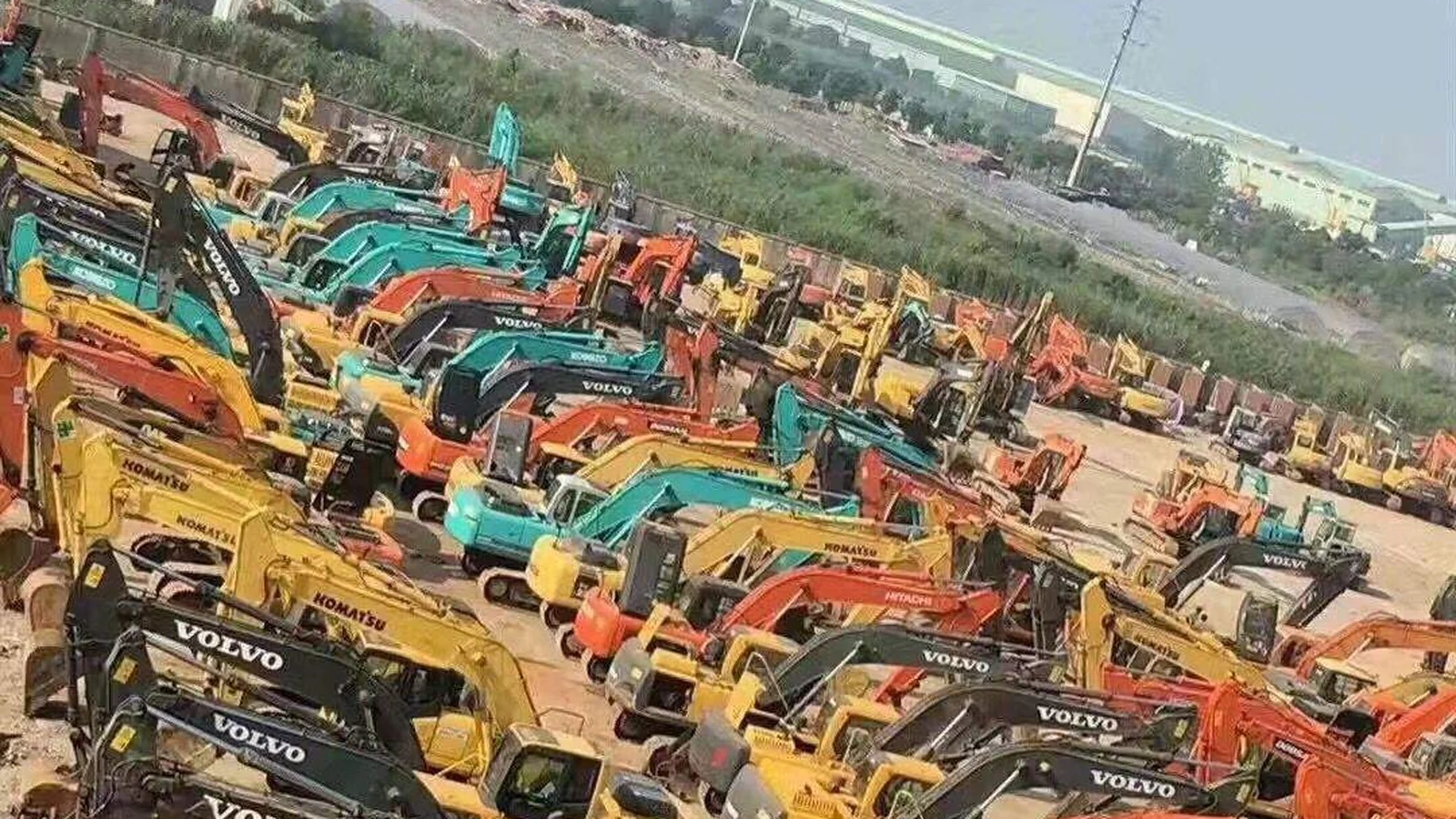
If the Hitachi ZX200-5A is on your shortlist for a 2026 Nigeria project, ExcaYard runs verified yard inventory across Shanghai, Ningbo, and Qingdao with daily updated stock photos and Hitachi DrZX diagnostic dumps. Send us your spec brief (year, hours, undercarriage state, hydraulic condition, budget, destination state, Form M status) on WhatsApp at +86 193 9277 7259 and we will match against current stock within one working day. Lagos landing typically 50–70 days from deposit. T/T, L/C through Nigerian dealer banks, and CNY (Hong Kong) payments accepted.
References
- Standards Organisation of Nigeria — SONCAP — official SONCAP framework and Inspection Agency Function programme covering imported used machinery to Nigeria.
- Nigeria Customs Service — Tariff and Trade — current tariff schedule, Form M, and PAAR procedures at Tin Can Island and Apapa.
- Nigerian Ports Authority — Lagos Port Complex — terminal handling, storage, and gate-out timelines at Apapa and Tin Can Island.
- Hitachi Construction Machinery — Excavators — manufacturer reference for Zaxis series and TRIAS hydraulic system technical documentation.
- Isuzu Motors — Industrial Engines — manufacturer reference for AA-6BG1 family industrial diesel engines.
- Central Bank of Nigeria — Trade and Exchange — Form M, FX allocation, and authorised dealer bank framework.
- Federal Road Safety Corps — Articulated Vehicle Codes — heavy-load haulage routing and clearance regulations for inland transport.
These sources support specific claims — SONCAP procedure, customs duty schedule, port operations, manufacturer engineering data. They are external authority sources, not commercial competitors.
Cat vs Volvo Used Excavator: Honest Comparison for Export Buyers (2026)
Caterpillar vs Volvo used excavators — fuel economy, parts availability, resale value, and operating cost compared. Which to buy for African or Southeast Asian markets?
20-Ton vs 30-Ton Used Excavator: Which Class Should You Buy?
20-ton (Cat 320, Komatsu PC200) vs 30-ton (Cat 330, Komatsu PC300) — payload, fuel cost, transport cost, ROI per job class. Which makes more money for export buyers?
Sany vs XCMG Used Excavators: Chinese-Brand Comparison Guide
Sany vs XCMG used excavator comparison — quality, parts availability, dealer network, resale value. Honest take on the two largest Chinese OEMs for export buyers.