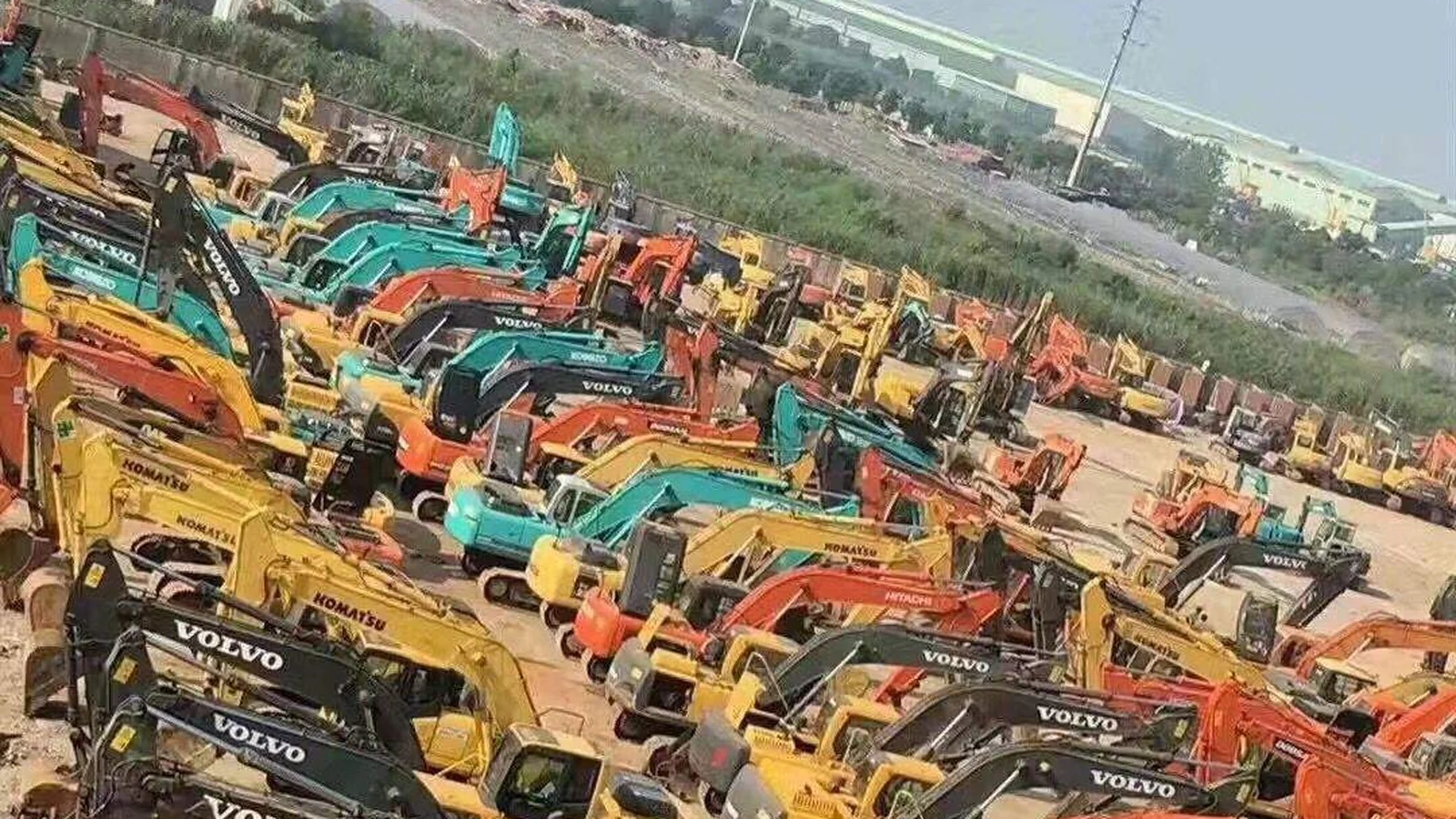
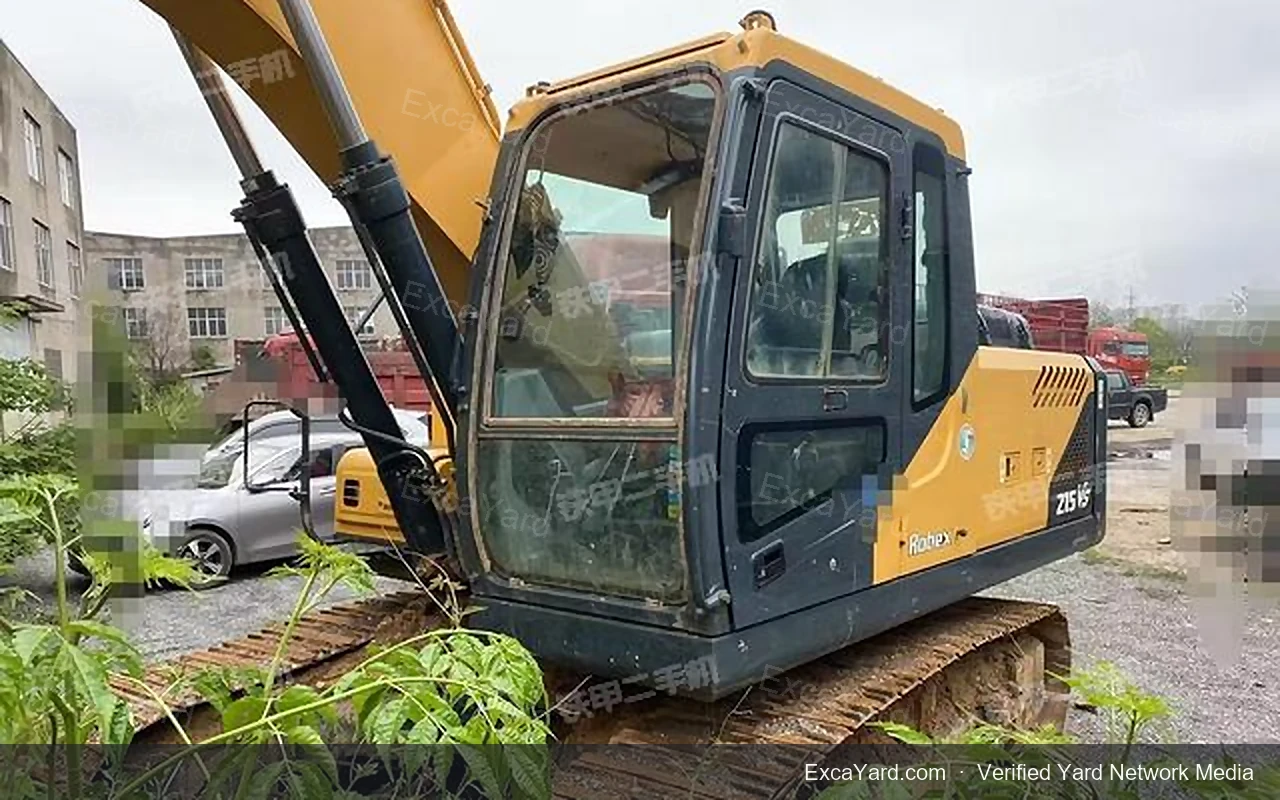
ExcaYard.

Used Volvo EC210 from China for Export to Nigeria (2026 Spec, Price, Shipping)

Honest 2026 buyer guide for used Volvo EC210B Prime / EC210BLC excavators exported from China to Nigeria — D6E engine reality, USD pricing, Apapa / Tin Can import, SONCAP PVoC, NCS duty, CFAO West Africa dealer context.

By ExcaYard Team · 15 min read · 3468 words

The Volvo EC210 is the structured choice for a Nigerian buyer who wants Scandinavian engineering and a class-leading operator cab without paying the Caterpillar 320D dealer premium. In a market shaped by Dangote Refinery follow-on civils, the Lekki Free Zone expansion, the Lagos Blue and Red Line rail programmes, Niger Delta oil-services work, and a Northern road rehabilitation cycle that the Federal Ministry of Works keeps active, demand for the 21-tonne excavator class is structural. This 2026 guide is the honest export-buyer brief on sourcing a used Volvo EC210 from China yards for Nigeria: the D6E engine reality, the USD price bands, the Lagos import process via SONCAP, and the inspection points that protect a buyer from the most expensive surprises.

The EC210 in one paragraph

The Volvo EC210 designation in the 2026 Chinese used-machine market is the buyer-facing shorthand for the EC210B Prime, the EC210BLC, and the late-production EC210C variants — all 21-tonne hydraulic excavators originally built at Volvo's Changwon (South Korea) facility, the legacy Samsung Heavy Industries plant Volvo CE acquired in 1998. All three share the Volvo D6E turbocharged inline-six diesel — 5.7 L displacement, approximately 142 kW (190 hp) at 1,900 rpm, Tier 3 emissions on export-spec units. Production span roughly 2008 to 2014 for the volume units now circulating in Chinese yards. Operating weight 20,800–21,700 kg, standard arm 2.92 m, bucket capacity 0.9–1.05 m³. Hydraulic system: Volvo EHC (Electronic Hydraulic Control) with the Kawasaki K3V112DTP main pump — a configuration the Asian rebuild market knows well. The Volvo Care Cab is the EC210's marketing centrepiece and a substantive advantage: pressurised, ROPS/FOPS-rated, isolated suspension mounts, and a noise floor below 73 dB(A) that matters on a ten-hour Lagos–Ibadan expressway maintenance shift in Harmattan dust season.

Why Nigeria buyers pick this machine

Five concrete reasons the EC210 holds its market position in Nigeria in 2026:

  • Operator-cab quality on long-shift work: The Volvo Care Cab is genuinely better than any of the Japanese or Korean 21-tonne competitors. For a Nigerian contractor running double shifts on the Dangote Refinery utility-corridor rebuild, the Lekki Deep Sea Port extension, the Lagos–Ibadan expressway maintenance, or Niger Delta access-road work, lower operator fatigue translates directly to fewer mistakes and lower turnover. Operators familiar with Volvo cabs ask for them by name in the Lagos and Port Harcourt job market.
  • D6E engine repairable across Nigerian industrial workshops: The Volvo D6E is mechanically conventional on the Tier 3 export spec — turbocharged inline-six, Bosch common-rail fuel system, no SCR / no DEF / no AdBlue. Workshops in Lagos Apapa-Wharf Road and Amuwo-Odofin, Port Harcourt Trans-Amadi, Kano Sabon Gari industrial belt, and Abuja Idu industrial zone handle Bosch common-rail service routinely. The engine block is the same casting family used in the Volvo FH truck engines familiar to Nigeria's long-haul trucking sector — the Dangote logistics fleet runs Volvo FH at scale.
  • Kawasaki K3V112 main pump is the regional rebuild standard: The K3V112DTP is the single most common hydraulic pump on 20-tonne export excavators across the Hitachi, Samsung, Sany, and Volvo families. A Lagos or Port Harcourt rebuild shop that can rebuild a PC200-8 pump can rebuild an EC210 pump — parts and pistons are commodity through the Korean and Chinese aftermarket, with strong Dubai parallel-import support into Apapa. This is a structural advantage over the Cat 320D, whose Cat-proprietary pump rebuild is Mantrac dealer-only.
  • CFAO West Africa Volvo CE dealer presence: CFAO Equipment Nigeria is the Volvo Construction Equipment authorised distributor with its primary facility in the Lagos industrial belt and parts availability through the CFAO West Africa regional logistics network covering Ghana, Côte d'Ivoire, Cameroon, and Senegal. For a Nigerian buyer who values a dealer support relationship even when buying used-import, the EC210 is supportable in a way that the Doosan DH200 or the Sany SY215 is not. Use the dealer for genuine OEM hydraulic and engine components; the wear parts (filters, tracks, teeth) come cheaper through the Lagos grey market.
  • Resale value above the Korean and Chinese 20-tonne competitors: A 2013 EC210B Prime that lands in Lagos at USD 62,000 in 2026 still trades at USD 36,000–42,000 at 12,000 hours in 2029 — a five-year retained-value ratio of approximately 56–60%. Comparable Doosan DH200 trades at 42–48% retained, comparable Sany SY215 at 32–40% retained. For a contractor financing equipment through a Nigerian commercial bank or a Bank of Industry asset-finance arrangement, the resale strength materially supports loan terms and the residual position at the end of the financing cycle.

2026 used market prices from China yards

Honest USD pricing for export-ready EC210-class units sourced from Shanghai, Ningbo, and Qingdao yards in 2026:

  • 2008–2010, 7,500–10,500 h, fair condition: USD 26,000–32,000 FOB Shanghai. Typical: EC210B Prime, 30–45% undercarriage remaining, K3V112 main pump original (rebuild candidate within 1,500 hours), cab condition fair, partial service record.
  • 2011–2013, 5,000–7,500 h, good condition: USD 34,000–42,000 FOB Shanghai. Typical: EC210B Prime or EC210BLC, 50–65% undercarriage, original Volvo hydraulic controller, no major boom welds, partial Volvo VCADS Pro diagnostic dump available. This is the export sweet spot for Nigeria.
  • 2013–2014, 3,500–5,000 h, very good condition: USD 44,000–52,000 FOB Shanghai. Typical: late-production EC210BLC, 65–80% undercarriage, near-original Care Cab interior, recent oil service, full VCADS Pro history.
  • 2014+ EC210C: USD 54,000–66,000 FOB Shanghai. Scarce in China yards and the post-2013 units sometimes carry a DPF that should be removed or Tier 3 spec'd before Nigeria export — DPF service support in Nigeria is concentrated in Lagos only.

Add approximately USD 4,200–5,600 for ocean freight Shanghai to Lagos, and approximately USD 3,800–5,200 for SONCAP CoC, NCS duty processing, terminal handling at Apapa or Tin Can Island, and intra-Lagos gate-out. Total landed cost in Lagos for a 2013 EC210B Prime at 6,500 hours therefore sits in the USD 62,000–73,000 band, all-in, in 2026 — approximately USD 5,000–9,000 below the equivalent Cat 320D landed price and approximately USD 8,000–13,000 above the equivalent Doosan DH200.

Inspection points before you wire the deposit

The ten highest-impact inspection points for a Volvo EC210-class machine sourced in China:

1. Hour meter cross-check vs Volvo V-ECU (engine controller) and I-ECU (instrument): Pull both controllers with VCADS Pro (or the Tech Tool diagnostic platform that succeeded it). Verify dashboard hours, V-ECU hours, and I-ECU hours agree within 50 hours. A 6,500-hour dashboard reading with 8,800 V-ECU hours is a yard that has rolled back the cluster.

2. Main hydraulic pump pressure test: Volvo / K3V112DTP main relief pressure should be 350 kgf/cm² (350 bar) at full load with the standard pilot pressure setting. Below 315 kgf/cm² indicates pump rebuild — USD 4,600–6,200 in Lagos, USD 3,500–4,800 in China before shipping.

3. Undercarriage wear measurement: Track shoes, link pitch, sprocket teeth, bushing diameter. Volvo undercarriage uses the standard 21-tonne pattern and Berco / DRB Korean replacement parts work directly. Below 35% remaining is a USD 7,500–11,500 future cost, with Lagos installation premium adding USD 800–1,200 over the Korean ex-Busan price.

4. Boom and arm weld inspection: Magnetic-particle test on the boom box-section critical welds. The EC210 boom design is structurally robust and crack history is relatively low — but the bucket cylinder bracket on heavy-quarry units (some Hubei red-clay quarry returns) should be re-checked. Boom-to-arm pin bore elongation above 1.5 mm is a buyer warning.

5. D6E engine blowby test: D6E blowby should be under 30 L/min at full operating temperature. Higher means piston ring wear and a USD 5,500–7,500 engine top-end rebuild approaching.

6. VCADS Pro diagnostic full pull: Work mode distribution (heavy / general / fine / breaker), engine idle ratio, fault history, fuel rail pressure history. A machine showing significant breaker-mode hours is a former demolition unit and the hydraulic circuit has been stressed beyond normal.

7. Volvo Care Cab condition and AC test: The cab is the EC210's structural selling point — verify door seals intact (Harmattan-season dust intrusion is the silent killer of resale value in Nigeria), dash and switch panel functional, AC compressor cycles correctly, and operator seat suspension functional. Cab refurbishment in Lagos is USD 2,200–3,800; cheaper to source a machine with intact cab.

8. Travel motor swash plate condition: The K3V112-paired travel motors share the EC210's hydraulic budget. Symptom of wear: machine drifts under straight-line travel on hard ground. Repair USD 2,800–4,200 per side.

9. Slew bearing play check: Excess radial play on the slew bearing (above 4 mm at the outer race) indicates bearing replacement approaching. Slew bearing replacement USD 3,500–5,000.

10. Final drive oil sample (both sides): Metallic content above 200 ppm is imminent failure. Each Volvo final drive USD 3,800–5,000 — the units are Doosan / Daewoo origin and parts are accessible through the Lagos Korean-parts channel.

Lagos import process and SONCAP PVoC

Nigeria's SONCAP (Standards Organisation of Nigeria Conformity Assessment Programme) is mandatory for used construction machinery imports including the EC210 class. The SONCAP Certificate is the document NCS (Nigeria Customs Service) at Apapa or Tin Can Island Port requires for clearance, working alongside the PAAR (Pre-Arrival Assessment Report) issued through the NCS single-window.

Process for an EC210 in 2026:

1. China yard prepares the machine: serial plate, engine number on the D6E block, chassis VIN photographed and matched to the bill of lading.

2. SONCAP PIA (Product Inspection Agent — Cotecna, Intertek, SGS, or Bureau Veritas as the SON-appointed agents) books a physical visit to the Shanghai, Ningbo, or Qingdao yard. Lead time 6–10 working days.

3. Inspector verifies machine condition against the proforma invoice and issues the Product Certificate (PC). The SONCAP Certificate is then issued against the PC and the shipping documents. SONCAP fee approximately USD 480–620 per machine in 2026.

4. PAAR is filed through the NCS Trade Hub with the Form M, invoice, and SONCAP Certificate. Machine ships under the SONCAP and PAAR reference. PAAR is the document the bonded terminal needs to release the BL.

Always insist on the SONCAP Certificate scan before paying the yard's final balance. SONCAP non-compliance at Apapa or Tin Can Island triggers a destination re-inspection at typically 2.5× cost premium plus storage demurrage at USD 28–45 per day at Lagos terminal, plus potential NCS detention until compliance. Tin Can Island generally clears faster than Apapa in 2026 — confirm with your clearing agent which terminal is congesting at shipment time.

Other Nigeria import notes:

  • NCS duty + VAT + levies: Approximately 15–18% effective rate on CIF (5% ECOWAS CET duty on used machinery under HS 8429.52 + 7.5% VAT on CIF+duty + 1% CISS + 1% port charges + 7% surcharge of duty + ETLS 0.5%). Duty on a USD 50,000 CIF EC210 is approximately USD 8,200. Confirm current rates with your NCS-licensed clearing agent at purchase time — the surcharge components shift between budget cycles.
  • Form M and CCVO: The importer (your Nigerian buying entity) must open a Form M with their commercial bank and obtain a CCVO (Combined Certificate of Value and Origin). These precede the bill of lading and are non-negotiable.
  • FX repatriation reality: The CBN's I&E (Investors and Exporters) FX window remains the standard channel for the dollar payment back to the China yard. Plan 5–14 working days from Form M to FX confirmation; the parallel market route is non-compliant and exposes the buyer to NCS query at clearance.

Shipping options and transit times

Two practical options for Shanghai → Lagos shipping an EC210-class machine in 2026:

  • RoRo (Roll-on / Roll-off): Approximately USD 4,200–5,400 per machine, transit 34–44 days Shanghai to Lagos Apapa. The Lagos service rotates on Höegh Autoliners, Grimaldi, and NMT Maritime, often via Dakar or Tema transhipment which adds 4–7 days.
  • 40-ft High Cube Container: Approximately USD 5,800–7,200 per machine, transit 36–46 days. The EC210B Prime fits a 40HC with boom and arm partially demobilised; the EC210BLC with long arm requires boom removal. Container is the preferred channel for high-spec EC210 units where dust and brine exposure during the long West African RoRo dwell is the cosmetic concern.

Lagos to inland Nigeria low-loader transport for an EC210-class machine:

  • Lagos to Ibadan: approximately USD 800–1,100, transit 1 day.
  • Lagos to Abuja (via Lokoja): approximately USD 2,400–3,200, transit 3–4 days.
  • Lagos to Port Harcourt: approximately USD 2,200–3,000, transit 3–4 days (often barge-and-road combination via Onne).
  • Lagos to Kano: approximately USD 3,400–4,400, transit 4–6 days.
  • Lagos to Maiduguri: approximately USD 4,800–6,200, transit 6–9 days — Northern security overlay drives the premium.

For Niger Delta sites, low-loader to Onne port plus river barge to delivery point is often the cleaner channel — discuss with your logistics provider before committing to a Lagos-to-PH road haul.

Worked example: 2013 EC210B Prime, 6,200 h, landed Lagos

A realistic 2026 landed cost worksheet for the EC210B Prime sweet spot:

  • China yard purchase (Qingdao, EC210B Prime, 6,200 h, 60% undercarriage, K3V112 main pump original, partial VCADS history): USD 38,000 FOB
  • Ocean freight (RoRo Shanghai – Lagos via Tema transhipment): USD 4,800
  • SONCAP CoC (Cotecna): USD 560
  • NCS duty + VAT + CISS + port charges + surcharge: approximately USD 8,400
  • Apapa terminal handling + 7 days free storage: USD 720
  • Clearing agent fees + PAAR administration + Form M handling: USD 480
  • Lagos terminal to Amuwo-Odofin yard low-loader: USD 280
  • Total landed Lagos: approximately USD 53,240 in 2026

That positions the EC210B Prime approximately USD 5,500–8,500 below the equivalent Cat 320D landed price and approximately USD 8,000–12,000 above the equivalent Doosan DH200 — a fair premium for the Care Cab durability, the dealer-supportable resale, and the K3V112 rebuild ecosystem in Lagos. Note that the headline duty figure is lower than the Kenya, Tanzania, or UAE equivalent because Nigeria's ECOWAS CET applies a lower used-construction-machinery rate than the EAC CET — Nigeria is typically the lowest-duty West African destination for the EC210 class.

FAQ

How does the EC210 compare to the Cat 320D and Komatsu PC200-8 for Nigeria?

For Nigeria, the EC210 wins on cab quality (the Care Cab is the best operator environment in the 20-tonne class and the door-seal integrity matters in Harmattan season), on resale strength (56–60% at 5 years, second only to the 320D's 58–62%), and on the K3V112 pump rebuild ecosystem (parts available in Lagos through three independent supply chains plus the Dubai parallel-import channel into Apapa). It loses on dealer service density to the Cat 320D — Mantrac Nigeria has more service points than CFAO Volvo across the country — and on the upfront acquisition price compared to the PC200-8. Best buyer profile: a Nigerian contractor running multi-year EPC subcontracts where operator retention matters and where the 5-year exit value is part of the equipment economics.

Are there genuine Volvo CE parts dealers in Nigeria?

Yes, CFAO Equipment Nigeria is the authorised Volvo Construction Equipment distributor. Their Lagos facility carries common service parts in stock and runs an ex-Europe air freight channel for hydraulic and engine components — typical lead time 7–14 days for genuine Volvo parts into Lagos. For wear items (tracks, buckets, teeth, filters) the Lagos grey market through the Wharf Road and Amuwo-Odofin industrial corridors sources Korean and Chinese aftermarket parts at 40–60% of the dealer price. The pattern most Nigerian EC210 operators settle into: dealer for hydraulics and engine, grey market for everything else.

What about ECOWAS Common External Tariff and re-export to Ghana, Benin, or Côte d'Ivoire?

Nigeria, as a full ECOWAS member, applies the ECOWAS CET schedule consistently with Ghana, Côte d'Ivoire, Benin, Togo, Senegal, and the remaining ECOWAS members. Used construction equipment under HS 8429.52 typically attracts a 5% duty as of 2026, materially lower than the EAC 25% rate. The CET also means that re-export from Apapa to Ghana (Tema), Benin (Cotonou), or Côte d'Ivoire (Abidjan) is procedurally lighter than a separate destination import — useful if your buying entity has cross-border operations in West Africa. ETLS levy applies to inter-ECOWAS re-exports; confirm current rate with your clearing agent.

How many hours is too many on a used EC210?

Practical export-grade ceiling is approximately 11,500 hours in fair condition. Sweet spot for export to Nigeria: 5,000–8,000 hours, good condition, original K3V112 main pump (no rebuild) or documented Korean OEM rebuild, undercarriage above 50%, no major boom or arm welds, full VCADS Pro history available. For Northern Nigeria deployments where parts access is logistically heavier than Lagos, prioritise lower hours with original pump over higher hours with documented rebuild — a rebuild done in a yard you can't verify is a coin flip and a Maiduguri or Kano breakdown is a 5–7 day standstill.

Does the post-2013 EC210C with DPF pose a problem in Nigeria?

Yes, but manageable. The EC210C Tier 3i interim units (2013–early 2014) carry a Volvo diesel oxidation catalyst (DOC) only — no problem in Nigeria, fuel sulphur tolerance is acceptable on Dangote-refined AGO and on imported ULSD. The post-2014 Tier 4i units carry a DPF and selective catalytic reduction in some markets. DEF / AdBlue supply in Nigeria is concentrated in Lagos and Abuja industrial outlets only, and the DPF service interval shortens on East African diesel sulphur content if you ever cross-border to legacy fuel. For a buyer prioritising long-term simplicity, the Tier 3 EC210B Prime or EC210BLC remains the right pick over the EC210C for a Nigerian deployment in 2026.

What if my EC210 has a major failure within 30 days of Lagos landing?

ExcaYard provides a 30-day major-fault warranty from Lagos landing — covering engine, hydraulic pump, and final drive catastrophic failure. Document the fault with photo, video, and a workshop diagnosis report on the day of receipt or first start. We coordinate diagnosis with our partner workshop network in Lagos Amuwo-Odofin and Port Harcourt Trans-Amadi. Wear-related issues, operator-induced damage, fuel / hydraulic oil contamination from local supply, and cosmetic issues are buyer responsibility.

Next step

If the EC210 is on your shortlist for a 2026 Nigeria project, ExcaYard runs verified yard inventory across Shanghai, Ningbo, and Qingdao with daily updated stock photos and Volvo VCADS Pro diagnostic dumps. Send us your spec brief (year, hours, undercarriage state, hydraulic condition, budget, destination — Lagos / Port Harcourt / Abuja / Kano / Niger Delta) on WhatsApp at +86 193 9277 7259 and we will match against current stock within one working day. Lagos landing typically 36–46 days from deposit. T/T, L/C, and CNY (Hong Kong) payments accepted. Form M handling support available.

References

These sources support specific claims throughout the article — SONCAP procedure, ECOWAS CET schedule, Lagos port operations, FX channel, and manufacturer engineering data. They are external authority sources, not commercial competitors.

Ready to put this into practice?

Tell us your target spec and destination — we’ll send a 24-hour CIF quote with the actual numbers.